 Ultimate guide
The Complete Guide to Displaying Fine Art at Home
Last Updated: November 14, 2026
Quick Summary
The best ways to display fine art combine wall hanging, ledges, leaning, and frameless methods matched to each room. To display fine art safely, place single works at 57 to 60 inches on center, use rated anchors matched to the piece's weight, and choose conservation framing with UV-filtering glazing.
- Above furniture, leave 6 to 10 inches between the frame's bottom edge and the sofa or console back.
- Keep 2 to 3 inches between frames in a gallery wall so the grouping reads as one unit.
- A picture ledge lets you layer frames and swap pieces without drilling new holes.
- Frameless prints collect dust and face light directly, so keep them out of direct sunlight.
- Conservation framing combines UV glazing, acid-free matting, acid-free backing, and tissue hinges.
Table of Contents
- Best Ways to Display Fine Art at Home: An Overview
- Best Ways to Display Fine Art on a Wall
- Precise Hanging Measurements and Installation
- Conservation-Grade Framing, Lighting, and Care
- Planning Your Collection with DE LA Gallery
- Frequently Asked Questions
Best Ways to Display Fine Art at Home: An Overview
The best ways to display fine art at home depend on the piece, the room, and how much wall you're willing to give up.
Museum and conservation professionals have long stressed that display choices affect a print's lifespan as much as its appearance. The American Institute for Conservation publishes guidance on light exposure and framing materials that every collector should know before hanging a large piece.
Matching the Method to the Room
A dining room with low-slung furniture calls for a different approach than a hallway with tall ceilings. Before you commit to a gallery wall or a single statement piece, measure the wall, note where furniture sits, and decide how much visual weight the space can carry.
For neutral palettes, our guide on choosing art for a neutral room walks through color and scale decisions step by step.
Best Ways to Display Fine Art on a Wall
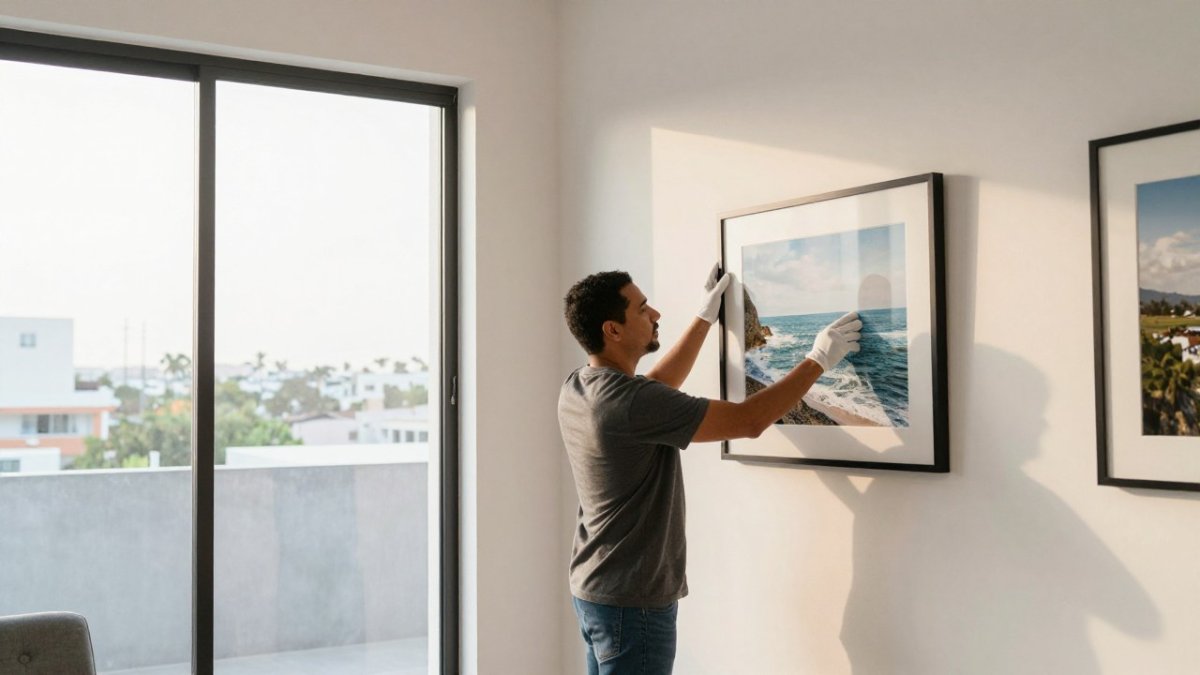
Hanging remains the most versatile method, and it rewards precision. The center of a single artwork is commonly placed at eye level, roughly 57 to 60 inches from the floor.
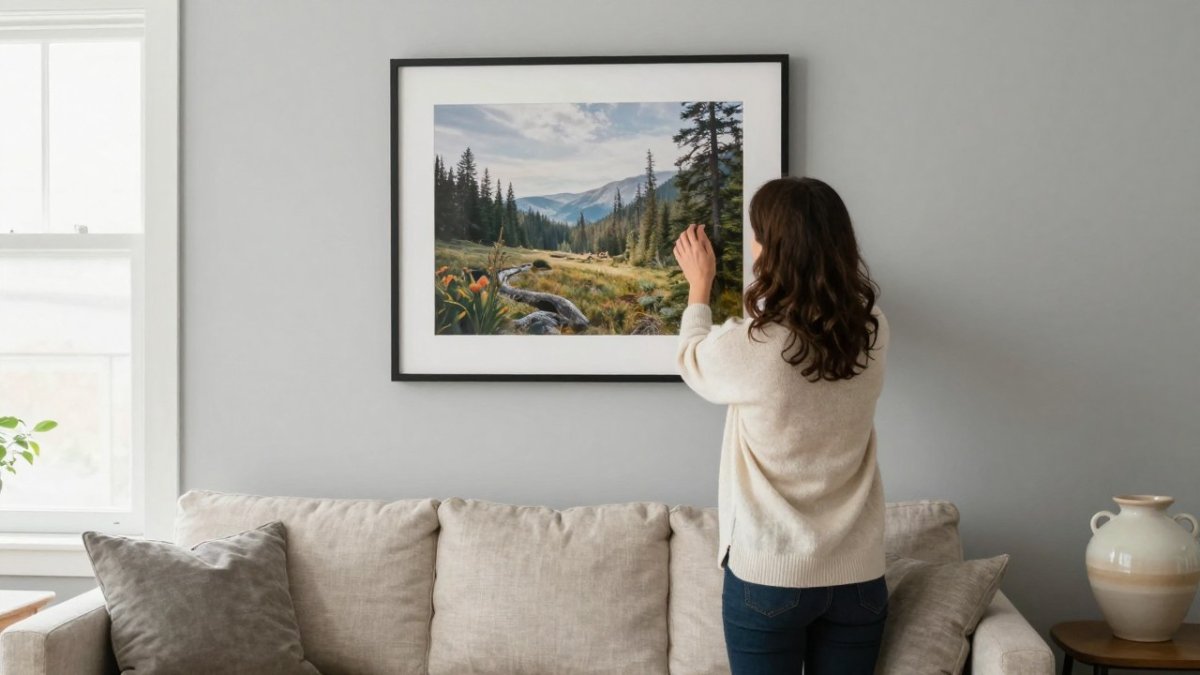
Precise Hanging Measurements and Installation
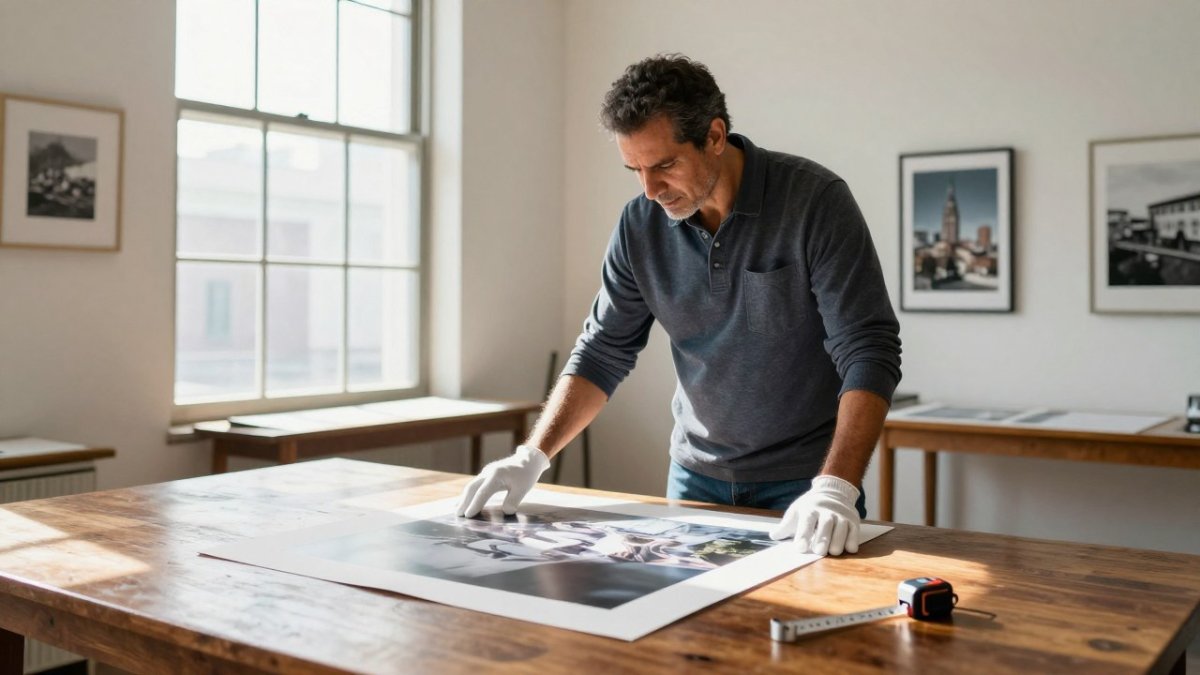
Accuracy beats guesswork every time. Follow these steps for a clean installation:
- Mark the artwork's center at 57 to 60 inches from the floor.
- Measure the distance from the frame's top edge to its hanging wire, then transfer that measurement upward from your center mark.
- Locate studs with a stud finder; for drywall without studs, use rated anchors matched to the piece's weight.
- Drill, insert anchors, and mount the hook.
- Hang the piece, then check level with a spirit level before stepping back.
| Method | Best For | Watch Out For |
|---|---|---|
| Single hang | Large statement pieces | Sagging wire on heavy frames |
| Gallery wall | Hallways, staircases | Inconsistent spacing |
| Picture ledge | Renters, rotating collections | Dust on exposed prints |
| Leaning | Consoles, floor displays | Sliding on smooth surfaces |
| Frameless | Modern, casual rooms | Light and dust exposure |
Conservation-Grade Framing, Lighting, and Care
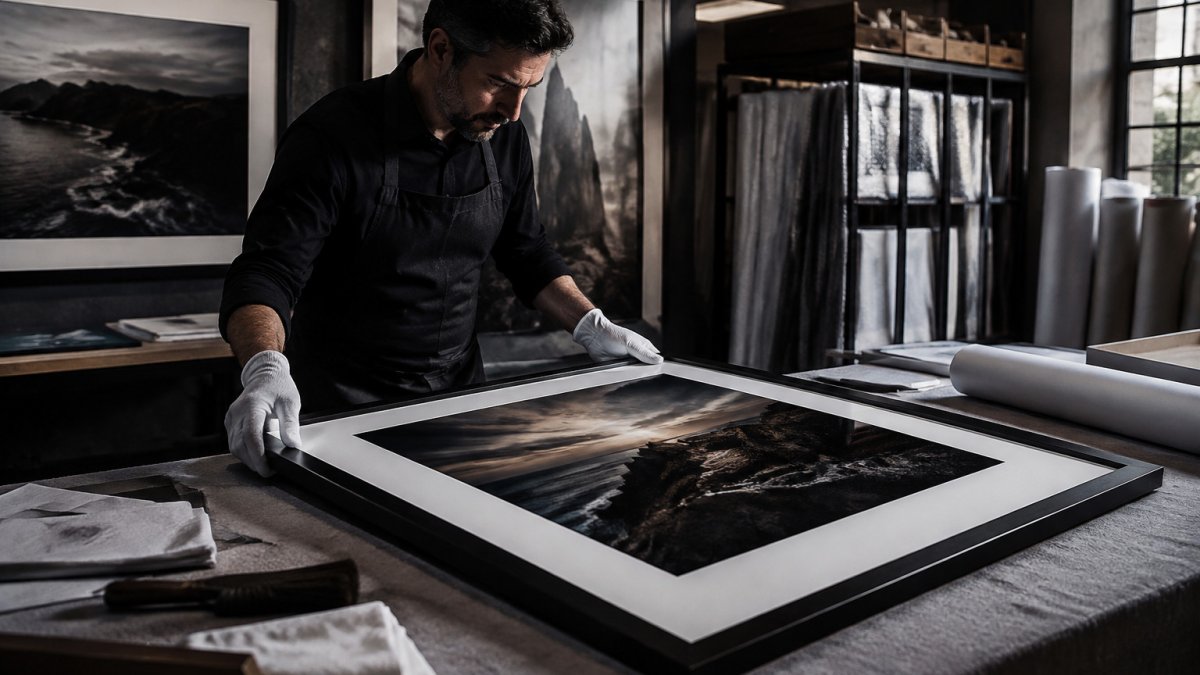
Longevity comes down to materials and light, and the details matter more than the marketing. Conservation framing is a system, not a single upgrade: the glazing, the mat, the backing board, and the mounting method each play a role, and skipping one undermines the rest.
What Conservation Framing Actually Includes
- Glazing. UV-filtering glass or acrylic blocks a large share of ultraviolet radiation, the part of the spectrum most responsible for fading and yellowing. Acrylic is lighter and safer around children and pets; glass resists scratching better. Neither stops all fading, because visible light also does damage, so glazing buys time rather than immunity.
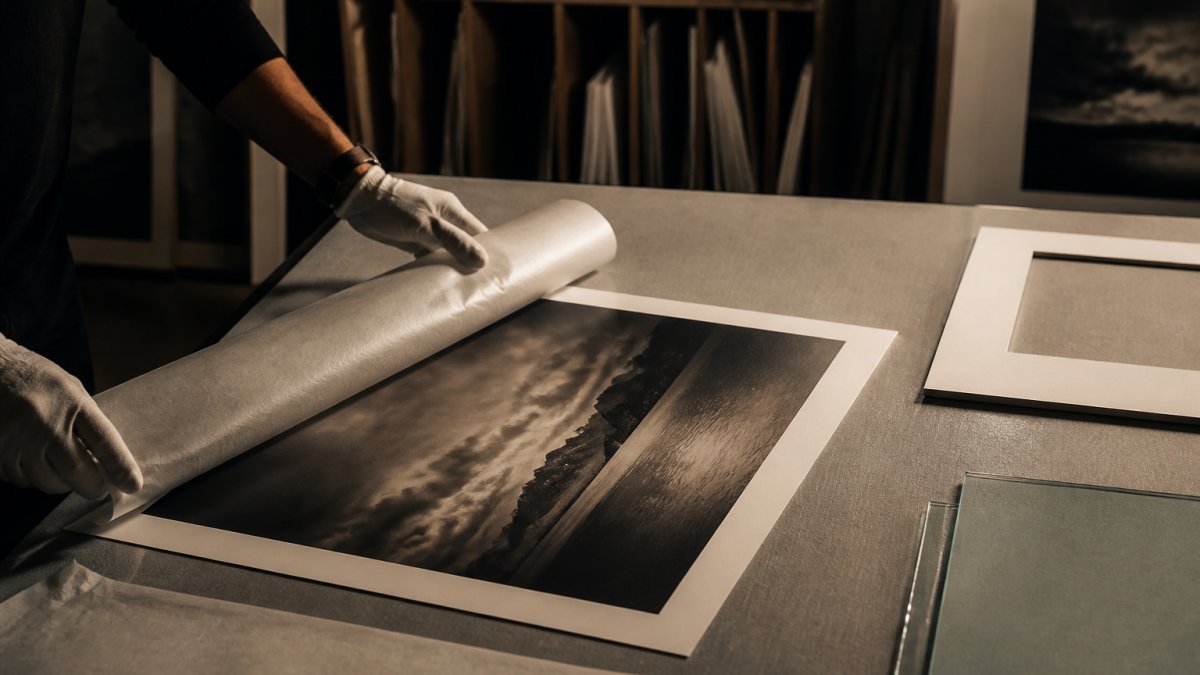
- Matting. An archival, acid-free mat keeps the artwork from touching the glazing and creates a buffer against acidity. Look for mats labeled lignin-free and buffered; ordinary cardboard and some decorative papers off-gas acids that stain prints over years.
- Backing. An acid-free backing board behind the artwork, plus a dust cover on the reverse, limits exposure to pollutants and pests.
Lighting Fine Art Safely
Light damage is cumulative and irreversible, so the goal is control rather than elimination.
- Keep works on paper and photography off walls that receive direct sun. Sheer curtains, UV window film, and rotating pieces away from the brightest wall all reduce exposure.
- For artificial light, choose fixtures with a high color rendering index so colors read accurately, and keep bulbs and spotlights at a distance that avoids heat buildup. LED fixtures run cooler than halogen and are the safer default near framed work.
- Watch for glare. Angling a picture light or choosing a matte glazing option can cut reflections without changing the artwork.
Room-by-Room Humidity and Temperature
Stable conditions matter more than any single number. Rapid swings cause paper to cockle and frames to loosen.
- Kitchens and bathrooms carry steam and grease. If you hang art there, keep it away from the shower and stove, run ventilation, and favor framed pieces with sealed backs over unframed prints.
- Bedrooms and hallways are usually the gentlest spaces, with less light and steadier air.
- Basements and exterior walls can run damp. A simple hygrometer is inexpensive and tells you whether a space stays in a reasonable range before you commit a valuable piece to it.
The Library of Congress preservation guidance recommends limiting light exposure and maintaining stable indoor humidity for works on paper. If you're weighing the cost of proper framing, read is luxury large scale wall art worth the investment.
Planning Your Collection with DE LA Gallery
A collection grows best when each piece earns its place. Our guide on buying investment photography that holds value covers what to look for in an artist's editions and materials.
DE LA Gallery represents photographer Jorge de la Torriente exclusively, and its augmented reality previews let you see a piece in your own space before you commit. Browse Into the Light II to start your collection with a museum-quality print.
Choosing how to display fine art at home comes down to matching method, materials, and light to the room you actually live in.
Frequently Asked Questions
What is the 70/30 rule in art?
The 70/30 rule is a guideline for balancing a collection: about 70% of your displayed pieces should share a common thread (color palette, subject, or frame style), while the remaining 30% can introduce contrast or variety. This ratio keeps a wall or room feeling cohesive without becoming monotonous. When you display fine art at home, applying the 70/30 rule helps large statement pieces coexist with smaller works. It works especially well for gallery walls and shelf displays where you want visual interest without chaos.
How high should fine art be hung on a wall?
The standard museum hanging height is 57 inches (145 cm) from the floor to the center of the artwork. This places the focal point at average eye level. For large-format pieces, measure from the center of the frame, not the top. If you are hanging above furniture, keep 6 to 10 inches of breathing room between the bottom of the frame and the furniture top. In rooms with high ceilings or low-slung furniture, you may need to adjust slightly, but 57 inches remains a reliable starting point for best ways to display fine art on a wall.
How do you display fine art without damaging it?
Use archival, acid-free materials for framing and backing, and avoid direct contact between the artwork and glass by adding a mat or spacers. Hang away from direct sunlight and heat sources; UV-filtering glazing slows fading but does not stop it entirely. For leaning arrangements, place a felt or cork pad behind the frame to prevent scuffs. When you display art prints without frames, use a stable easel or ledge and keep the print out of humid areas. DE LA Gallery uses verified archival materials in-house to protect print longevity.
How can you display artwork without putting it on a wall?
Leaning is the most common alternative: prop a large framed piece on the floor against a wall, on a console table, or on a picture ledge. Shelves and picture ledges let you layer several works. You can also use a freestanding easel, a bookcase, or a room divider as a display surface. For how to display artwork without walls, rotate pieces seasonally to keep the arrangement fresh. Renters often prefer these methods because they require minimal hardware and leave the drywall surface untouched.
How do you choose the right size artwork for a room?
A common guideline is that artwork should cover about 60% to 75% of the width of the furniture it hangs above. For a sofa that is 84 inches wide, aim for a piece or grouping that spans roughly 50 to 63 inches. On an empty wall, scale the art to the wall itself: a large-format photograph can anchor a room, while a small print may look lost. DE LA Gallery specializes in large-format fine art photography, and augmented reality previews let you see scale in your actual space before you buy.
What is the 2/3 rule for wall art?
The 2/3 rule says artwork should occupy about two-thirds of the width of the wall space or furniture below it. It is a quick way to avoid undersized pieces on large walls. For example, above a 72-inch console, a grouping around 48 inches wide fits the rule. Pair this with the 57-inch center height and consistent spacing (2 to 4 inches between frames in a gallery wall) to keep the composition balanced. These proportions matter most when you display fine art on a wall in open-plan rooms.
How can you display artwork without putting it on a wall?
Beyond leaning and shelves, consider a floor arrangement with a large framed piece propped against a fireplace or column, a picture ledge above a desk, or a frameless print mounted on a rigid board and set on an easel. Staircase galleries and console table vignettes also work without heavy hanging. For how to display artwork without walls, keep the piece stable and away from foot traffic. These methods suit renters and anyone who likes to rearrange their collection often.
How do you protect fine art from fading and damage?
Ask for UV-filtering glazing and acid-free mats and backing boards. Keep pieces out of direct sunlight and away from heat vents, radiators, and humid rooms like bathrooms. Dust frames with a soft dry cloth rather than sprays. DE LA Gallery prints and frames in-house using verified archival materials. If you display art prints without frames, keep them out of sunlight and handle them by the edges to avoid oils and creases.