 Ultimate guide
Best Ways to Preserve Fine Art at Home and in Storage
Last Updated: November 5, 2026
Quick Summary
To preserve fine art, limit light exposure, keep temperature and humidity stable, and store works with archival materials. Hang pieces away from direct sun, use UV-filtering glazing, and monitor conditions with a thermo-hygrometer. Handle works carefully and inspect them regularly.
- Hang artwork away from direct sun and use UV-filtering glazing or window film.
- Keep short-term temperature swings within about ±5°F and humidity within about ±5% RH.
- Store unframed prints flat in archival boxes, separated by acid-free tissue.
- Wrap framed paintings in breathable cotton or muslin, not sealed plastic, for long-term storage.
- Inspect stored works every few months for moisture, pests and frame shifting.
Table of Contents
- Why Fine Art Degrades and What Causes the Damage
- Protect Artwork From Light and Fading
- Control Temperature and Humidity Where Art Lives
- The Best Ways to Preserve Fine Art Prints
- How to Store Framed Paintings at Home
- How to Protect a Canvas Painting From Dust
- Handling, Display Habits and When to Call a Conservator
- Start Protecting Your Collection With a Care Plan
- Frequently Asked Questions
Why Fine Art Degrades and What Causes the Damage
Fine art rarely fails all at once. It degrades slowly, through light, humidity, temperature swings, dust and handling, and most of that damage is preventable. Understanding these causes is the first step toward learning how to preserve fine art, whether the collection hangs in a living room or sits in storage.
Light is usually the most underestimated threat. Ultraviolet and visible light break down pigments and paper fibers over time, so a print that looks vivid after a year on a sunny wall may look washed out after a decade. Humidity causes problems in the opposite direction: paper and canvas expand and contract as moisture shifts, which can warp stretchers, cockle paper and encourage mold growth.
Temperature swings compound these effects. Rapid changes stress materials and accelerate the wear on adhesives and frames. Dust, meanwhile, settles into surfaces and abrades them, while careless handling leaves oils, scratches and bent corners that no amount of cleaning fully reverses.
Most of these risks come from everyday habits rather than rare disasters. The sections that follow address each cause in turn, starting with the one that does the most cumulative harm: light.
Protect Artwork From Light and Fading
Light is the single most common cause of irreversible fading in works on paper and photographic prints. Direct sunlight is the worst offender, but even indirect daylight and gallery-style ceiling lights add up over years of exposure.
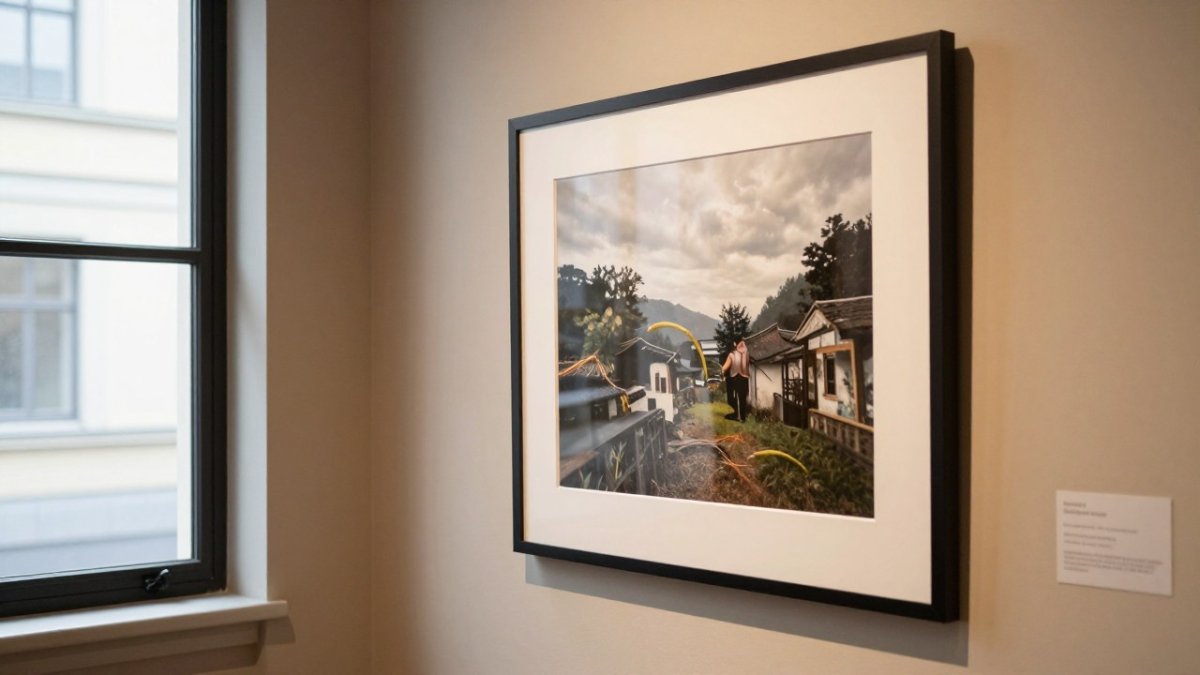
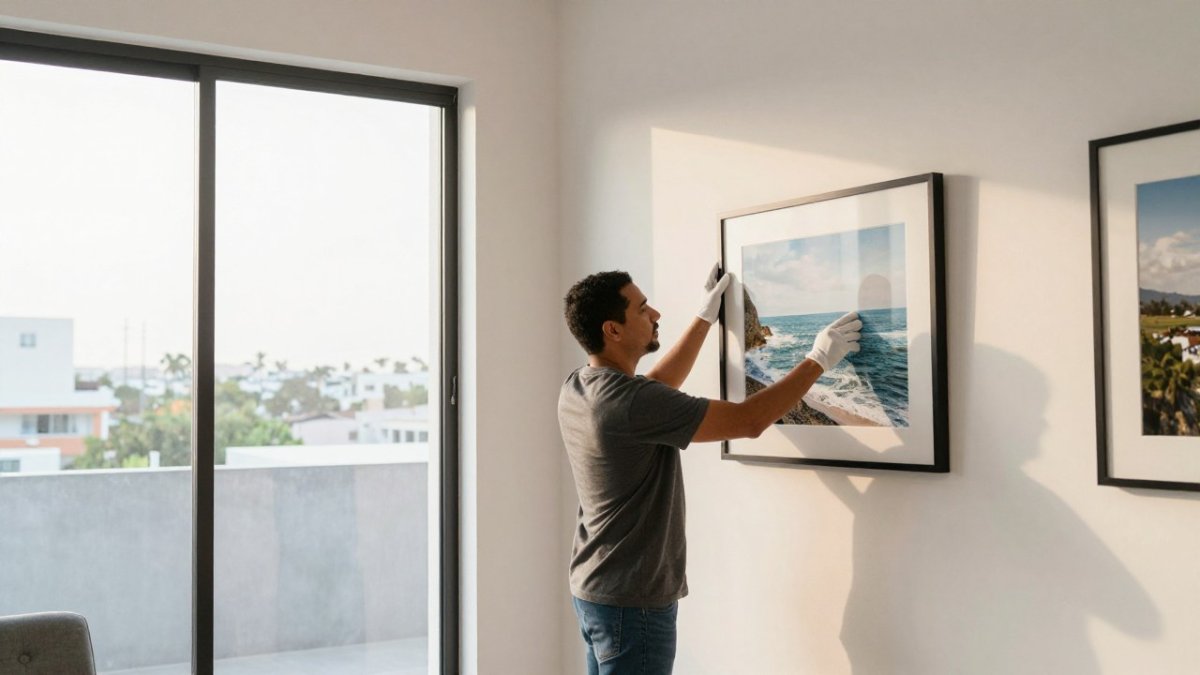
Hang artwork away from direct sun, especially on walls that receive strong afternoon light. If a window cannot be avoided, UV-filtering glazing or window film can block much of the harmful wavelengths. Museum-quality framing often includes UV-filtering acrylic or glass, which is a worthwhile upgrade for any piece you intend to keep for decades.
Rotate display locations where practical, and consider limiting how long a sensitive work stays in strong light. Storing pieces you are not actively displaying in a dark, cool cabinet or closet is one of the simplest ways to preserve them.
A common mistake is assuming LED lighting is harmless. LEDs emit far less UV than older bulbs, but they still deliver visible light, so a consistently lit piece will still fade gradually. Keep display lighting at reasonable intensity and avoid spotlights aimed directly at delicate prints.
Control Temperature and Humidity Where Art Lives
Stable conditions matter more than perfect ones, but 'stable' needs a number attached to be useful.
A common pattern is to treat fluctuation as the real enemy. A work that lives at a steady 68°F and 50% RH will generally fare better than one that bounces between 60°F and 80°F with humidity following the weather.
Where the numbers come from matters. You do not need a lab to apply them, you need a way to see what your space is actually doing.
Monitoring is the step most home collectors skip. A basic digital thermo-hygrometer placed near the artwork, ideally one that logs minimum and maximum readings, costs little and reveals seasonal patterns a single glance cannot.
When readings drift outside the band, respond in order of impact. First, stop the source: close blinds on hot afternoons, keep doors to unconditioned rooms shut, and move art off exterior walls and away from supply vents, radiators, and fireplaces. Second, stabilize the room rather than the artwork, run heating and air conditioning consistently instead of cycling them hard, and use a room dehumidifier in damp seasons rather than pointing air at the piece. Third, if a space cannot be stabilized, relocate the work; climate-controlled storage is the safest option for valuable pieces that spend long periods unseen.
Watch out: do not place a humidifier or dehumidifier directly beside a painting or print, since the local microclimate can swing far more sharply than the room average and drive moisture into the surface.
Basements, attics, garages, and rooms beside exterior doors are the usual failure points because they combine temperature swings with humidity spikes. A finished interior closet or an interior wall in a conditioned room is a better default.
The article gives concrete climate targets and monitoring steps that can be scanned at a glance.
| Factor | Target or limit | Note |
|---|---|---|
| Short-term temperature swing | Within about ±5°F | Keep steady year-round |
| Short-term humidity swing | Within about ±5% RH | Swings cause the damage |
| Rapid change in 24 hours | More than 10°F or 10% RH | Avoid |
| Sensor placement | Height of the artwork | Keep away from vents and sun |
| Monitoring frequency | Weekly check | Log highs and lows |
The Best Ways to Preserve Fine Art Prints
Fine art prints need careful handling because their surfaces and papers are often more sensitive than paintings. The goal is to keep the print flat, clean and protected from light, moisture and contact.
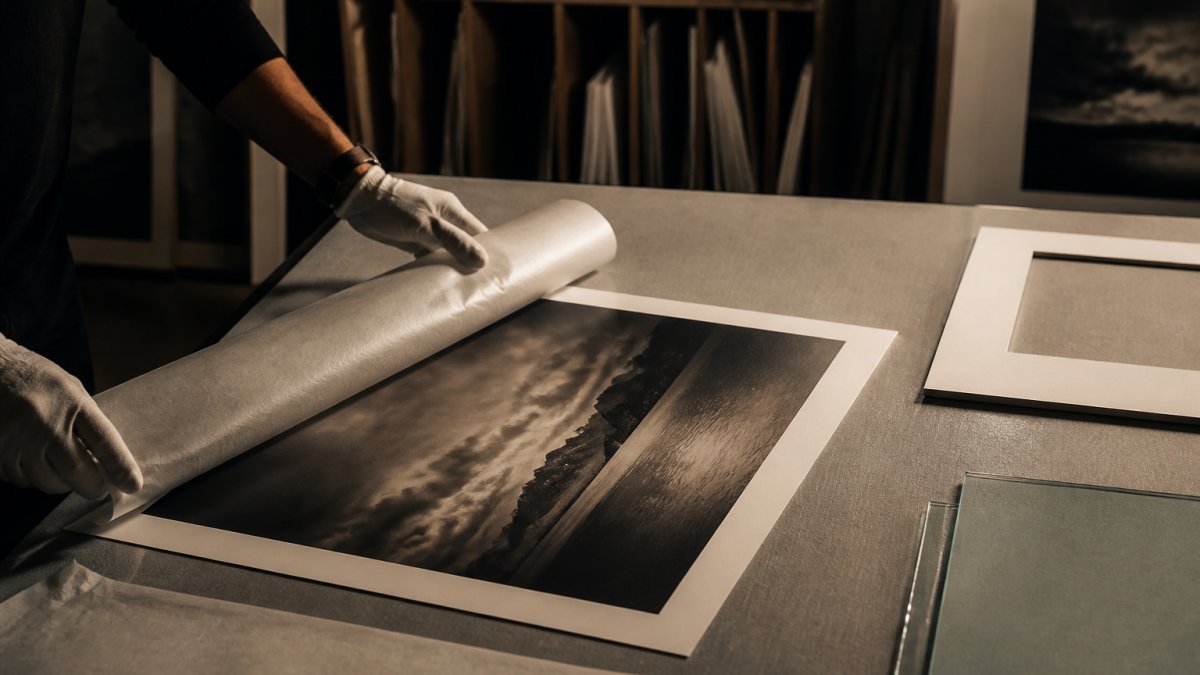
Store unframed prints flat in archival boxes or portfolios, separated by acid-free tissue or interleaving sheets. Avoid stacking heavy objects on top, and never store prints in standard plastic sleeves that contain plasticizers or PVC. Look for materials labeled acid-free and lignin-free, and confirm that any mounting or matting is made from archival-grade board.
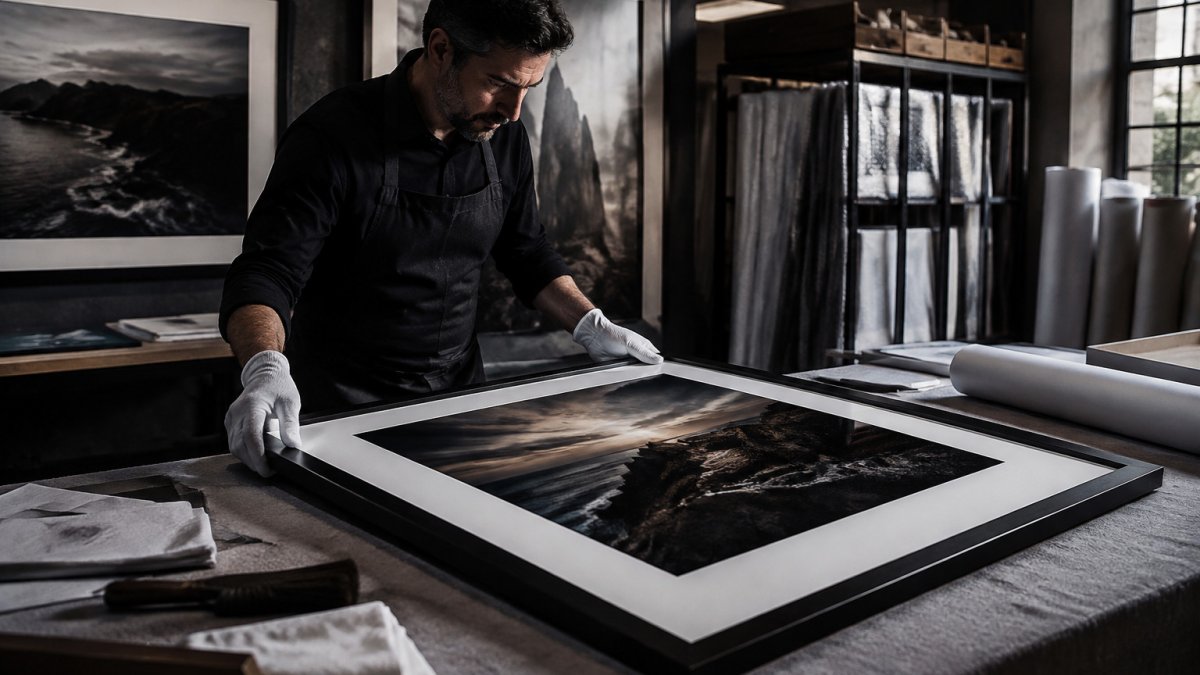
Framed prints benefit from the same logic: use UV-filtering glazing, keep a spacer between the glass and the image so the surface does not touch the glass, and seal the back to limit dust and pests. If you are unsure whether a print's materials are archival, a professional framer or conservator can assess them.
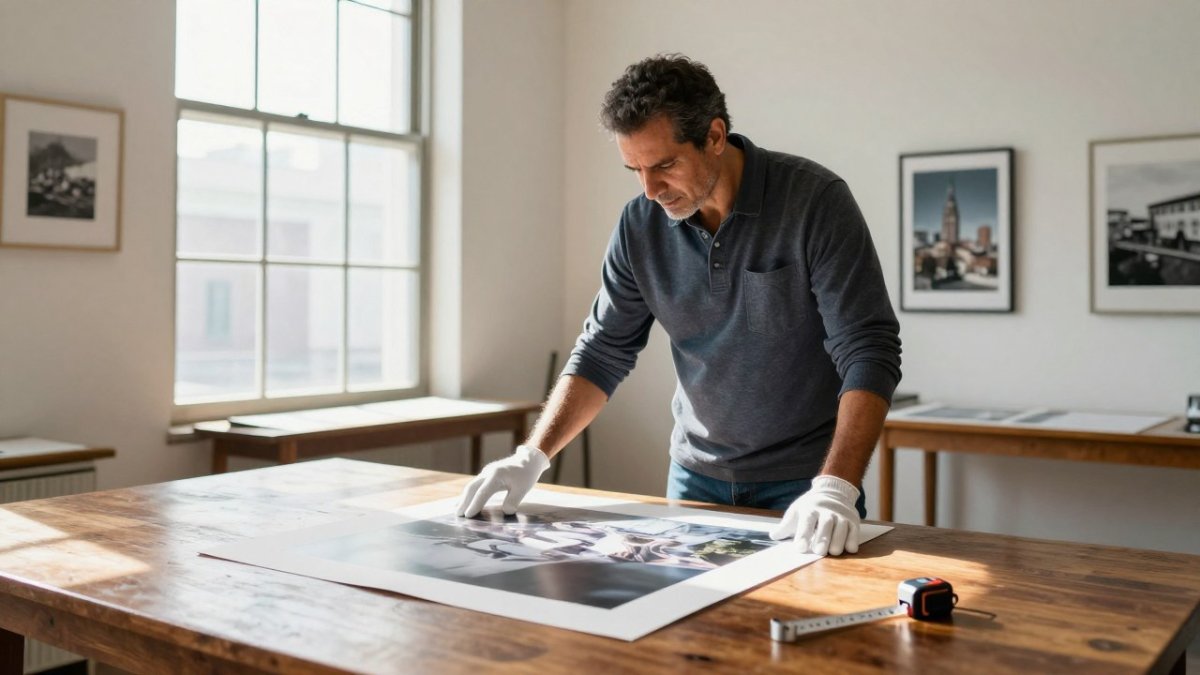
Handle prints by their edges, wear clean cotton or nitrile gloves, and never fold or roll a print to fit it into a space.
How to Store Framed Paintings at Home
Framed paintings fail in storage for predictable reasons: weight bearing on the wrong points, moisture trapped against the surface, pests settling into frames and canvas backs, and handling accidents during moves.
Start with orientation and support. Store framed paintings upright and slightly angled against an interior wall, never flat in a stack where the weight of upper frames presses on lower ones.
Wrap for breathability, not for sealing. Cotton sheeting, washed muslin, or acid-free paper lets air move and avoids the condensation that plastic can trap against a cool surface.
Choose a location that fails safely. A cool, dry, dark interior closet is the default. Avoid basements that flood, attics that bake, garages that swing with the weather, and any wall shared with a bathroom, kitchen, or exterior.
Prevent the four common collection risks before they start. For pests, inspect frames, canvas backs, and stretcher bars for frass, webbing, or live insects before storing, keep the space clean and free of cardboard and paper debris that harbor insects, and avoid storing paintings near stored food, wool, or taxidermy. For mold, keep RH below 60% and watch for musty odor or cold surfaces; mold needs sustained damp, so fixing the humidity usually fixes the risk. For water, never store art directly below plumbing, windows, or roof lines, and keep pieces elevated off the floor. For fire, store away from heat sources and consider a fire-resistant cabinet or safe room for the most valuable works; smoke damage can be as costly as flame.
Document before you wrap. Photograph the front, back, frame corners, and any existing damage, and note the title, medium, dimensions, and condition in a simple record kept with your insurance file.
Watch out: never carry a framed painting by the top of the frame or by a hanging wire, since both can fail under the weight and send the piece to the floor.
Check stored works every few months. Unwrap enough to inspect the surface, frame joints, and back for moisture, pests, or shifting, then rewrap.
How to Protect a Canvas Painting From Dust
Dust is abrasive, and on a canvas it works its way into the paint surface and texture. Preventing it is far easier than removing it later.
Dust regularly with a soft, dry brush or a clean microfiber cloth, working gently in one direction. Avoid household cleaning sprays, which can leave residues that damage varnish. For a varnished painting, a conservator can recommend appropriate cleaning if it becomes heavily soiled.
For long-term protection, consider a breathable dust cover made of cotton or a similar material, placed over the front and secured lightly at the back. Keep paintings away from high-traffic areas, cooking zones and fireplaces, where airborne particles and smoke collect quickly. Enclosing a canvas in sealed plastic, however, can trap moisture, so reserve that approach for short-term transport only.
Handling, Display Habits and When to Call a Conservator
Good habits go a long way. Always lift artwork by the frame or stretcher rather than the surface, keep hands clean, and clear a stable surface before moving a piece. Plan the route when carrying large works, and never drag a frame across a floor.
Inspect your collection once or twice a year. Look for flaking paint, cupping or lifting in paper, mold spots, insect activity, loose frame joints and discoloration. Photograph each piece and keep a simple record of its condition, materials and location. Documentation is also valuable for insurance and for any future sale.
Call a qualified conservator when you see active damage, such as mold, flaking paint, tears, water exposure or significant fading, or before attempting any repair yourself. Amateur interventions often cause more harm than the original problem. Seek professional help promptly for high-value works, and ask for references and examples of similar work.
Start Protecting Your Collection With a Care Plan
Preserving fine art comes down to a few consistent habits: limit light exposure, keep conditions stable, use archival materials, handle works carefully and inspect them regularly. Writing these steps into a simple care plan makes them easier to follow.
Start by assessing where each piece currently lives and what it is exposed to. Then address the largest risks first, usually light and humidity, before moving on to storage materials and routine checks. Revisit the plan each season as your collection and environment change.
If you are building or adding to a collection, the materials and framing used from the start make a lasting difference. Explore the work available at DE LA Gallery to learn more about its archival prints and framing.
Frequently Asked Questions
What is the best way to store framed paintings at home?
Store framed paintings upright in a cool, dry, dark closet or cabinet, away from exterior walls and direct sunlight. Stand each piece on padded blocks or foam, keep frames from touching, and cover the artwork with breathable cotton or acid-free paper rather than plastic, which traps moisture. Check the storage space periodically for humidity swings, and avoid attics and basements where temperature changes are sharpest.
How can you protect a canvas painting from dust?
Cover the painting with a breathable material such as unbleached cotton or acid-free tissue, which blocks dust while letting moisture escape. Avoid plastic sheeting directly against the surface, since it can trap humidity and stick to paint. For paintings on display, dust gently with a soft, dry brush or microfiber cloth at low suction, and never use household cleaners on the canvas.
How do you protect artwork from light and fading?
Keep artwork out of direct sunlight and away from strong artificial light, especially halogen bulbs. Use UV-filtering glazing or acrylic on prints and works on paper, and rotate displayed pieces with stored ones when practical. Light damage is cumulative and irreversible, so reducing exposure over time matters more than any single fix.
What materials are best for archival framing?
Archival framing uses acid-free mats and backing boards such as museum board or ragboard, pH-neutral adhesives, and UV-filtering glazing. Avoid lignin-based mat board, standard cardboard, and tape that can yellow or leave residue. Ask your framer which materials they use and whether they meet recognized archival standards before the work is mounted.
When should you call a professional conservator?
Contact a conservator when a piece shows flaking paint, mold, water damage, tears, or significant discoloration, or before attempting any repair yourself. Conservators can stabilize damage and advise on treatment that will not worsen the piece. Early consultation usually costs less and preserves more of the original work than delayed intervention.