 ultimate-guide
The Best Way to Buy Art Online: A Buyer's Guide
Last Updated: November 10, 2026
Quick Summary
The best way to buy art online is to verify the artist, materials, edition, and return terms before you pay, then confirm the piece will survive shipping and look right on your wall. Buyers who regret an online purchase almost always skipped one of those four checks.
- Marketplaces offer huge selection but seller quality and documentation vary widely.
- Ask whether the piece is one-of-a-kind or a numbered edition before committing.
- A certificate of authenticity should name the artist, title, medium, dimensions, edition size, date, and printing method.
- Confirm the carrier, transit insurance amount, packaging standard, and return window in writing before paying.
- Tape the piece's outline on your wall and check colors against your room's light before ordering.
Table of Contents
- What the Best Way to Buy Art Online Actually Requires
- Where to Buy Art Online: Marketplaces, Galleries, and Artist-Direct
- Finding Original Art for Sale Online Without Getting Burned
- The Best Way to Buy Art Online Cheap (Without Buying Regret)
- Why Buy Fine Art Photography Online From the Artist
- Authentication, Certificates, and Proving What You Bought
- Shipping, Insurance, Framing, and Returns: The Logistics That Protect You
- Previewing Art Before You Commit
- Frequently Asked Questions
What the Best Way to Buy Art Online Actually Requires
Buying art online works best as a provenance decision, not a shopping decision.
Buying art online means acquiring original artwork, limited edition prints, or fine art photography from a seller's website without seeing the physical piece first.
A common mistake is falling for a polished marketplace listing without asking who printed the piece or what paper it sits on.
Where to Buy Art Online: Marketplaces, Galleries, and Artist-Direct
Three channels dominate online art buying, each shifting risk differently. Marketplaces offer enormous selection, but seller quality varies widely. Print retailers offer more consistent production with less individuality. Artist-direct and gallery-direct sales put you closest to the maker.
Marketplace vs. Gallery vs. Direct-from-Artist
| Channel | What You Get | Main Risk | Best For |
|---|---|---|---|
| Marketplace | Huge selection, many sellers | Inconsistent quality and documentation | Browsing and price comparison |
| Print retailer | Predictable production | Generic, mass-produced feel | Affordable wall art |
| Gallery-direct | Curated collections, vetting | Limited inventory | Collectors who want guidance |
| Artist-direct | Provenance, direct contact | Smaller catalog | Buyers who want the story |
Best for: shoppers who value selection above all. Skip if: you need verified archival materials and a named printer.
A useful rule: the further you sit from the maker, the more paperwork you should demand.
Finding Original Art for Sale Online Without Getting Burned
Original art for sale online is real, but so are reproductions dressed up as originals. The difference usually shows up in the edition statement, the signature, and the paper.
How to Tell an Original From a Reproduction
Ask these questions before you commit:
- Is the piece one-of-a-kind, or part of a numbered edition?
- Does the listing name the printing method, such as giclée prints on archival paper?
- Is the signature hand-signed, or printed into the image?
- Does the seller disclose the paper weight and finish?
- Will a certificate of authenticity accompany the shipment?
A reproduction is not a scam. A reproduction sold without disclosure is. Listings that use "original" while describing "giclee prints" in the same paragraph are usually reproductions with loose language, and that ambiguity follows the piece into resale.
The Best Way to Buy Art Online Cheap (Without Buying Regret)
The best way to buy art online cheap is to spend less on size and framing, never on materials. A smaller archival print outlasts a large poster every time.
Cheap art fails in predictable ways: thin paper that cockles in humidity, inks that shift color within a few years, and frames with no UV protection.
- Choose smaller formats over discounted large ones
- Confirm the paper is acid-free before checkout
- Skip bundled frames unless the glazing is specified
If you want to see how an affordable entry point can still use archival stock, our 80's House print is available on smooth matte, gallery edition, and canvas starting at $99.00, which is the kind of low-stakes way to test a seller's quality before committing to a larger acquisition.
Why Buy Fine Art Photography Online From the Artist
Buying direct from the artist removes the middleman and the guesswork.
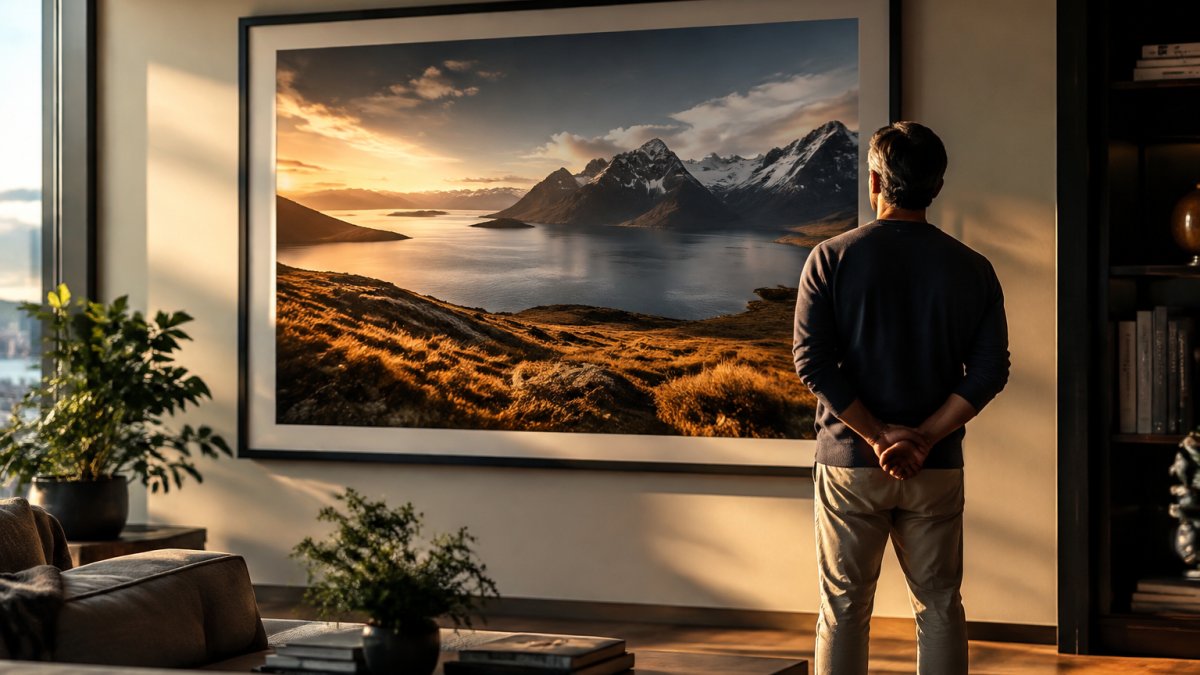
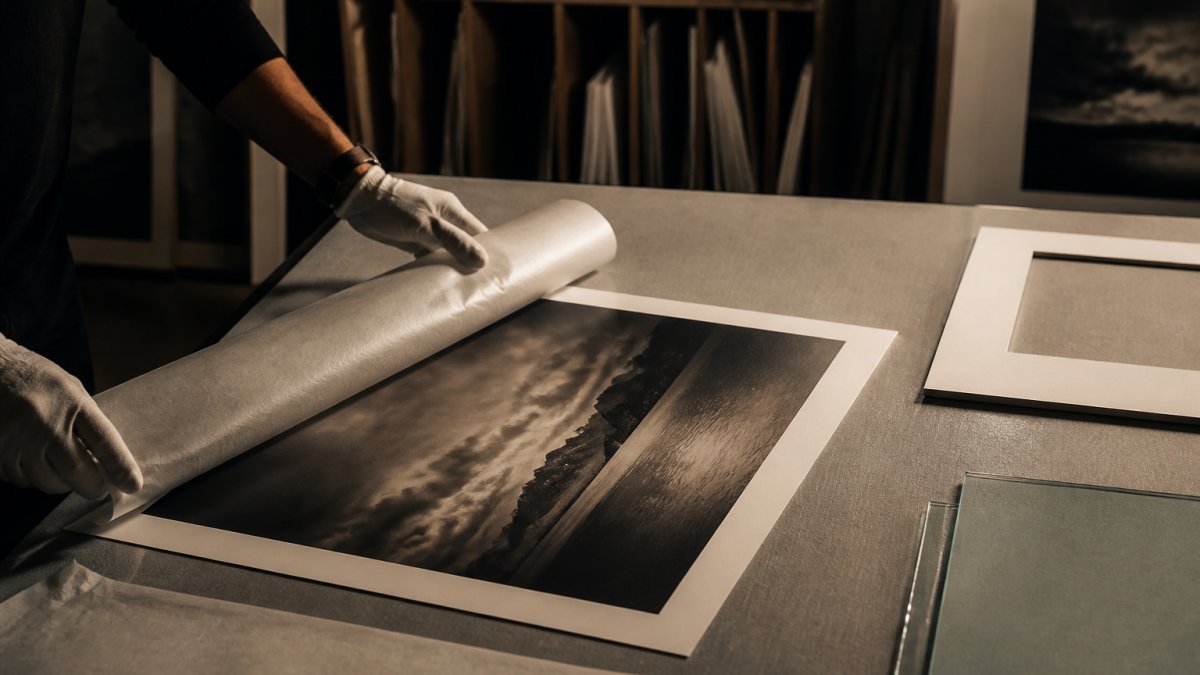
At DE LA Gallery, every piece is the work of photographer Jorge de la Torriente, printed and framed in-house by Jeffrey Rodriguez. You can see an original fine art photograph available for purchase in The Storm Provides.
What Archival Materials and In-House Printing Change
In-house printing changes the accountability chain.
For a deeper look at how large-format pieces are produced and sold, our guide to buying large scale photography online walks through the full process.
Authentication, Certificates, and Proving What You Bought
Authentication is the paper trail that proves what you own, and it matters most the day you resell. A certificate of authenticity should name the artist, title, medium, dimensions, edition size, date, and printing method. Provenance is that document plus the chain of ownership behind it, prior owners, exhibition history, gallery invoices, and any catalog raisonné entry.
What a Real Certificate of Authenticity Contains
A certificate that carries weight at resale typically includes:
- Artist name and, where relevant, signature
- Title and year of creation
- Medium and exact materials (paper brand and weight, ink type, canvas substrate)
A certificate printed by the seller with no artist signature carries little weight. Ask whether the artist signs it, and whether it travels with the piece or is emailed separately. A PDF is convenient, but a physical signed certificate stored with the artwork is what a future buyer wants to see.
Editions, Numbering, and What Resale Actually Looks Like
For limited edition prints, confirm the total edition size and whether the piece is numbered. An edition of 25 with hand-numbered prints behaves very differently at resale than an open-edition run.
Watch out: some sellers list an edition size but also sell "artist proofs" outside that number. Ask whether artist proofs exist and how many, because they dilute the stated edition.
Our Blue Heaven piece shows how edition status works in practice: it sold as an original and now exists only as a limited edition, exactly the kind of transition that makes documentation valuable.
Digital Art and NFT Verification: The Gap Most Guides Skip
Most buying guides stop at paper certificates and ignore digital work. If you are buying digital art or an NFT, verification changes shape. On-chain provenance, the transaction history recorded on a public blockchain, replaces the paper trail but not the artist. Confirm the wallet offering the piece is the artist's verified wallet, the token metadata points to permanent storage rather than a link that can go dead, and the smart contract specifies edition size and royalty terms.
Building Your Own Provenance File
Once the piece arrives, keep the certificate, invoice, listing screenshots, and seller correspondence in one folder, physical or digital. If you insure, donate, or resell the work, that file is the difference between a smooth transaction and a valuation argument.
Shipping, Insurance, Framing, and Returns: The Logistics That Protect You
Shipping logistics affect whether your art arrives safely. Large-format work should travel in protective packaging, and the seller should specify the carrier and coverage before the piece leaves.
Packaging and Carrier Standards for Fine Art
Ask the seller what packaging is used for large framed work, who the carrier is, whether the shipment is signature-required, and whether the piece is insured for its full purchase price in transit.
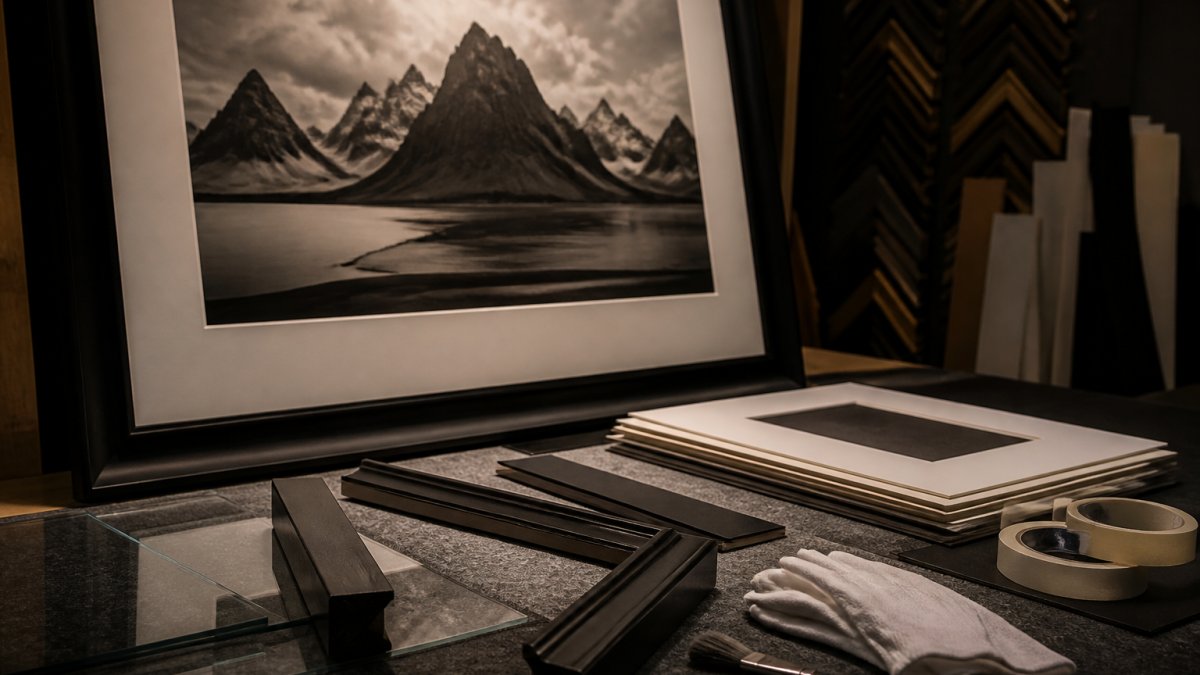
Confirm the framing and glazing specifications before the frame is built, and check how the return policy applies to custom work.
Framing Specifications That Protect the Work
When buying framed work, ask about UV-filtering glazing and acid-free mounting, and request both in writing. Glazing and mounting choices affect how well a print holds up over time.
Return Policies and Buyer Protection
Read the return window, who pays return freight on a large piece, and whether custom-framed work is excluded before you order. Keep the listing page, invoice, and photos of the packaging before you open it, those are the evidence a dispute requires.
Art Insurance: The Step Most Guides Skip
A standard homeowner policy may cap coverage on fine art at a low sublimit and may require a scheduled rider or separate fine art policy for higher-value work. Ask your insurer about a scheduled rider, and document the piece with photographs, the certificate of authenticity, and the purchase invoice. If you lend, move, or ship the work to a conservator, confirm the policy follows the piece rather than the address.
International Orders: Tax, Customs, and Sustainability
If you buy from a seller outside the country, the landed cost is not the listed price. Import duties, sales tax collected at delivery, and customs brokerage fees can add a meaningful percentage, and the carrier, not the seller, usually collects them. Confirm who is responsible for duties before checkout, and ask whether the seller provides a commercial invoice that accurately describes the artwork, since misdescribed shipments can be held or reclassified.
A Pre-Purchase Logistics Checklist
Before you pay, confirm in writing: the carrier and transit insurance amount, the packaging standard, the glazing and mounting specifications, the return window and who pays return freight, whether custom framing is excluded, and, for international orders, who pays duties and taxes. That list is short, but it is the difference between a piece that arrives protected and one that arrives as a dispute.
Previewing Art Before You Commit
Previewing art before you buy solves the biggest online objection: not knowing how a large piece will look in your room.
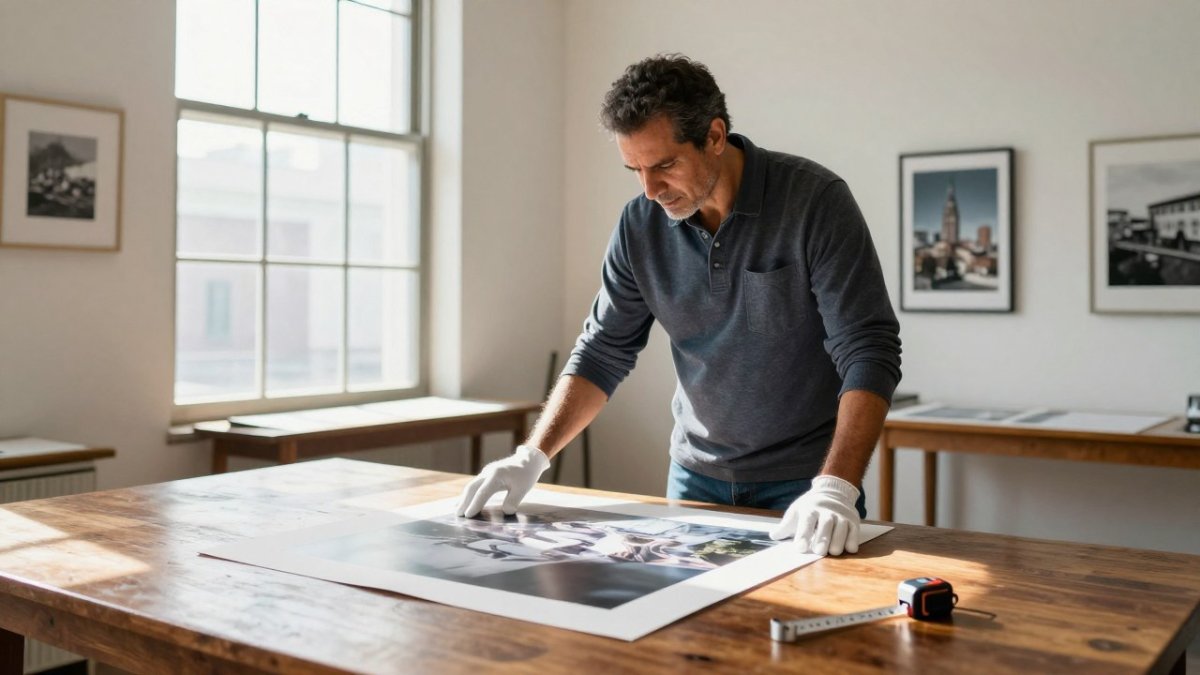
Scale the piece to your wall first. Measure the width and height, tape the outline on the wall, and live with it for a day.
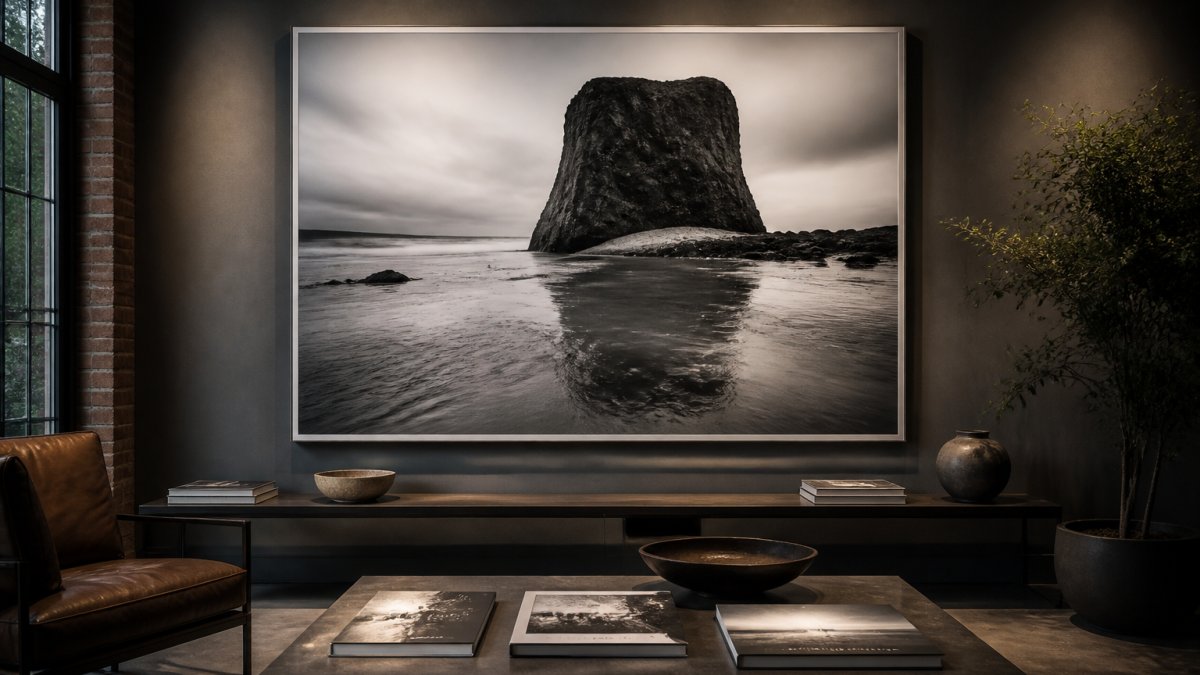
At DE LA Gallery, we support augmented reality for live art previews, so you can place a piece on your own wall through your phone before ordering. For practical guidance on hanging and arranging, our article on styling large format photography covers placement, spacing, and grouping.
The gap between a confident purchase and a regretful one comes down to four questions: who made it, what is it printed on, how many exist, and what happens if it arrives wrong. DE LA Gallery offers in-house printing and framing by Jeffrey Rodriguez, verified archival materials, secure checkout, and augmented reality previews so you can see the piece on your wall before you commit.
Get started with DE LA Gallery and acquire a museum-quality photograph you can trace back to the artist who made it.
Frequently Asked Questions
What should you check before buying art online?
Confirm four things before you pay: the edition size and whether the piece is an original or a print, the materials used (archival pigment inks and acid-free paper or canvas matter for longevity), the certificate of authenticity and provenance documentation, and the seller's shipping, insurance, and return terms. Ask who printed and framed the piece and how that work is done. Get the answers in writing before checkout.
How can you tell if art is good quality when buying online?
Look for specifics rather than adjectives. A serious seller names the paper or canvas, the ink type, the edition size, and the framing materials. High-resolution detail images of corners, texture, and signature help. Ask whether the work uses verified archival materials, because that determines whether colors hold up over decades. Vague claims like museum-quality without a materials list are a warning sign. A certificate of authenticity and a named artist with a traceable exhibition or gallery record add real weight.
How do you know whether an artwork is an original or a print?
Originals are one-of-a-kind: a painting, drawing, or mixed media piece exists once. Prints are reproduced in an edition, and the edition size plus the artist's signature and numbering should be documented. Fine art photography sits in between, since photographs are printed in limited editions from an original negative or digital file. Ask directly for the edition size, whether the piece is signed and numbered, and whether a certificate of authenticity accompanies it. Any hesitation on those points is your answer.
How can you preview artwork on your wall before buying it?
Use augmented reality where the seller offers it. An AR preview can help you judge scale on your own wall, which matters most for large-format work. Before that, measure your wall and compare it to the listed dimensions, and check the ceiling height and furniture sightlines. If AR is not available, ask the gallery for a scaled mockup or a video of the piece on a wall. Never judge size from a product photo alone.
Is it safe to buy art online from an artist directly?
Buying direct from the artist can give you a clear line of contact with the person who made the work. Verify the artist has a real gallery presence or exhibition history, check that the site uses secure checkout, and confirm the return and damage policy in writing. Direct-from-artist also usually means you can ask questions about materials and archival methods and get a real answer.
What happens if a piece arrives damaged or the colors look different?
Ask whether the seller insures shipments and what its damage policy is before you buy. Photograph the packaging before opening and the damage immediately after, then contact the seller within their stated window. Color variation is a separate issue: screens render color differently, so ask whether the seller color-corrects product images and whether they will send additional photos in natural light. Confirm the return or replacement terms in writing at checkout, not after the box arrives.