 how-to
How to Style Large Format Photography for Your Walls
Last Updated: November 8, 2026
Quick Summary
Style large format photography by choosing a simple, thin frame one to two inches wide with a three to four inch mat, then hang it at eye level with the center around sixty inches from the floor. Use two hooks set a few inches apart and keep prints out of direct sun with UV-filtering glass.
- A 4x5 sheet holds roughly fifteen times the image area of a 35mm frame.
- Aim for a frame face roughly one to two inches wide on prints over thirty inches.
- A print should fill roughly two-thirds to three-quarters of the wall width above furniture.
- Large framed art needs two hooks, not one, to stay level and spread the load.
- Keep prints out of direct sun and use UV-filtering glass or acrylic.
Table of Contents
- What Makes Large Format Photography Different
- How to Choose a Frame for a Large Photograph
- Large Wall Art Placement Ideas for Every Room
- How to Hang Large Framed Art Safely and Beautifully
- Lighting Strategies for Large Format Photography
- How to Protect Fine Art Photography Prints
- Previewing Your Art: Augmented Reality and Other Tools
- Choosing Your Statement Piece from DE LA Gallery
- Frequently Asked Questions
What Makes Large Format Photography Different
Large format photography is a method of shooting film on individual sheets rather than a roll, most often in 4x5 and 8x10 sizes. The result is a level of detail and tonal depth that smaller formats cannot match.
A 4x5 sheet holds roughly fifteen times the image area of a 35mm frame. That extra area captures finer texture and smoother gradation in skies, water, and stone. When you print big, nothing falls apart.
The Visual Qualities That Set Large Format Apart
Three qualities separate a large format print from an enlarged small-format image:
- Detail that survives scale. Fine detail stays crisp at forty inches wide and beyond.
- Smooth tonal transitions. Skies and shadows shift gradually, with no visible grain.
- Controlled perspective. Camera movements keep vertical lines straight and true.
That last point matters most for wall art. A large print with leaning walls looks wrong from across the room. A view camera fixes this at the moment of capture, not in editing.
How to Choose a Frame for a Large Photograph
The best frame for a large photograph is a simple one. Thin, dark, or natural wood profiles let the image lead.
Scale is the first decision. A frame that is too narrow looks flimsy beside a wide print. A frame that is too wide swallows the picture.
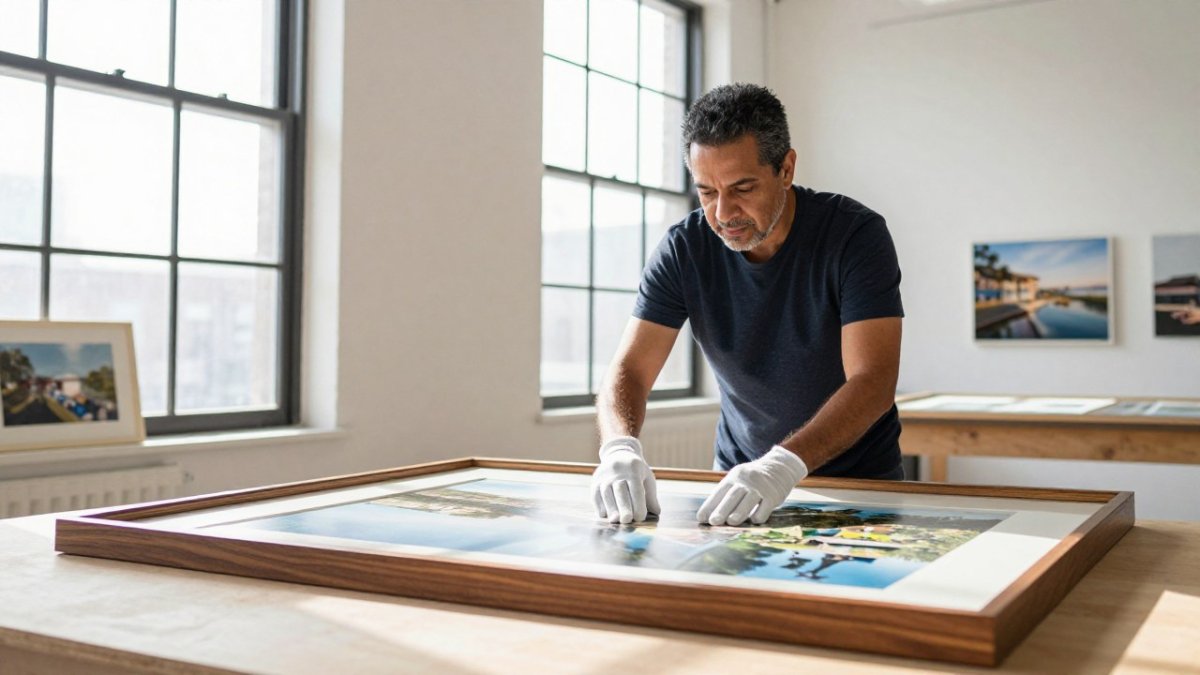
Matting is the second decision. A wide mat, three to four inches, gives the image breathing room and keeps the glass off the print surface.
Frame Styles That Complement Large Format Art
- Gallery black or walnut: clean lines, works in almost any room.
- Natural oak or ash: warm and relaxed, good for coastal and rustic spaces.
- Floating frame: shows the full paper edge, a favorite for collectors.
- No frame, acrylic face-mount: sleek and modern, best for very contemporary rooms.
What most guides miss is the glass.
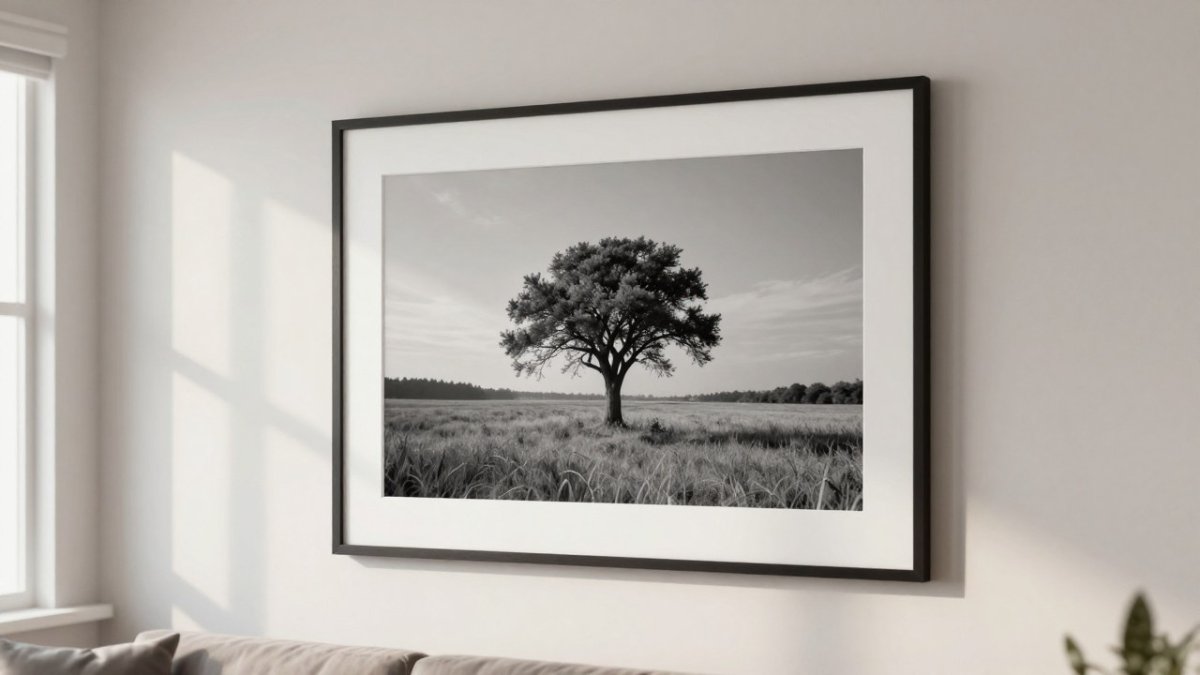
Here are the frame decisions the article walks through, from scale to glass.
| Decision | Guideline | Note |
|---|---|---|
| Frame face width | Roughly one to two inches wide | For prints over thirty inches |
| Mat width | Three to four inches | Gives the image breathing room |
| Gallery black or walnut | Clean lines | Works in almost any room |
| Natural oak or ash | Warm and relaxed | Good for coastal and rustic spaces |
| Floating frame | Shows the full paper edge | A favorite for collectors |
| No frame, acrylic face-mount | Sleek and modern | Best for very contemporary rooms |
Large Wall Art Placement Ideas for Every Room
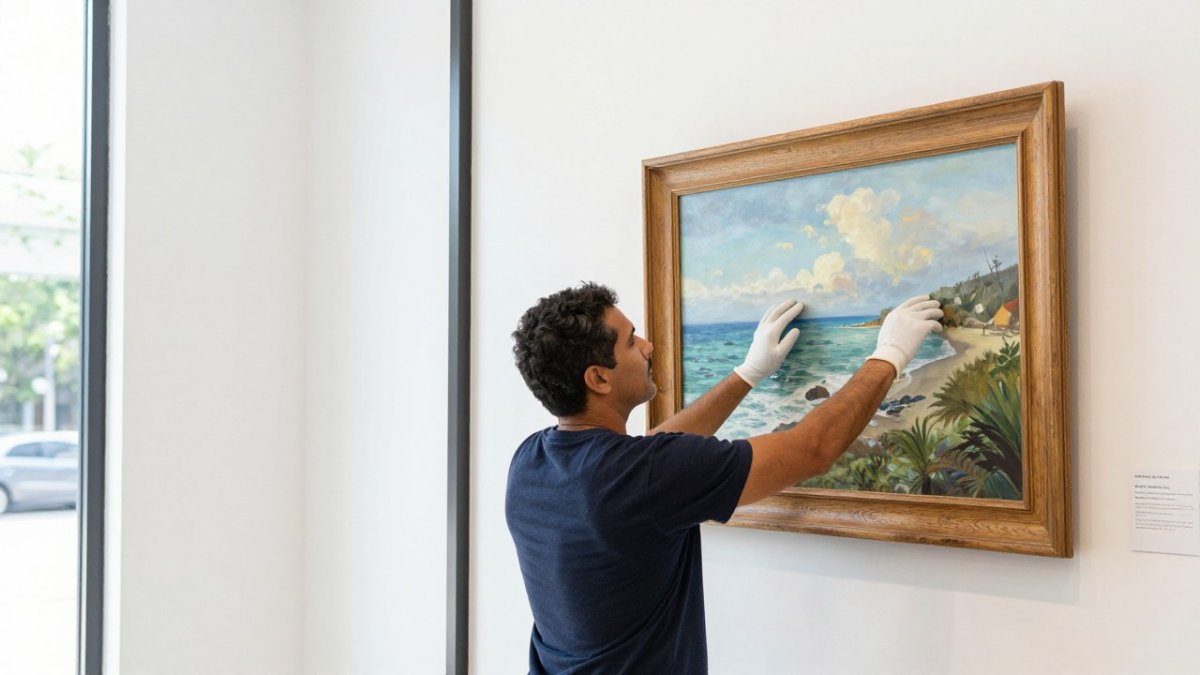
Placement starts with one rule: hang art at eye level, with the center of the piece around sixty inches from the floor. Everything else follows from the room.
In a living room, center a large print above the sofa, leaving six to ten inches of space between the frame bottom and the sofa back. In a dining room, place it on the wall you face while seated. In a bedroom, keep it opposite the bed so you see it first thing. In a hallway, hang a wide panoramic piece low enough to view while walking.
Size matters as much as spot. A print should fill roughly two-thirds to three-quarters of the wall width above a piece of furniture. Too small and the wall looks empty.
How to Hang Large Framed Art Safely and Beautifully
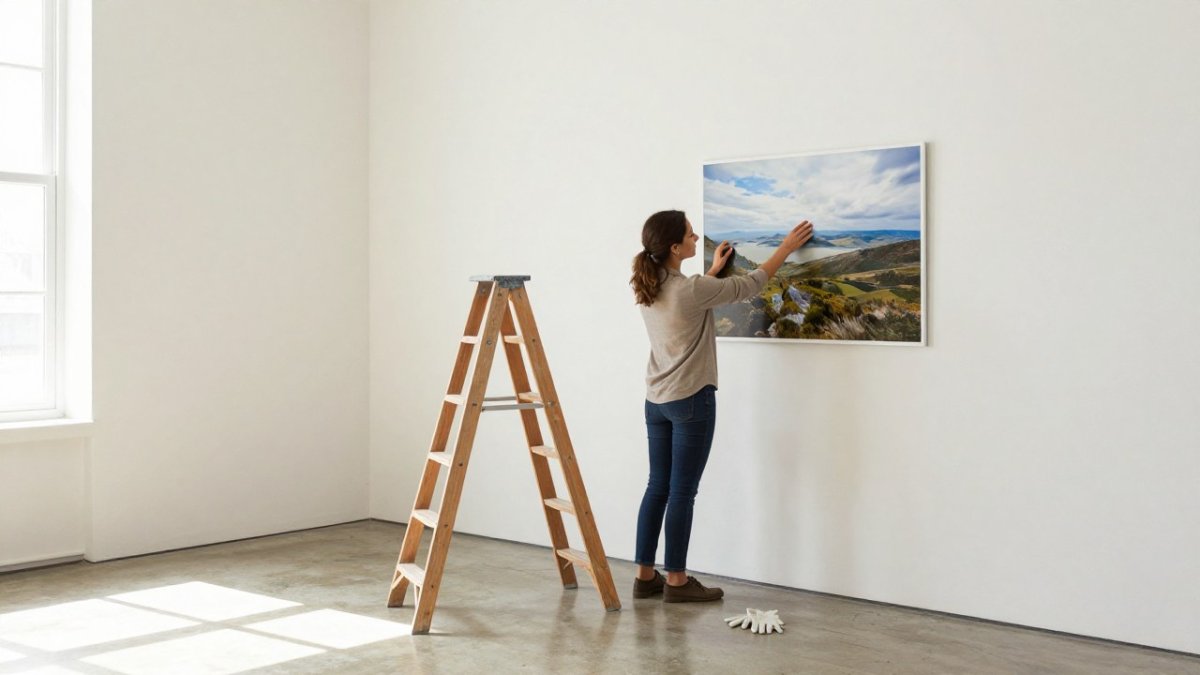
Large framed art needs two hooks, not one. A single hook lets a wide piece tilt and swing. Two hooks set a few inches apart keep it level and spread the load.
Here is the process we recommend:
- Find the studs. Use a stud finder and mark the wall. For heavy pieces, anchor into studs where you can.
- Use the right hardware. For drywall without studs, use rated toggle bolts, not plastic plugs.
- Measure twice. Mark the hook height, then check it against the frame's hanging wire.
- Add bumpers. Small felt pads on the bottom corners keep the frame off the wall and let air flow.
- Check the level. A wide frame shows a half-inch tilt from across the room.
Watch out: hanging a heavy frame from a single nail in drywall is the most common mistake. A forty-inch framed print can weigh far more than people expect, and the wall will fail before the wire does.
Lighting Strategies for Large Format Photography
Light is the raw material of a large format photograph. Because a sheet of film records a long tonal scale, the way you shape light before the exposure determines whether the final print feels luminous or flat.
Start by deciding what kind of light the image needs. A landscape usually wants low-angle sun that rakes across texture and separates planes. A portrait wants soft, directional light that models the face without blowing out highlights.
Natural Light for Landscapes and Interiors
For landscapes, the most reliable window is the hour after sunrise and the hour before sunset, when the sun sits low and the light travels through more atmosphere. That angle produces warm color and long shadows that give a large negative depth.
For interiors, place the camera so windows provide side light rather than backlight; side light reveals the shape of a room, while backlight turns it into a silhouette.
Artificial Light and Fill
When natural light is not enough, a single strobe or continuous source with a large modifier gives you control. For portraits, place a softbox at roughly forty-five degrees to the subject and a reflector opposite to lift the shadow side. For still life, a light tent or a sheet of diffusion material between the source and the subject softens specular highlights on glass and metal.
Reading the Light on the Ground Glass
The ground glass is your best lighting monitor. Move the camera or the light a few inches and watch how the tonal relationships change. This previsualization step is where large format lighting is won or lost.
Matching Light to the Final Print
Warm light tends to suit warm-toned subjects, stone, wood, skin, autumn foliage. Cool light suits water, metal, and moody skies. Decide the mood you want before you set up, then choose the hour, the modifier, and the direction that produce it. The print will carry that decision all the way to the wall.
How to Protect Fine Art Photography Prints
Protection for a large format print begins long before the frame goes on the wall. The chain runs from sheet film handling through processing, scanning, printing, matting, and display. A failure at any link shows up years later as fading, staining, or physical damage.
Film Handling and Processing
Large format film is handled sheet by sheet, which means every sheet is a chance for dust, fingerprints, and scratches. Load holders in a clean, still room, and use a antistatic brush on the film before closing the holder. Process promptly after exposure; latent image can degrade if film sits for weeks in warm conditions.
Scanning and Digital Output
If you scan the negative, clean it with compressed air and a lint-free wipe before it goes on the scanner glass. Scratches that are invisible on a light table can become obvious in a high-resolution scan. When printing digitally, use a calibrated monitor and a printer profile for the specific paper, so the print matches what you approved on screen.
Archival Matting and Framing
The materials that touch the print matter most.
- Light: keep prints out of direct sun and use UV-filtering glass or acrylic.
- Moisture: avoid bathrooms, damp basements, and walls near exterior doors.
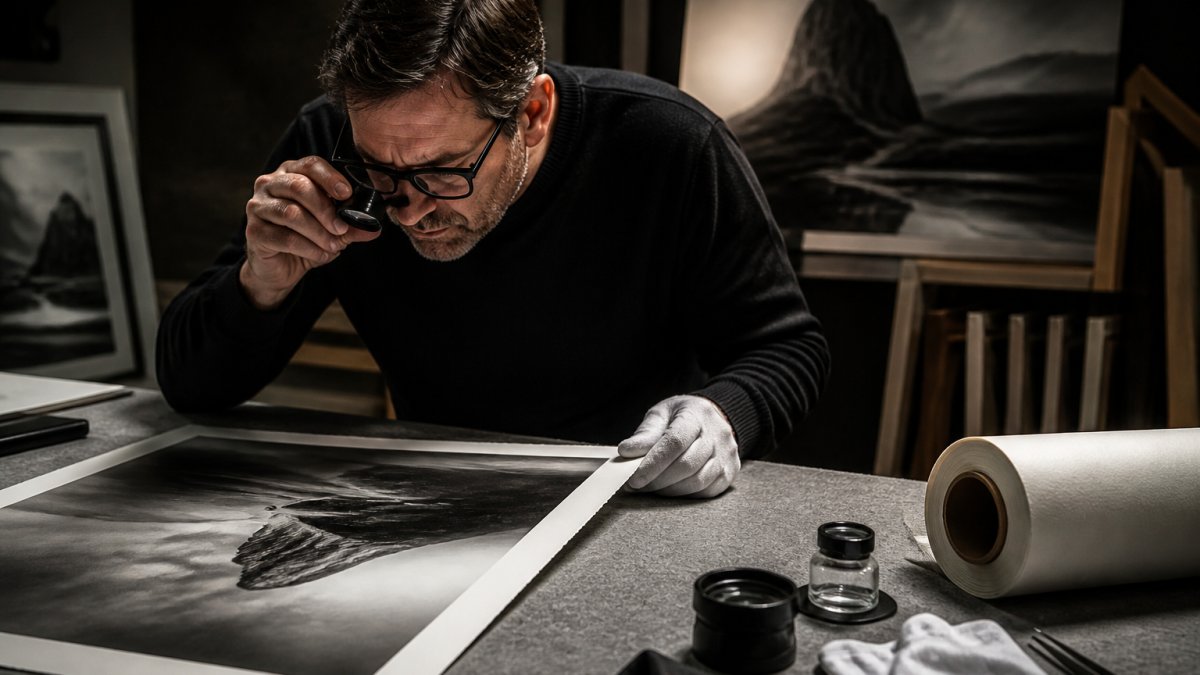
- Handling: never touch the print surface; skin oils cause permanent marks.
- Dust: clean glass with a dry microfiber cloth, never a wet spray.
Display and Long-Term Care
Hang prints away from heat sources and direct airflow from vents, which can cause paper to cockle. Check hanging hardware once a year; wire and hooks can loosen. If you rotate a collection, store unframed prints flat in an acid-free box in a cool, dry room.
If you are weighing a larger investment, read our guide on whether luxury large scale wall art is worth it before you commit.
Previewing Your Art: Augmented Reality and Other Tools
Buying a large print online used to be a gamble. Now it does not have to be. Augmented reality lets you see a piece on your own wall, at true scale, before you buy.
Augmented reality previews can help you see how a piece might look on your wall before you buy.
Three more tools help:
- Paper templates. Cut a sheet to the frame size and tape it to the wall for a few days.
- Room photos. Send a straight-on photo of your wall and we can mock up the piece.
- Color check. View the image on a calibrated screen, since phone screens shift color.
Choosing Your Statement Piece from DE LA Gallery
The right piece is the one you want to look at every day. Start with the wall, then the mood, then the size. A calm room takes a quiet image. A bold room can carry drama.
We represent the work of fine art photographer Jorge de la Torriente. Browse works like Ring of Light, a study in glow and stillness, or End of the Pier, a wide panoramic piece built for long walls. For a bolder, more sculptural presence, see Trinity. To understand what large format can do at its best, explore our collection of large format landscape photography prints.
A large print is a long-term decision, and it should feel easy to get right. DE LA Gallery takes the guesswork out of it with direct-from-artist buying, in-house printing and framing by Jeffrey Rodriguez, verified archival materials, and augmented reality previews so you can see the piece on your wall first.
Frequently Asked Questions
How do you style a large photography print in a living room?
Treat the print as the room's focal point. Center it on the wall behind your main seating area, with the center of the image at eye level, roughly 57 to 60 inches from the floor. Keep surrounding decor minimal so the artwork breathes. Choose a frame that complements your room's palette without competing with the image. If your sofa is wide, the art should span about two-thirds of its width to feel balanced.
How high should you hang a large framed photograph?
The standard rule is to place the center of the artwork at eye level, typically 57 to 60 inches from the floor. In rooms with high ceilings, you may hang slightly higher, but avoid placing art so high that it feels disconnected from the furniture below. If hanging above a sofa, leave 6 to 8 inches of breathing room between the frame's bottom edge and the sofa back.
How do you protect large photography prints from sunlight and humidity?
Keep prints out of direct sunlight, which can fade colors over time even with UV-filtering glass. Use frames with UV-protective glazing and acid-free matting. Maintain indoor humidity between 40 and 50 percent, and avoid hanging art near bathrooms, kitchens, or heating vents where moisture and temperature fluctuate. For museum-quality pieces, consider archival-grade materials and consult your framer about conservation options.
Should large-format photography be hung alone or in a gallery wall?
Large format photography works best as a standalone statement piece. Its scale and detail command attention, and grouping it with other works can dilute its impact. Reserve gallery walls for smaller prints or collections. If you want to pair a large piece with others, leave generous spacing and ensure the large photograph remains the clear focal point.