 how-to
How to Verify Fine Art Authenticity Before You Buy
Last Updated: November 2, 2026
Quick Summary
To verify fine art authenticity, gather the full documentation package, trace the ownership history through provenance records, and inspect the signature, edition number, and paper in person. Fine art authenticity rests on three pillars: paperwork, provenance, and physical inspection, and most verification work takes an afternoon.
- Ask for the certificate of authenticity, original invoice, appraisal letters, and exhibition records before discussing price.
- A strong provenance chain has names, dates, and documents at each link; three or four clean links usually satisfy buyers.
- Check that the certificate lists the artist's signature, title, medium, edition size, number, and date.
- A pencil signature should show slight texture and sit on the paper surface, not look flat and too perfect.
- Hire an art authentication expert for expensive pieces, older works, or purchases with a provenance gap.
Table of Contents
- Why Fine Art Authenticity Verification Matters Before You Buy
- Step 1: Gather the Documentation Package
- Art Provenance Verification: Tracing the Ownership History
- Reading a Certificate of Authenticity for Artwork
- Fine Art Print Authentication: Signatures, Editions, and Paper
- When to Bring In an Art Authentication Expert
- Common Red Flags and Mistakes Buyers Make
- Buying Direct From the Artist With Confidence
- Frequently Asked Questions
Why Fine Art Authenticity Verification Matters Before You Buy
Learning how to verify fine art authenticity protects both your money and your home. A beautiful landscape photograph can become a family heirloom or a costly mistake. The difference often comes down to paperwork you check before money changes hands.
At DE LA Gallery, we sell original photography direct from the artist, so we see both sides of this question. Buyers want proof. Sellers who do things right are happy to provide it. The trick is knowing what proof looks like.
Fine art authenticity is the documented, verifiable link between a work of art and the person who made it. That link rests on three pillars: paperwork, provenance, and physical inspection. Miss any one of them and you are guessing.
Here is the good news. Most verification work takes an afternoon, not a degree in art history. Below, we walk through each step in order, from the first email to the final signature check.
Step 1: Gather the Documentation Package
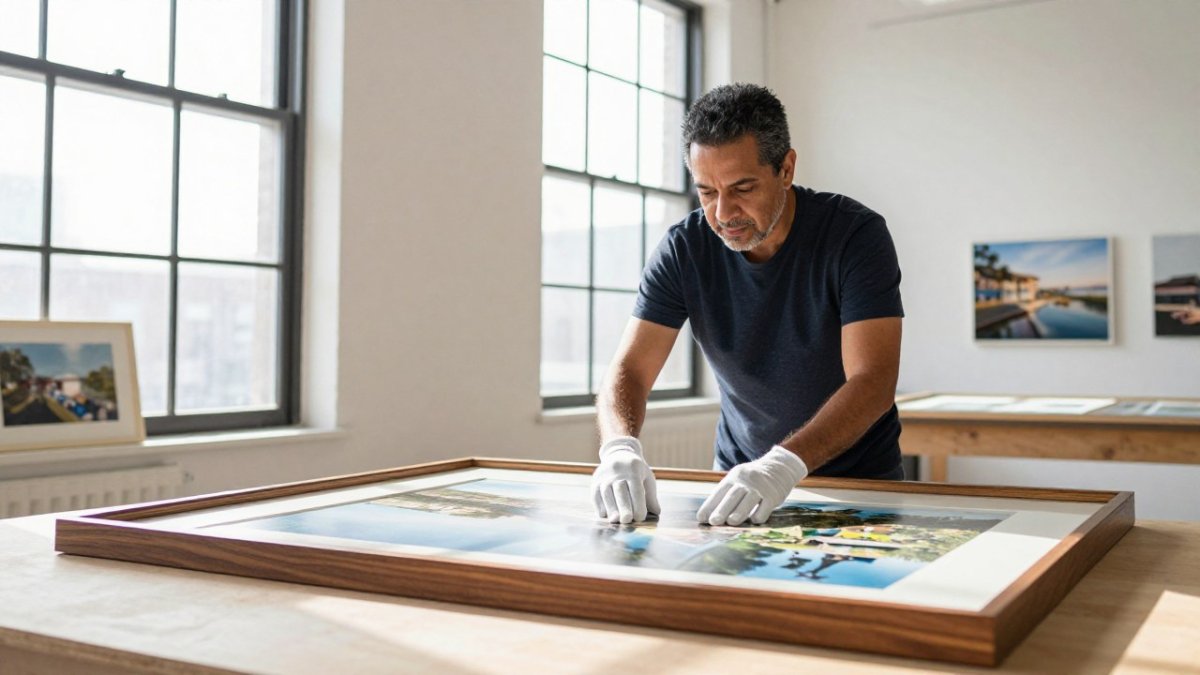
Ask for the full paperwork before you discuss price. A serious seller will send it without hesitation. A hesitant seller is telling you something.
Request these items in writing:
- A certificate of authenticity for artwork, signed and dated
- The original invoice or bill of sale
- Any appraisal letters from prior owners
- Exhibition records or catalog pages listing the piece
- The artist's biography and signature on file
Read each document for consistency. Names, dates, titles, and edition numbers should match across every page. A single mismatch is not proof of fraud, but it deserves a direct question.
Keep everything in one folder, digital or paper. If you ever resell or insure the piece, that folder becomes your best asset.
What a Complete Paper Trail Includes
A complete paper trail tells the story of the artwork from the studio to your wall. Each handoff should have a name, a date, and a document.
Most gaps in a paper trail are innocent. Art changes hands through gifts, estate sales, and moves. The question is whether the seller can explain the gap with something more than a shrug.
Ask for the full paperwork before you discuss price, and check that these items are consistent across every page.
| Document | What to check |
|---|---|
| Certificate of authenticity | Signed and dated by artist or publisher |
| Original invoice or bill of sale | Names, dates, titles match other documents |
| Appraisal letters | From prior owners |
| Exhibition records or catalog pages | Listing the piece |
| Artist's biography and signature on file | On file with seller |
Art Provenance Verification: Tracing the Ownership History
Art provenance verification means confirming who has owned the piece and when. Provenance is the ownership history of an artwork, recorded as a chain from the artist to the current seller. A strong chain has names, dates, and documents at each link.
Start with the most recent owner and work backward. Ask for the purchase record, then the one before it. Three or four clean links usually satisfy a buyer's concerns.
Red Flags in a Provenance Chain
Watch for these warning signs:
- The seller cannot name the prior owner
- Ownership records stop abruptly with no explanation
- Documents use photocopies of photocopies
- The story changes between emails
One gap is common. A pattern of gaps is not.
Reading a Certificate of Authenticity for Artwork
A certificate of authenticity for artwork is a signed statement from the artist or publisher that identifies the piece and confirms its origin. It is not a government document, and no single standard format exists. That makes reading it carefully your job.
Check these fields on any certificate:
- Artist's full name and signature
- Title of the work
- Medium and materials used
- Edition size and the specific number of your piece
- Date of creation or printing
- Name of the printer or publisher, if separate from the artist
A certificate with blank fields or a printed signature deserves scrutiny. Ask the seller to explain how the certificate was produced. Direct-from-artist sellers can usually answer in one sentence.
Fine Art Print Authentication: Signatures, Editions, and Paper
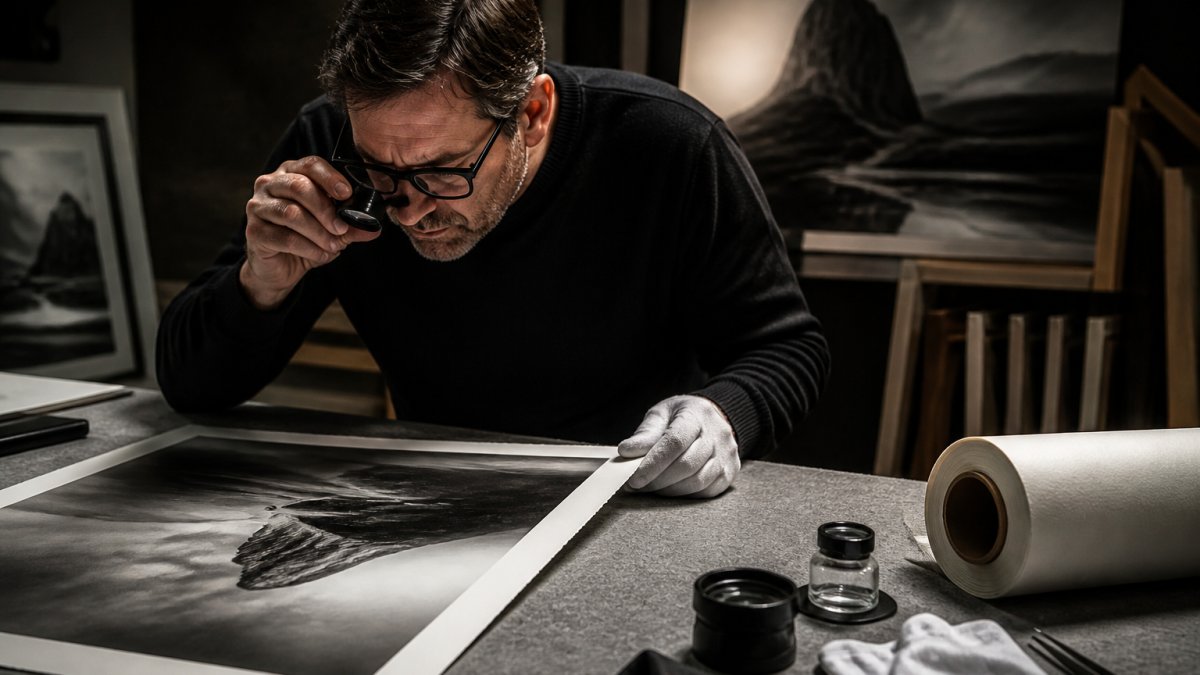
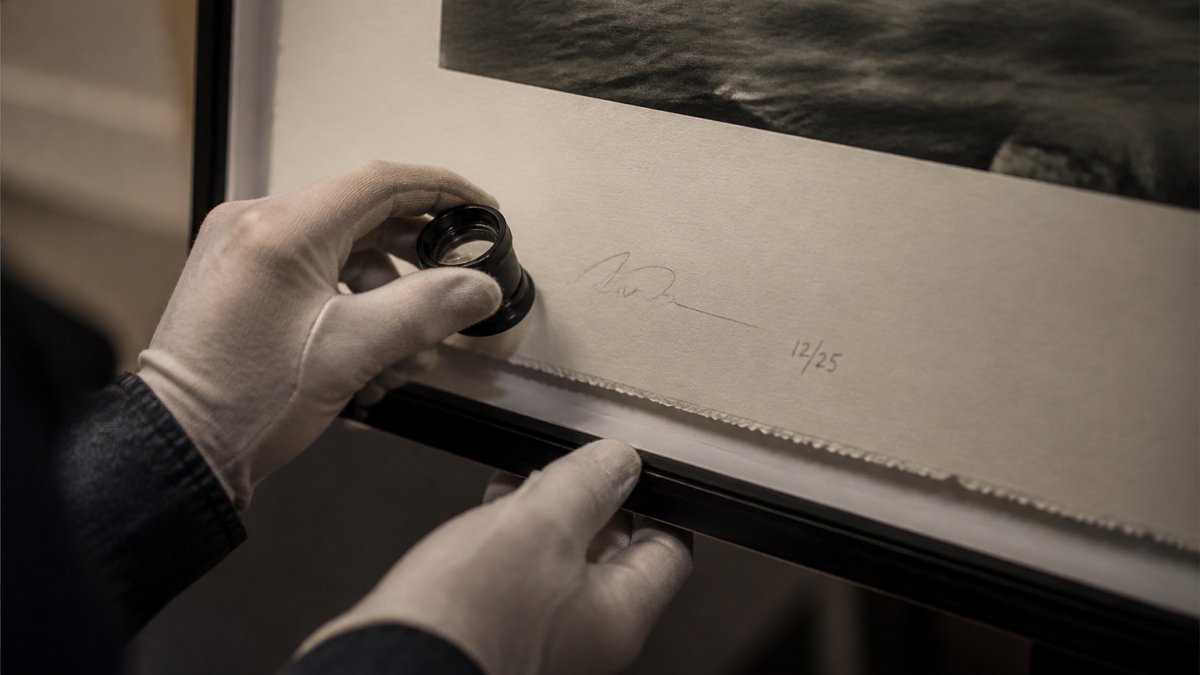
Fine art print authentication comes down to three physical checks: the signature, the edition number, and the paper itself. Do all three in person when you can. When buying online, ask for close-up photos of each.
Checking Signatures and Edition Numbers
Look at how the signature sits on the paper. A pencil signature should have slight texture and sit on the surface. A printed reproduction of a signature often looks flat and too perfect.
Edition numbers usually appear as a fraction, such as 12/50. The bottom number is the total edition size. The top number is your specific print. Ask whether the artist signed and numbered by hand.
Watch out: a low edition number like 1/50 does not automatically mean higher value. What matters is that the number is honest and the edition is closed.
Examining Paper and Print Quality
Archival papers have a visible texture and a substantial feel. Hold the print at an angle under good light. Look for even ink coverage and sharp detail in the shadows.
Ask what materials the print uses. Archival materials are made to resist fading over time. If a seller cannot name the paper and ink, treat that as a gap in the story.
When to Bring In an Art Authentication Expert
Hire an art authentication expert when the stakes are high or the paperwork is thin. An expert is a trained professional who examines materials, signatures, and records to confirm authorship. They are most useful for expensive pieces, older works, and any purchase where the provenance has a gap.
Expect the expert to review documents first, then examine the piece. Ask for a written report you can keep.
For most contemporary photography bought direct from the artist, a full expert review is not necessary. The artist's own records serve that role.
Common Red Flags and Mistakes Buyers Make
The biggest mistake buyers make is skipping the paperwork because they love the image. Emotion is a fine reason to buy art. It is a poor reason to skip a ten-minute document check.
Other common errors:
- Accepting a certificate with no signature
- Paying in full before seeing the edition number
- Trusting a printed signature as a hand signature
- Ignoring a seller who dodges provenance questions
A common mistake is treating an online listing photo as proof of quality. Screens can hide paper texture and ink depth. Ask for detail shots or a video walkthrough.
Buying Direct From the Artist With Confidence
Buying direct from the artist removes most of the middle layers where paperwork gets lost. You can ask the person who made the work about the paper, the ink, and the edition. That conversation is worth more than any single document.
At DE LA Gallery, every piece comes from photographer Jorge de la Torriente, printed and framed in-house. Buying direct from the artist keeps the chain from studio to wall short. Our augmented reality previews let you see works in your own space before you commit.
If you want to see how this works in practice, browse The Gathering, a gallery edition photograph with its edition details listed, or view The Big Swim to compare format and presentation. Both show the kind of information we publish with every piece.
Frequently Asked Questions
How can you tell if a piece of fine art is authentic?
Start with the documentation: a signed certificate of authenticity, a provenance record showing prior owners, and a matching edition number on the print and certificate. Then inspect the physical piece for a consistent signature, quality paper, and clean print detail. For higher-value works, have an independent appraiser or the artist's studio confirm the details. When buying direct from the artist, ask for written confirmation of materials and edition size before you pay.
Does a certificate of authenticity prove that art is genuine?
No. A certificate of authenticity for artwork is a seller's written statement, not a government-issued guarantee, and forged certificates exist. Treat it as one piece of evidence: check that the edition number, title, medium, dimensions, and artist signature match the physical piece, and that the issuer is traceable to the artist or their authorized gallery. A certificate carries real weight when it comes from the artist's own studio alongside provenance records and archival material details.
How do you authenticate a fine art print?
Fine art print authentication combines paperwork and physical inspection. Confirm the print is signed and numbered consistently with the stated edition size, check that the paper has the expected texture and weight, and look for sharp detail without banding or pixelation. Ask what inks and paper were used and whether the materials are archival. If the seller cannot name the printer, paper stock, or edition size, that gap is itself a warning sign.
When should you hire an art authenticator?
Bring in an art authentication expert when the price is significant, the provenance chain has gaps, or the seller cannot document the work's history. Experts also help with older or resold pieces where signatures and editions are harder to confirm. For a new print bought directly from the artist's studio, the artist's own documentation and material records usually provide the assurance you need without a separate appraisal.
Verifying authenticity should feel like a conversation, not an interrogation. We built our gallery around that idea, with direct access to the artist, in-house printing and framing, and archival materials we can name and explain. Get started with DE LA Gallery and buy your next photograph with the full story attached.