 blog
How to Choose Between Andrew Prokos and Jess Lee
Last Updated: November 1, 2026
Quick Summary
Choosing between Andrew Prokos vs Jess Lee comes down to whether you want the built world or the natural one. Prokos works with architectural precision and urban geometry, while Lee works with wildlife and landscape narratives. Match the artist to your space: cool, structured interiors lean Prokos, warm, textured rooms lean Lee.
- Fine art photography is a limited-edition artwork printed to archival standards and sold with the artist's authorization.
- Ask about the print before you ask about the price when evaluating any large-format piece.
- Both Prokos and Lee work within limited editions, so value is tied to scarcity, not just the image.
- The materials, not the image file, largely decide how long a print holds up.
- View the image at the size it will actually hang before you commit to a purchase.
Table of Contents
- Andrew Prokos vs Jess Lee: Two Distinct Visions in Fine Art Photography
- How to Evaluate Fine Art Photography: A Collector's Checklist
- Andrew Prokos: Architectural Precision and Urban Geometry
- Jess Lee: Wildlife and Landscape Storytelling
- Limited-Edition Photography Prints: What Sets These Artists Apart
- Archival Fine Art Photography Prints: Why Materials Matter for Longevity
- Matching the Photographer to Your Space and Collection
- Next Step: Previewing Large-Format Photography in Your Own Space
- Frequently Asked Questions
Andrew Prokos vs Jess Lee: Two Distinct Visions in Fine Art Photography
Choosing between Andrew Prokos vs Jess Lee comes down to one question: do you want the built world or the natural one? Prokos works with architectural precision and urban geometry, while Lee works with wildlife and landscape narratives. This guide from DE LA Gallery breaks down both artists, how to evaluate fine art photography, and how to match a photographer to your space.
The stakes are higher than most buyers expect. Fine art photography is a long-term purchase, and the wrong choice shows up years later as a print that fades or a composition that never quite fit the room. Below, we walk through a collector's checklist, the defining traits of each artist, and the print materials that decide whether a piece lasts decades or a handful of seasons.
But first, here's what most guides get wrong: they compare photographers on style alone. Style matters, but longevity, edition size, and how a piece reads at large scale matter just as much.
How to Evaluate Fine Art Photography: A Collector's Checklist
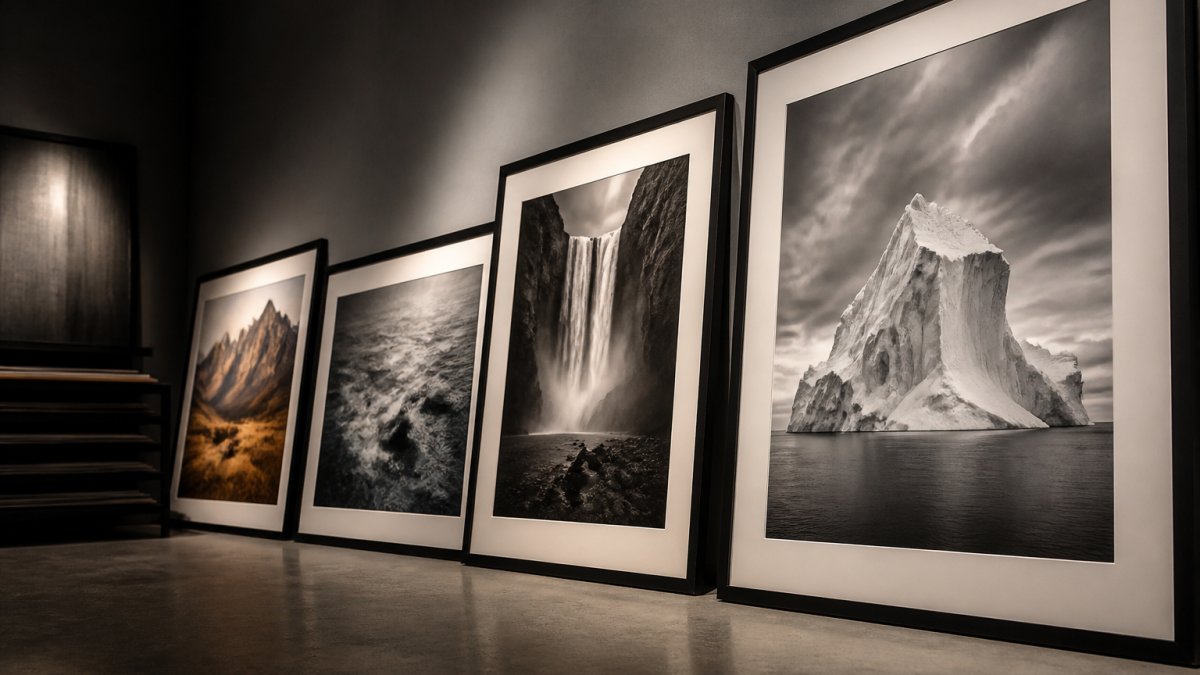
Fine art photography is photography created as a limited-edition artwork, printed to archival standards and sold with the artist's authorization, rather than as unlimited reproduction decor. That definition matters because it separates a collectible print from a poster.
Use this checklist before committing to any large-format piece:
- Edition size stated in writing, a numbered, limited run rather than an open edition
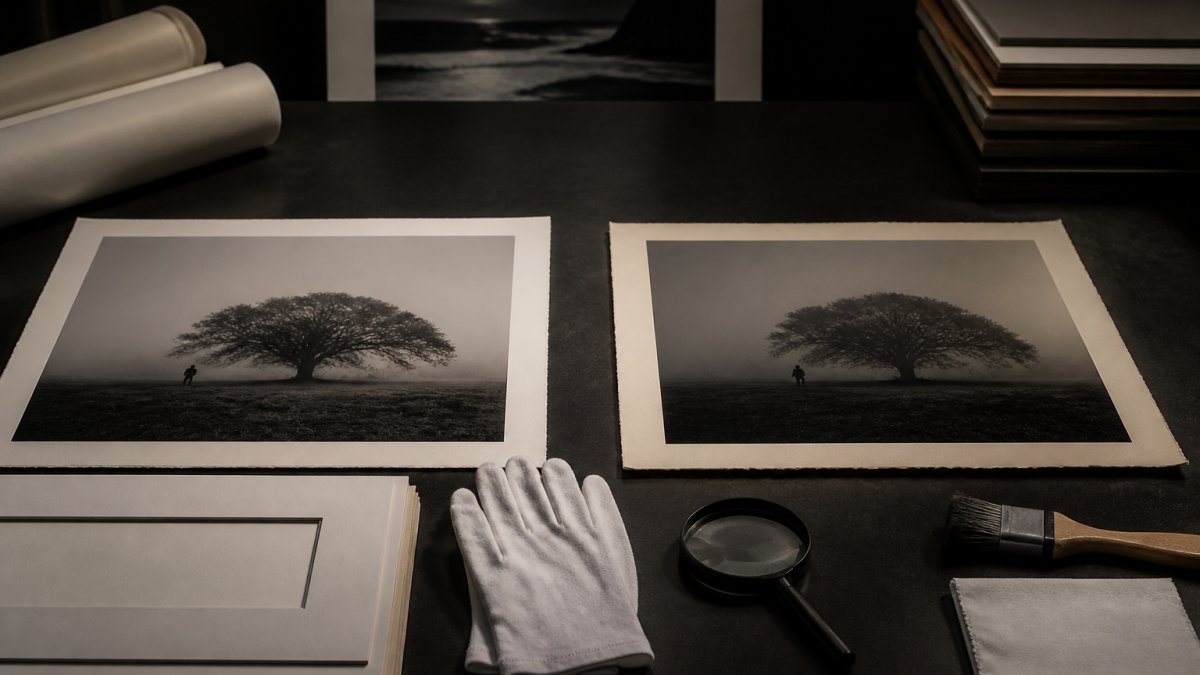
- Print process named, pigment-based inks on cotton rag or fiber paper, not dye on glossy stock
- Framing specified, UV-filtering glazing and acid-free matting
- Certificate of authenticity, signed and numbered, matching the print
- Full-resolution preview, you can see the actual image, not a thumbnail
- Scale in context, you can judge the piece at wall size before purchase
A common mistake is falling for an image online and never asking about the print itself. The Getty Museum's guidance on photographs and conservation is a useful primer on why materials and display conditions shape how long a photograph survives. When you evaluate fine art photography, ask about the print before you ask about the price.
Andrew Prokos: Architectural Precision and Urban Geometry
Prokos builds images around structure. If your space has strong architectural lines of its own, this is the work that answers them.
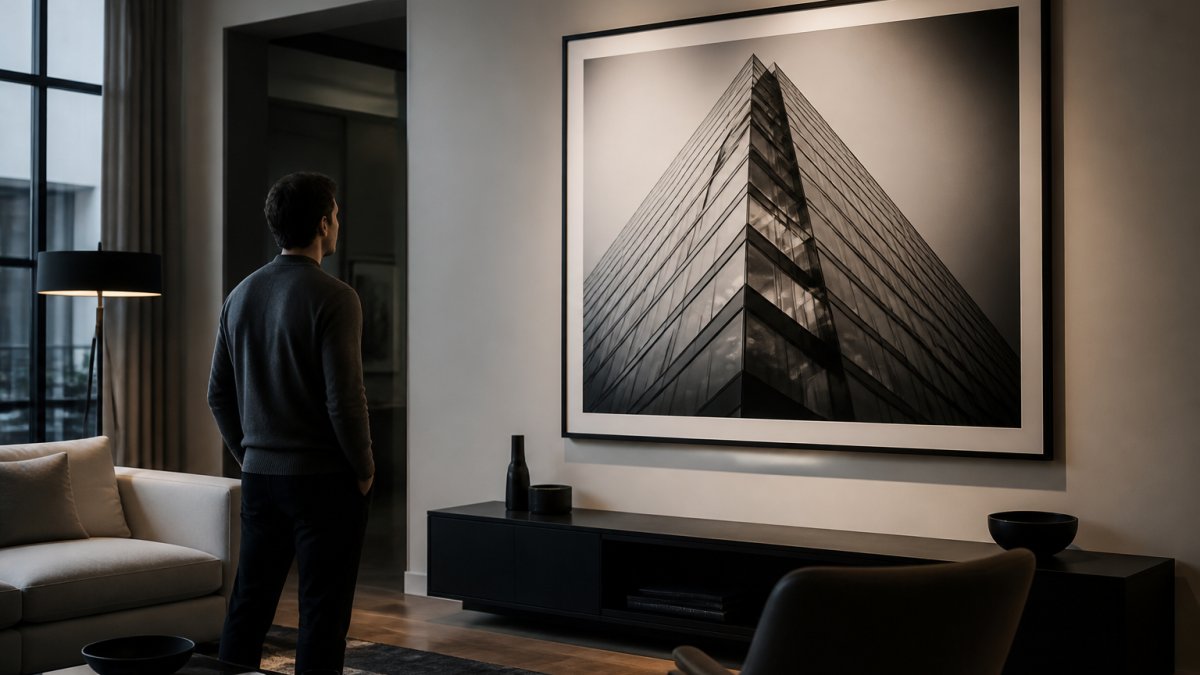
A skyline shot that looks busy on a screen can read as calm and monumental at large sizes, which is where a room-defining piece lives. See how that urban geometry translates into a collectible print with Remnant.
Best for: modern interiors, offices, lofts, and collectors drawn to structure and order. Skip if: you want warmth, wildlife, or a softer, more organic palette.
Jess Lee: Wildlife and Landscape Storytelling
Wildlife and landscape photography can carry narrative: an animal mid-motion, a landscape at a specific hour of light.
Landscape and wildlife prints are the harder category to buy well. Color grading, paper choice, and how a sky renders at large size all change the final result. A nature image that looks vivid on a phone can turn flat on the wall if the print process is wrong. See the storytelling carried through in a landscape print like Protected Areas.
Best for: living rooms, bedrooms, mountain or coastal homes, and collectors who want emotional resonance. Skip if: your space is minimal and cool-toned, where a busy nature scene can feel out of place.
Limited-Edition Photography Prints: What Sets These Artists Apart
Limited-edition photography prints are released in a fixed, numbered run, and that number is the single clearest signal of collectability. Both Prokos and Lee work within limited editions, which means the value of a piece is tied to scarcity, not just to the image.
The practical difference shows up in three places:
| Factor | What to check | Why it matters |
|---|---|---|
| Edition size | Numbered run, stated in writing | Scarcity drives long-term value |
| Signature | Signed by the artist | Confirms authorization |
| Documentation | Certificate of authenticity | Protects resale and insurance |
Edition size and print quality are separate questions. A small edition printed on unstable paper can still fade. If you're weighing whether this level of print is worth the spend, our breakdown of whether luxury large scale wall art is worth the investment walks through the trade-offs honestly.
Archival Fine Art Photography Prints: Why Materials Matter for Longevity
The materials, not the image file, largely decide how long a print holds up. A piece such as Snow Forest shows what that archival standard looks like in a finished print.
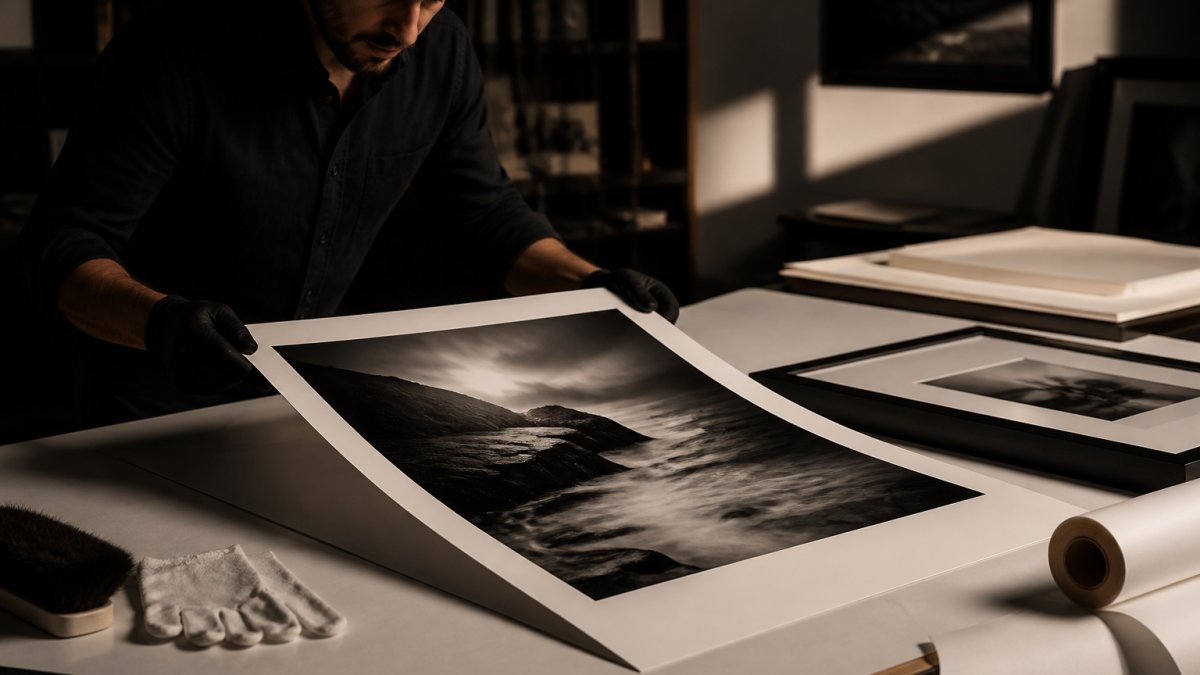
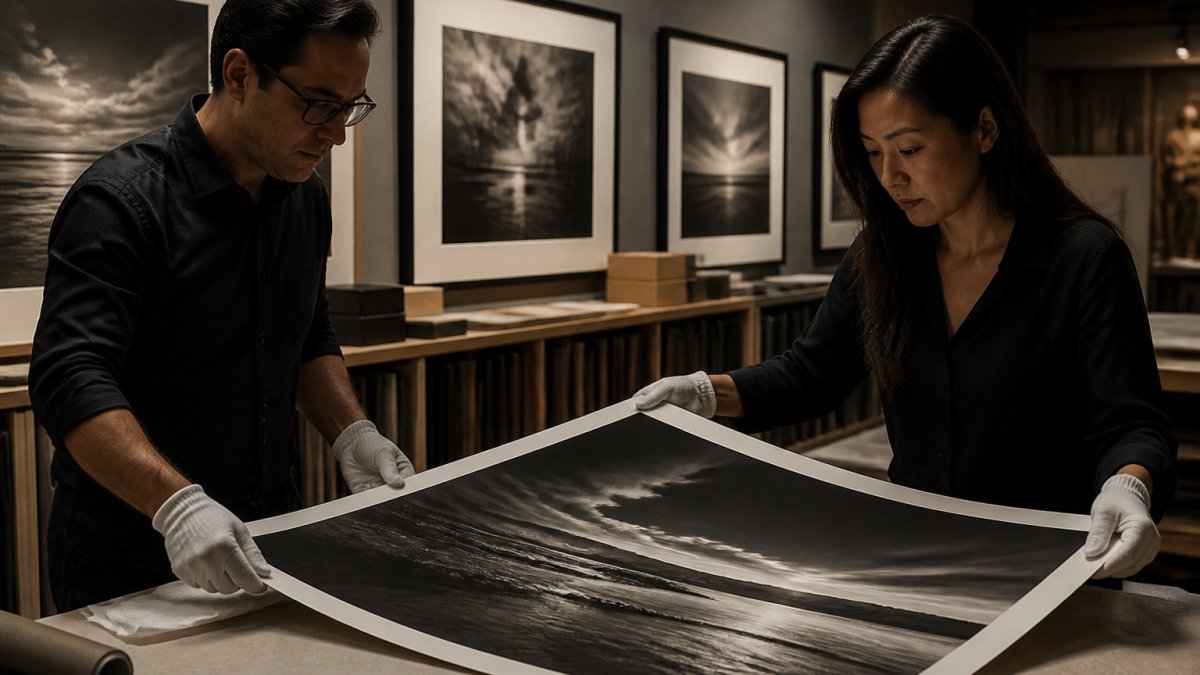
At DE LA Gallery, we print and frame in-house using verified archival materials.
Matching the Photographer to Your Space and Collection
The right choice depends less on the artist than on the wall. Start with the room, then work backward to the photographer.
- Cool, structured interiors with concrete, steel, or glass: lean Prokos.
- Warm, textured rooms with wood, stone, or natural light: lean Lee.
- A collection already heavy in one style: choose the artist who adds contrast, not repetition.
- A single statement wall: prioritize scale and composition over subject matter.
A useful rule: view the image at the size it will actually hang. A piece that feels quiet at thumbnail size can dominate a room, and the reverse is just as common. This is the step most buyers rush, and it's the one that decides whether a piece feels right five years from now.
Next Step: Previewing Large-Format Photography in Your Own Space
The hardest part of buying large-format photography is imagining it on your wall. Our buying process includes augmented reality previews that let you see a piece in your own room before you commit, plus a direct-from-artist experience and secure online checkout.
If you want the full picture of how online acquisition works, read our guide to buying large scale photography online, then explore the collection and preview a piece on your own wall. Get started with DE LA Gallery and choose a print you'll still love a decade from now.
Frequently Asked Questions
Who are Andrew Prokos and Jess Lee?
Andrew Prokos is a fine art photographer whose work includes architectural and urban imagery. Jess Lee is a wildlife and nature photographer. Both offer limited-edition prints, but their subjects and visual styles appeal to different collectors and interior settings.
How do Andrew Prokos and Jess Lee differ as fine art photographers?
Prokos works with buildings and cityscapes, while Lee works with wildlife and natural scenes. If your space calls for a calm, architectural statement, Prokos may fit better; if you want a dramatic nature narrative, Lee's work could be the stronger choice. Consider the room's palette and scale before deciding.
What should I check when buying a limited-edition photography print?
Confirm the edition size, whether the print is signed and numbered, and what paper and inks are used. Ask about the printer and framing materials, and ask the seller what documentation accompanies the piece. These details separate a lasting collectible from a decorative poster, and they directly affect resale value and fade resistance.
How do print size, materials, and framing affect the value of fine art photography?
Larger prints from smaller editions tend to command higher prices because fewer exist. Archival materials and careful framing help resist fading and preserve value. A gallery that handles printing and framing in-house can control these variables, which is worth asking about when you compare photographers or editions.