 blog
blog
Archival vs Non Archival Art Prints: What Lasts
Table of Contents
- Archival vs Non Archival Art Prints: What the Label Actually Means
- What Makes an Art Print Archival
- How Long Do Archival Prints Last? Lifespan and Cost Compared
- Archival Paper for Art Prints: What to Look For
- How to Protect Art Prints from Fading
- How to Assess a Seller's Archival Claims
- Which Prints Belong in Your Space: A Decision Framework
- Frequently Asked Questions
Last Updated: October 14, 2026
Archival vs Non Archival Art Prints: What the Label Actually Means
Walk into any gallery or online art store and you'll see the term archival art prints attached to nearly everything. But the label is largely unregulated, so the gap between an archival print and a non-archival print comes down to materials, not marketing.
An archival print is a print made with acid-free, pH-neutral paper and pigment-based inks designed to resist fading, yellowing, and deterioration for decades under proper display conditions. A non-archival print, sometimes called a standard print or standard poster, uses cheaper paper and dye-based inks that begin breaking down far sooner.
Below is what to check before you spend money on a large-format piece.
What Makes an Art Print Archival
Three things decide whether a print earns the archival label: paper composition, ink type, and how the two are combined during printing. Miss one and lifespan drops sharply.
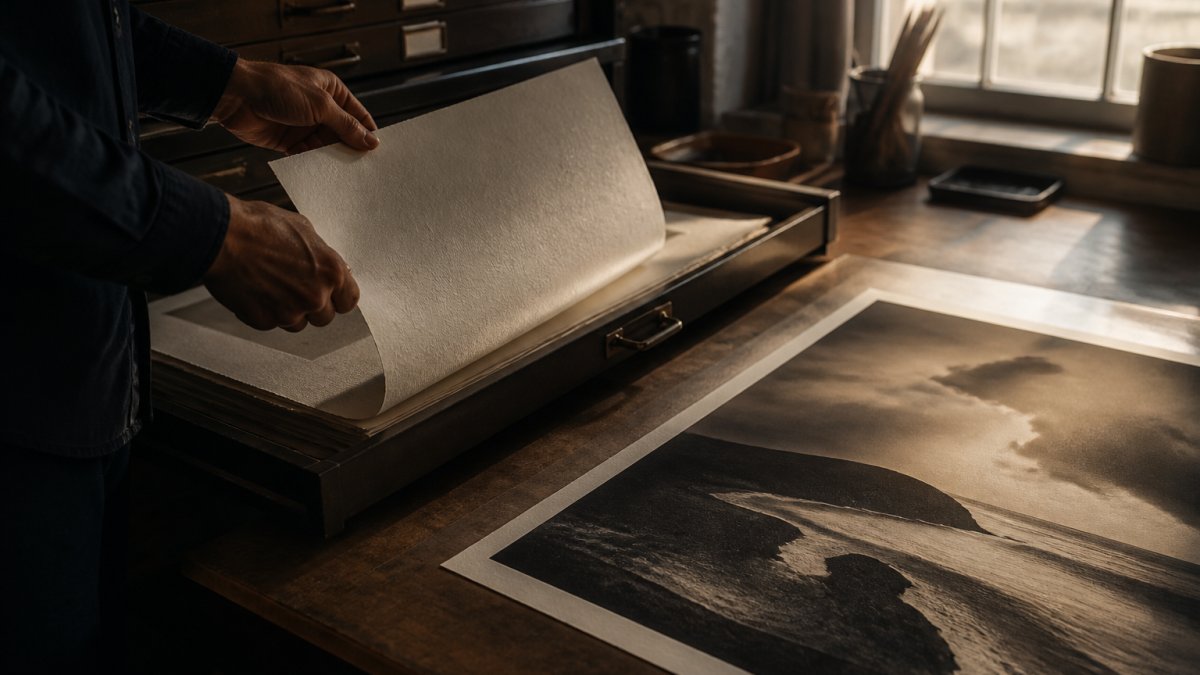
Paper Composition: Acid-Free, pH-Neutral, and Cotton Rag
Acid-free paper is manufactured to neutralize the acids that cause yellowing and embrittlement. Without that treatment, paper slowly eats itself from the inside.
Look for these markers on any fine-art paper:
- pH-neutral or buffered pulp that resists environmental acid exposure
- Cotton rag or alpha-cellulose fiber instead of wood-pulp newsprint stock
- No optical brighteners, which fade unevenly and leave a yellow cast
Cotton rag paper, sometimes sold as fine-art or museum-grade paper, holds pigment on the surface rather than letting it sink in, keeping colors stable for decades.
Pigment Inks vs Dye-Based Inks
Pigment inks suspend color particles in a carrier fluid; dye-based inks dissolve color into liquid. Pigment particles sit on the paper surface and resist UV breakdown, while dye molecules bond into the fiber and fade faster. A giclée print, the fine-art term for a pigment-inkjet print, uses pigment inks for that reason.
How Long Do Archival Prints Last? Lifespan and Cost Compared
"Archival" is not a single number but a set of material properties, and lifespan depends on which properties a print has and how it is displayed. That is why two prints both labeled archival can behave very differently on the same wall.
What the Word "Archival" Does and Does Not Guarantee
The term is not a regulated product standard, and no agency certifies a print as archival. Longevity claims usually trace back to a few testing frameworks:
- Accelerated lightfastness testing, in which a print is exposed to intense light and the fading is extrapolated to normal display conditions. Results are typically reported in years under a stated light level and a stated display assumption.
- ANSI/NISO and ISO light-stability methods, which are the underlying test protocols many labs use to generate those numbers. A seller citing a test method is giving you something checkable; a seller citing only a vibe is not.
- Manufacturer-published ratings, which combine a specific ink set with a specific paper. The rating belongs to that combination, not to the ink or paper alone.
That last point is the one buyers miss. A pigment ink rated for long life on one paper can underperform on a different paper with a different coating. When a seller says "archival inks," ask which paper the rating was measured on.
Lifespan and Cost Side by Side
The table below compares the two categories on the factors that drive how long a print survives and what it costs over time. Lifespan figures are ranges because display conditions move them more than any single material choice.
| Factor | Archival Print | Non-Archival Print |
|---|---|---|
| Paper | Cotton rag or alpha-cellulose, acid-free, pH-neutral, often buffered | Wood-pulp stock, frequently acidic |
| Ink | Pigment-based | Dye-based |
| Typical lifespan, framed behind UV glass in indirect light | Decades | A few years before visible change |
| Typical lifespan, unframed in a bright room | Reduced, but still long | Rapid fading, sometimes within a year or two |
| Fading resistance | High | Low |
| Yellowing risk | Minimal when paper is buffered and mat is acid-free | High, driven by both paper and ink |
| Upfront cost | Higher | Lower |
| Replacement cycle | Rarely replaced | Often replaced |
| Best suited to | Collecting, gifting, long-term display | Temporary decor, seasonal rotation |
The Total-Cost Math Most Buyers Skip
A non-archival print is cheaper once; an archival print is cheaper if you keep the piece long enough. Compare the archival price against the non-archival price multiplied by the number of times you expect to replace it.
The math flips for decor you plan to swap out. If a print is going on a seasonal wall and you expect to change it within a year or two, the archival premium buys longevity you will never use.
What Shortens the Clock
Even a well-made archival print has an expiration date if you ignore its environment. The biggest accelerators:
- Direct sunlight, which delivers far more UV and heat than indirect daylight
- Sustained high humidity, which can promote mold and cockling and can speed acid migration from poor framing materials
- Acidic contact materials, including cheap mat board, cardboard backing, and some tapes, which leach acid into the paper over time
Control those five and you extend any print's life; ignore them and you shorten even a museum-grade piece's.
Archival Paper for Art Prints: What to Look For
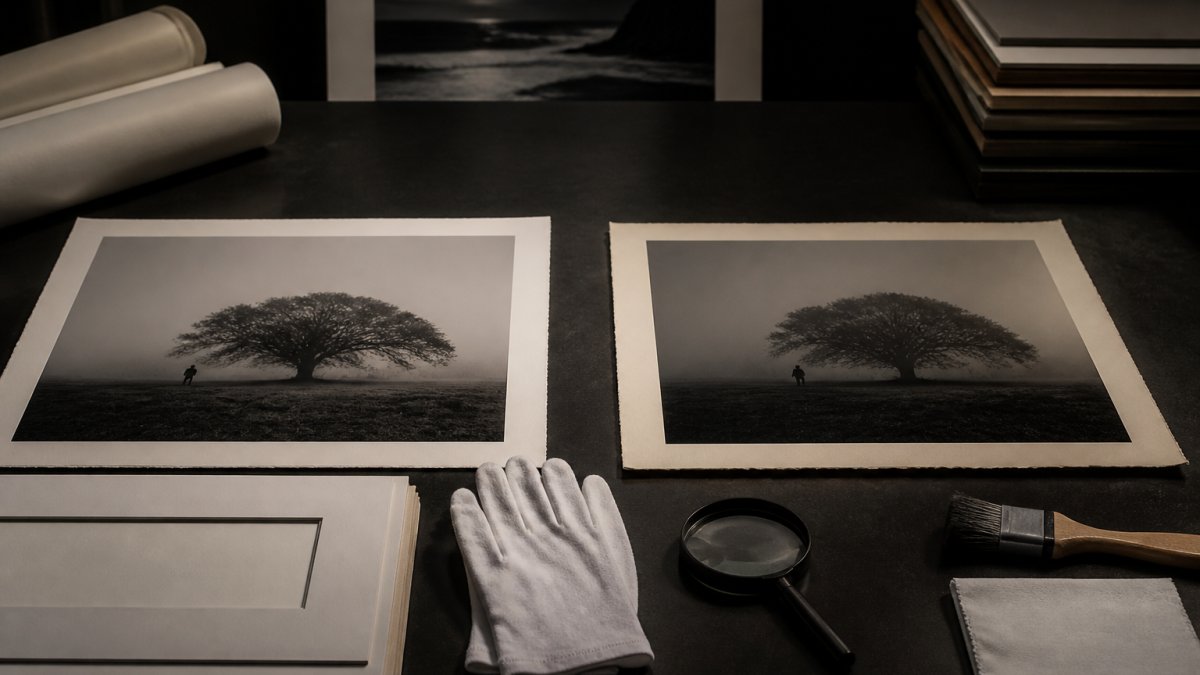
Archival paper for art prints should be acid-free, pH-neutral, and made from cotton rag or alpha-cellulose fiber rather than wood pulp. Anything less shortens the print's life regardless of how good the ink is.
Here is what to inspect before you buy:
- Weight: heavier stock (typically measured in gsm) holds up better to handling and framing
- Surface finish: matte, satin, or textured rag surfaces suit fine-art photography; glossy surfaces can show glare and micro-scratches
- Whiteness: natural white without optical brighteners ages more evenly
How to Protect Art Prints from Fading
Most guides stop at "keep it out of the sun." That is necessary but not sufficient. Fading is a chemical process driven by several environmental factors at once, and understanding the mechanism lets you control the ones that matter most.
Why Prints Fade: The Mechanism
Pigment and dye colorants break down when they absorb enough energy, mostly light, especially ultraviolet and short-wavelength visible portions of the spectrum.
Humidity and heat accelerate the process: moisture mobilizes acids within paper and framing materials, and heat speeds chemical reactions. Airborne pollutants, ozone, nitrogen oxides, fine particulates, settle on the surface and react with inks and coatings, while acidic materials like a cheap mat or cardboard backing drive acid migration into the print.
Light: What to Control and How
- Block UV at the frame. UV-filtering glass or acrylic removes the most damaging wavelengths. It does not stop all fading, since visible light also carries energy, but it slows the process substantially.
- Reduce total exposure. Move the piece off walls that receive direct sun and away from windows even in indirect light. In very bright rooms, rotate prints between display and dark storage.
- Mind the light source. Low-UV LED sources are gentler than incandescent or halogen bulbs.
Humidity, Heat, and Air Quality
- Target stable, moderate humidity. Wide swings stress paper more than a steady level; basements, attics, bathrooms, and laundry rooms are the usual problem spots.
- Avoid heat sources. Do not hang prints above fireplaces, radiators, or heating vents, or store them against exterior walls that swing in temperature.
- Keep the air reasonably clean. Avoid kitchens, where cooking aerosols settle, and open windows in high-pollution areas. A framed print with a sealed backing is better protected than an unframed one.
Handling and Storage
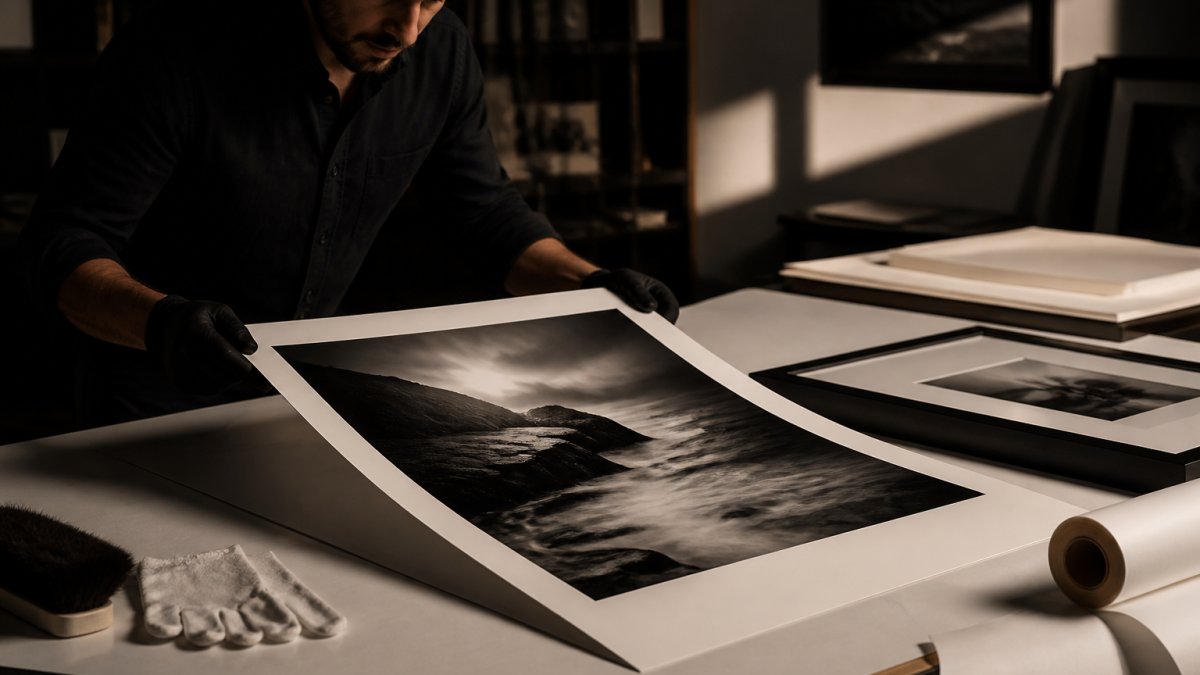
- Handle with clean, dry hands or cotton gloves. Skin oils and salts transfer to paper and can stain over time.
- Support the sheet from below. Never lift a print by one corner; paper creases and tears under its own weight.
- Store flat or fully supported, never rolled tight. Long-term rolling under tension can leave a memory curl that framing may not fully relax.
Framing for Longevity
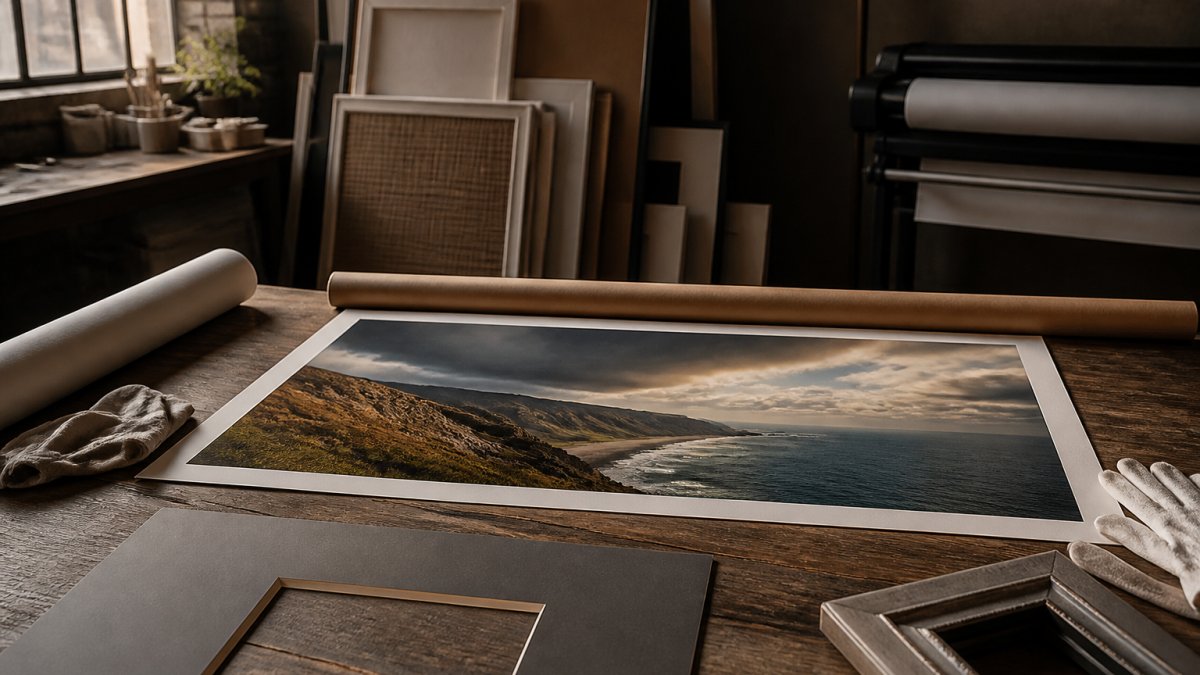
Framing is where most of your protective control lives. The choices that matter:
- UV-filtering glazing to cut the most damaging wavelengths
- Acid-free or buffered mat board so the mat does not leach acid into the print
- A rigid backing board to keep out dust, insects, and pollutants
A Quick Environmental Checklist
- Print is not in direct sun at any time of day
- Frame uses UV-filtering glazing
- Mat and backing are acid-free
Get these right and even a modest print will outlast its expected lifespan. Skip them and the archival label on the paper will not save it.
How to Assess a Seller's Archival Claims
Assessing an archival claim means asking for specifics: paper brand, ink type, and any third-party testing. Vague language like "museum-quality" or "gallery-grade" tells you nothing without those details.
Use this checklist when evaluating any seller:
- Can they name the paper and ink manufacturer?
- Do they describe the paper as acid-free and pH-neutral?
- Do they specify pigment inks rather than dye-based?
A seller who answers all six likely uses verified archival materials; one who dodges is hoping you won't ask. At DE LA Gallery, we print and frame in-house, tracing every material that touches a piece from paper to backing board.
Which Prints Belong in Your Space: A Decision Framework
Match the print type to how long you plan to keep it and where it will hang:
- Statement piece for a living room, kept for years: archival print, framed behind UV glass
- Rotating décor for a seasonal wall: non-archival print is fine if you accept a shorter life
- Gift or short-term display: non-archival works if it stays out of direct light
The rule is simple: the longer you plan to keep it and the more light it will see, the more the archival premium pays off.
Frequently Asked Questions
How long do archival prints last compared to standard prints?
Archival art prints made with pigment inks on acid-free or cotton rag paper are typically rated to resist noticeable fading for decades under normal display conditions, with dark storage extending that considerably. Standard prints on acidic paper with dye-based inks can show fading or yellowing within a few years, especially in bright rooms. Exact lifespan depends on paper, ink, framing, and how much UV exposure the print receives.
What makes an art print archival?
Three things decide it: paper, ink, and process. Archival paper is acid-free and pH-neutral, often cotton rag, so it will not yellow or turn brittle. Archival pigment inks are chemically stable and resist fading. The printing process matters too, since a fine-art print should sit on paper made for pigment inks. If any one of the three is missing, the print's longevity drops.
Are archival art prints worth the extra cost?
If you plan to display the piece for years, the math usually favors archival. A standard poster that fades in three to five years gets replaced, reframed, or thrown out, and those costs add up. An archival print holds its color and value far longer, which matters most for large-format statement pieces and limited editions. Pricing varies by size, framing, and edition, so check DE LA Gallery's site for current figures.
Do archival prints fade in sunlight?
All prints fade eventually with enough UV exposure, including archival ones. The difference is rate. Pigment inks on acid-free paper resist fading far longer than dye-based inks on standard stock, but direct sunlight will still shorten any print's life. Hang away from windows and strong light, or use UV-filtering glass, and the piece will hold its color for decades.
The challenge with any art purchase is trusting that what you hang today will still look right in ten years. DE LA Gallery solves that by printing and framing every piece in-house with verified archival materials, offering a direct-from-artist experience with photographer Jorge de la Torriente, and letting you preview large-format works through augmented reality before you commit. Get started with DE LA Gallery and bring home a museum-quality print built to last.