 listicle
Large Scale Landscape Photography for Home
Table of Contents
- What Makes Large Scale Landscape Photography a Statement Piece
- Panoramic Landscape Photo Prints: Format and Composition
- How to Hang Large Wall Art: Sizing and Placement Strategy
- Archival Fine Art Photography Prints: Longevity and Quality
- Print Materials, Finishes, and Framing Options
- Subject Matter: Mountain, Forest, and Waterway Landscapes
- Room-by-Room Display Ideas and Color Coordination
- Investing in Museum-Quality Fine Art Photography
- Frequently Asked Questions
Last Updated: October 11, 2026
What Makes Large Scale Landscape Photography a Statement Piece
A single large-scale landscape photograph transforms an entire room by creating an emotional anchor and commanding attention without requiring multiple pieces. At DE LA Gallery, we understand that large scale landscape photography works as statement art because of its immersive, transformative power.
A true statement piece combines image resolution, print quality, and emotional resonance. A landscape photograph at 40 inches or larger must hold fine detail across the entire composition, visible texture in rock formations, individual trees, and layered mist when viewed from six feet away. This requires high-resolution source images and archival-quality printing that preserves tonal depth and color accuracy.
Your eye naturally gravitates to the biggest visual element in a room. A 60-inch panoramic landscape photograph becomes the focal point that anchors furniture placement, color schemes, and aesthetic direction. Unlike smaller prints that blend into decor, large scale landscape photography demands to be the hero of the wall.
Panoramic Landscape Photo Prints: Format and Composition
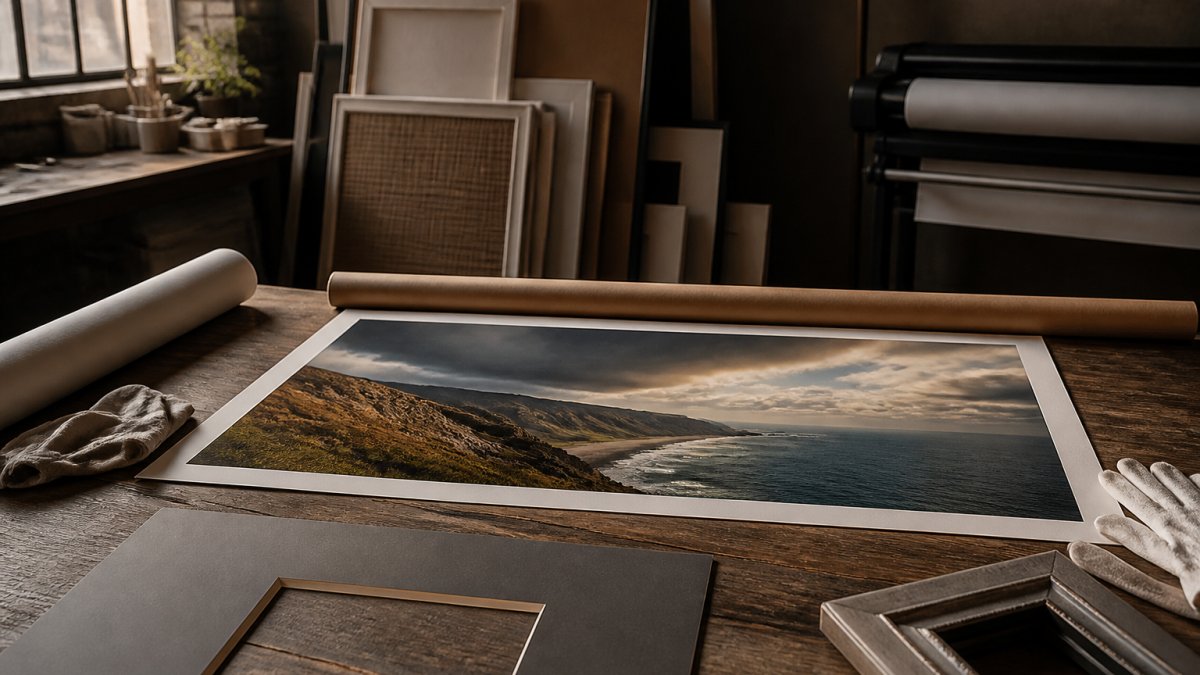
Panoramic landscape photo prints stretch your field of view horizontally, mimicking how the human eye naturally scans a landscape. A 3:1 or 4:1 aspect ratio works exceptionally well for mountain ranges, sweeping valleys, and waterscapes, creating a cinematic quality that standard rectangular prints cannot match.
Composition matters more in panoramic formats. Photographers must thoughtfully position foreground, midground, and background elements across the wider canvas so each zone earns its visual weight.
When selecting a panoramic print, assess whether the composition feels intentional. The best panoramic landscapes use the extra width to reveal environmental context, a single waterfall becomes a waterfall nested within a canyon system.
How to Hang Large Wall Art: Sizing and Placement Strategy
Getting scale and placement right separates professional installations from amateur attempts. Common mistakes include hanging art too high, too small, or without considering how resolution holds up at viewing distance.
Matching Print Dimensions to Your Wall
Your print should occupy 50-75% of the wall space above your primary furniture piece. For an 84-inch sofa, a 48-60 inch print creates visual balance. If your wall is taller than wide, a vertical composition works better than horizontal.
Measure your wall accurately before ordering, accounting for the frame or mounting system, which adds 1-2 inches on each side. Confirm the total width fits with 6-12 inches of clearance on either side.
Height and Viewing Distance
The center of your artwork should sit at eye level, roughly 57-60 inches from the floor (standard gallery height). If hanging above a sofa, measure from the floor to the sofa back, then add 12-18 inches. This ensures visibility without neck strain and creates balanced visual relationship with furniture.
Viewing distance is critical to sizing. At 8 feet, a 36-inch print feels too small. At 12 feet, 48-60 inches is appropriate. At 15+ feet, consider 60-72 inches or larger. The farther the viewing distance, the larger the print must be to command attention.
Understanding Resolution and Print Quality at Large Sizes
Image resolution determines whether fine detail remains sharp at large sizes. Most professional landscape photographers capture at 24-45 megapixels (roughly 4000-8000 pixels on the long edge), sufficient for prints up to 60 inches when viewed from typical living room distances (8-12 feet).
Resolution alone does not guarantee quality.
When evaluating a landscape photograph for large-format printing, ensure sharpness across the entire composition. Strong tonal separation (rich blacks, bright highlights, clear midtones) remains visible at distance.
Practical Sizing Examples
Living Room (8-foot distance): 48-54 inch horizontal landscape; 24+ megapixel at 300 ppi shows fine detail. Master Bedroom (6-foot distance): 40-48 inch print; choose 24+ megapixel with excellent sharpness. Home Office (12-foot distance): 54-72 inch panoramic; 16-20 megapixel at 150-200 ppi works well. Hallway/Entryway (10-15 foot distance): 60-72 inch vertical or panoramic; 12-16 megapixel sufficient; prioritize composition and emotional impact.
Installation and Wall Preparation
Large prints require secure mounting with anchors rated for combined weight. For prints over 60 inches, consider professional installation to ensure level hanging and proper weight distribution.
Archival Fine Art Photography Prints: Longevity and Quality
Archival fine art photography prints last 100+ years without significant fading. True archival prints use pigment-based inks (not dye-based) combined with acid-free, lignin-free paper or alternative substrates. Pigment inks resist light exposure better than dyes, and the substrate must be pH-neutral and chlorine-free.
DE LA Gallery uses verified archival materials and in-house printing by Jeffrey Rodriguez to ensure that your large scale landscape photography investment holds its value and visual impact for decades. When you invest in museum-quality fine art photography, you are purchasing longevity as much as aesthetics.
Print Materials, Finishes, and Framing Options
The substrate you choose affects not only how the photograph looks but also how it performs in your home environment, how much it weighs, how it ages, and what installation demands it places on your walls. Understanding these trade-offs helps you match the material to your room conditions and lifestyle.
Canvas Prints offer a traditional, painterly aesthetic with reduced glare and intimate viewing. Lightweight (2-4 pounds for 48-inch), canvas uses standard wall anchors. Downsides: porous surface absorbs dust and odors; stretches with humidity changes. Cost is 20-30% less than metal or acrylic.
Metal Prints create a sleek, contemporary look with enhanced color saturation and luminosity. Extremely durable and resistant to moisture and UV fading, ideal for bathrooms and kitchens. Downsides: heavier (4-8 pounds), requires secure anchors; shows fingerprints and dust; can create glare. Cost is 30-50% higher than canvas.
Acrylic Prints offer exceptional clarity and depth with a floating effect. Colors are vibrant and UV-protected. Lightweight (2-3 pounds) and durable. Downsides: prone to fingerprints and dust; can develop micro-scratches; may yellow with intense sunlight. Cost is 40-60% more than canvas.
Paper Prints deliver the most authentic photographic experience with subtle tonal gradations. Lightweight and easy to frame. Significant downside: vulnerable to moisture, dust, and UV fading; requires UV-protective glass and acid-free matting for longevity. Most expensive option at large sizes; best for climate-controlled living rooms and offices.
Finish Options and Their Impact Finish, matte, satin, or glossy, determines how light reflects off the print surface and affects perceived color and detail.
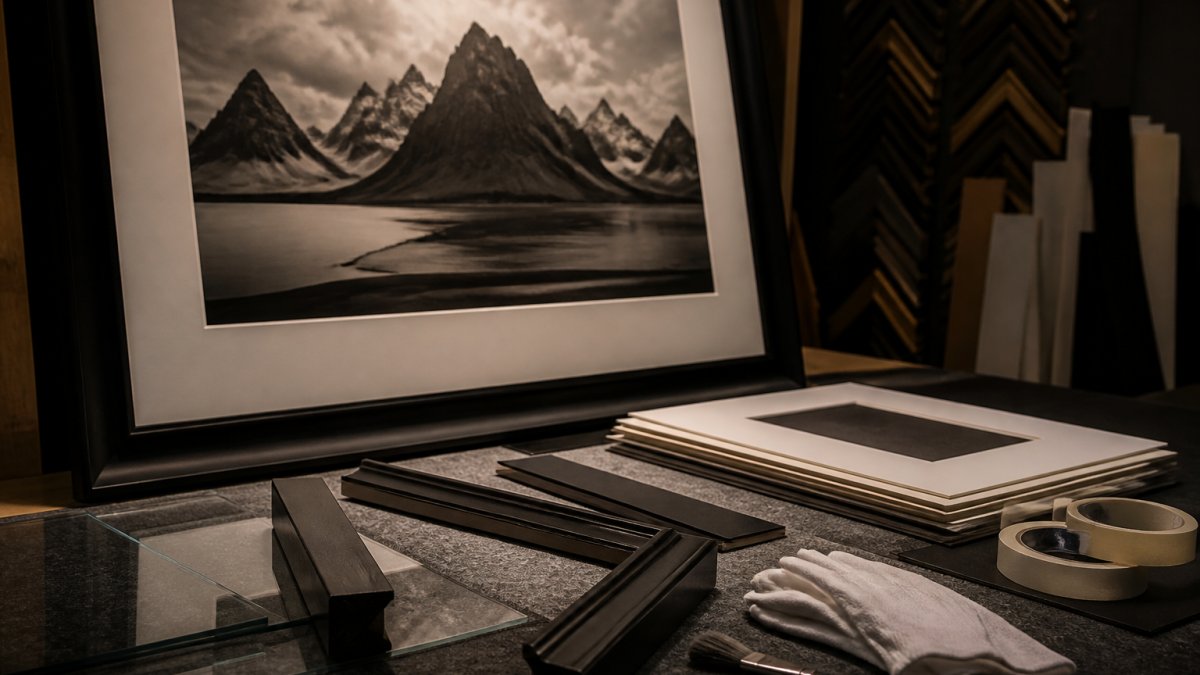
Framing Considerations A simple black or natural wood frame suits contemporary spaces; floating frames add visual lightness for metal and acrylic. Canvas, metal, and acrylic prints can display unframed.
Subject Matter: Mountain, Forest, and Waterway Landscapes
Mountain landscapes command attention through scale and drama, creating grandeur in minimalist spaces. Forest landscapes offer intimacy and depth, working well in bedrooms and reading spaces. Waterway landscapes (rivers, waterfalls, canyons, coastal scenes) introduce movement and energy, ideal for living areas and offices.
Room-by-Room Display Ideas and Color Coordination
In a living room, a large panoramic landscape above the sofa creates an immediate focal point. Choose a photograph with colors that complement your existing furnishings, warm earth tones for traditional spaces, cool blues and grays for contemporary interiors. A mountain landscape with warm sunset light works beautifully above a neutral sofa with warm-toned throw pillows.
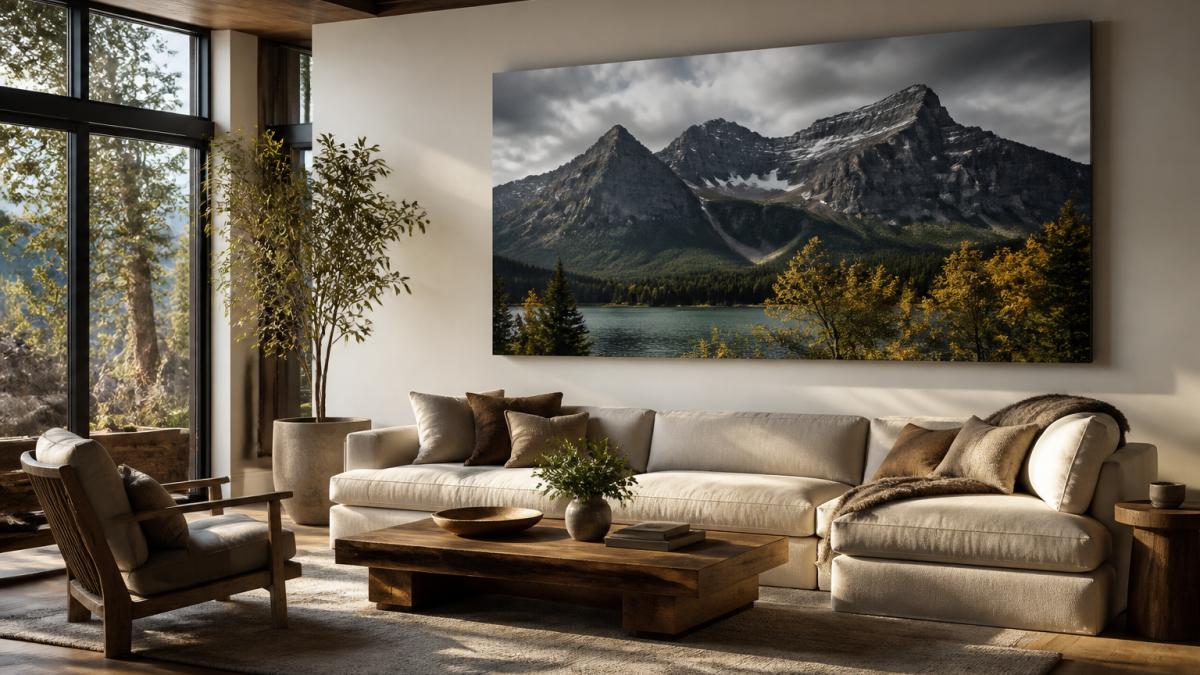
Bedrooms benefit from calming landscape imagery. A misty forest or a quiet lake at sunrise creates a restful visual environment. Position the print at eye level from your bed so it is the last thing you see before sleep. Avoid high-contrast dramatic images in bedrooms, softer, more serene landscapes promote relaxation.
Home offices and studies work well with landscapes that inspire focus without distraction. A forest or mountain photograph with strong compositional depth draws the eye inward and encourages concentration. Color coordination matters here too: cool tones (blues, greens, grays) are associated with calm focus, while warm tones can feel energizing.
Hallways and entryways are opportunities for dramatic statement pieces. A large-format panoramic landscape in an entryway sets the tone as visitors arrive. Hallways benefit from vertical landscape compositions that guide the eye along the corridor.
Investing in Museum-Quality Fine Art Photography
Purchasing large scale landscape photography at museum quality is an investment in both aesthetics and lasting value. Unlike mass-produced prints that fade and deteriorate, archival fine art photography retains its visual integrity and can appreciate in value, particularly limited-edition works by established photographers.
When you buy directly from the artist or a dedicated gallery like DE LA Gallery, you are acquiring a piece with provenance and authenticity. You receive documentation of the archival materials used, the print edition number (if limited), and the artist's statement about the work. This documentation matters if you ever decide to sell or insure the piece.
The total investment reflects the quality of every component: the photographer's vision and technical skill, the resolution and color accuracy of the capture, the precision of the printing process, and the durability of the materials.
Consider your space, your color palette, and the emotional response you want from the artwork. The best large scale landscape photography for your home is one that speaks to you personally and fits naturally into your interior design. Take time to evaluate how a print looks in your actual space before committing, DE LA Gallery's augmented reality preview feature lets you visualize large-format prints in your room before ordering.
Choosing the right large scale landscape photography means balancing scale, quality, and personal connection. At DE LA Gallery, we offer direct-from-artist access to museum-quality fine art photography by Jorge de la Torriente, with in-house printing and expert framing by Jeffrey Rodriguez using verified archival materials. Our augmented reality previews let you see exactly how a large-format landscape print will look in your space. Learn more about archival printing standards for fine art photography to understand the longevity guarantees behind museum-quality work. Visit DE LA Gallery online or at our Key West gallery to explore limited-edition landscape prints designed to become the centerpiece of your home.
| Print Size | Best Wall Width | Viewing Distance | Room Type |
|---|---|---|---|
| 24-36 inches | 4-6 feet | 6-8 feet | Small bedrooms, hallways |
| 40-48 inches | 6-8 feet | 8-12 feet | Living rooms, bedrooms |
| 54-72 inches | 8-12 feet | 12-15 feet | Large living rooms, offices |
| Panoramic (any size) | 6-12+ feet | 8-15 feet | Statement walls, entryways |
Frequently Asked Questions
What size large scale landscape photography works best above a sofa?
A landscape photograph above a sofa should span 75 percent of the sofa's width. For an 8-foot sofa, aim for a 6-foot-wide print. This proportional relationship creates visual balance without overwhelming the seating area. Mount the center of the artwork at eye level when seated, typically 57 to 60 inches from the floor.
How do you know if archival fine art photography prints will last without fading?
Archival-grade prints use acid-free paper, fade-resistant pigments, and UV-protective coatings. Verify that your supplier uses materials certified for longevity. Ask for documentation of the specific materials and their archival ratings before purchase.
What is the difference between panoramic landscape photo prints and standard formats?
Panoramic prints have an extended horizontal aspect ratio, typically 3:1 or wider, capturing expansive vistas that draw the viewer's eye across the entire composition. Standard landscape formats are closer to 2:3 or 16:10. Panoramics work best on long walls or above furniture, while standard formats suit varied wall sizes and create intimate focal points.
Should large landscape photography be framed, or can it stand alone?
Framing protects archival fine art photography prints from dust, moisture, and UV damage. Museum-quality framing with UV-filtering glass and acid-free materials extends the life of your investment. Unframed prints on canvas or metal can work in modern interiors but lack the protective benefits of proper framing.
How can augmented reality help you preview large scale landscape photography in your space before buying?
Augmented reality tools let you visualize how a print will look on your actual wall using your smartphone camera. You can see the artwork at true scale, assess how it interacts with your lighting and furniture, and adjust placement before committing to purchase. This reduces the risk of ordering a piece that doesn't suit your space.