 comparison
LUMAS Alternative for Fine Art Photography: 2026 Guide
Table of Contents
- What Buyers Actually Compare When Leaving LUMAS
- Alternative Fine Art Photography Sources Compared
- Where to Buy Landscape Photography Prints Without the Guesswork
- Limited Edition Photography Prints: What the Numbers Actually Mean
- Archival Fine Art Photo Prints: How to Verify Longevity Claims
- Fine Art Photography Framing and Mounting Options That Last
- Which LUMAS Alternative Fits Your Budget and Space
- Frequently Asked Questions
Last Updated: October 12, 2026
What Buyers Actually Compare When Leaving LUMAS
The LUMAS alternative conversation starts with a simple shift. Buying from a large gallery network means paying for curation, marketing, and a middle layer between you and the artist.
At DE LA Gallery, the deciding factor is rarely price. It's control: over format, framing, and who actually prints the piece.
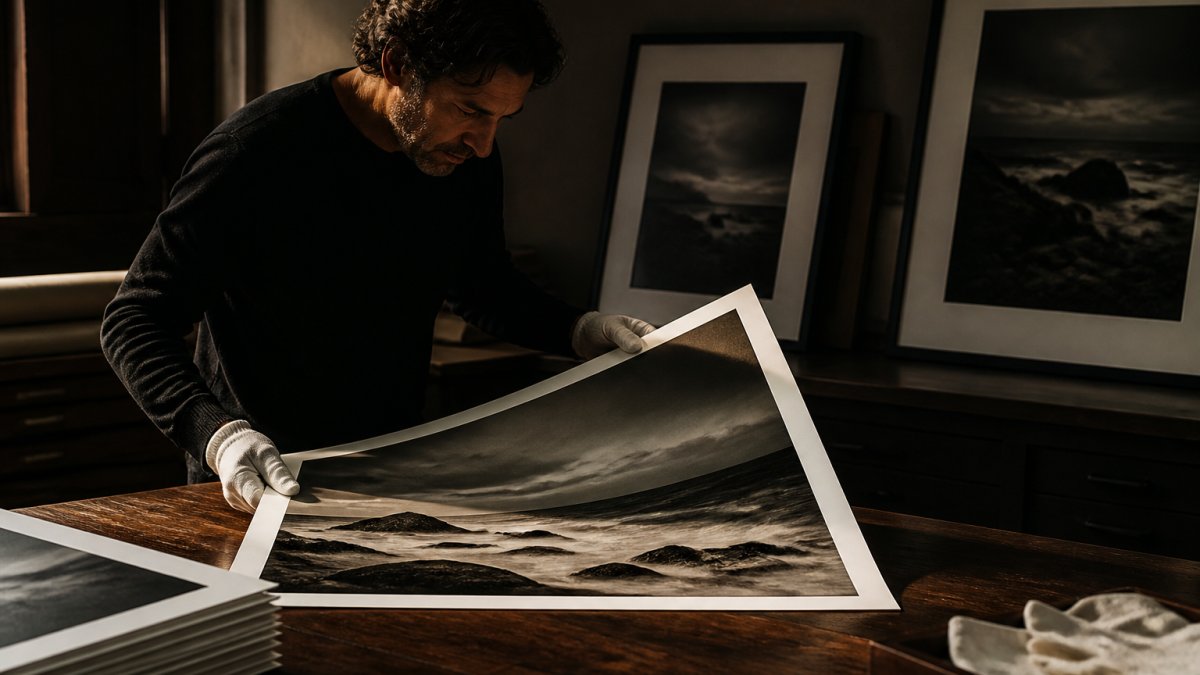
Fine art photography is work produced and printed to gallery standards, in controlled editions, on materials chosen for long-term stability. That's what separates a print you hang for a decade from one that fades in three years.
Editions, Materials, and Who You're Really Paying
Three variables decide what a photograph is actually worth to you.
- Edition size. A print from an edition of 10 is scarcer than one from an open run. Scarcity affects resale, not just bragging rights.
- Print method. Giclée printing on fine art paper produces different surface texture and color reproduction than standard lab output.
- Who prints it. In-house printing means the artist or their studio controls image quality and color reproduction end to end.
Alternative Fine Art Photography Sources Compared
LUMAS built its model on a large gallery network: curated editions, standardized sizes, in-house framing, and a price bundling curation and marketing into the print.
Artist-direct galleries and studios. You buy from the photographer or their studio.
Photography marketplaces and print-on-demand retailers. These platforms host thousands of images and let you pick size and substrate at checkout.
Institutional archives and agencies. Organizations like Magnum Photos function primarily as archives and licensing houses for documentary and photojournalistic work.
What to Compare Before You Buy
Four specifications determine whether two prints at the same price are actually equivalent:
- Edition size and documentation. A numbered edition with a signed certificate is a different asset than an open run. Ask for the total edition size in writing.
- Ink and paper. Pigment (giclée) printing on acid-free, lignin-free paper is the baseline for longevity.
- Mounting and glazing. Face-mounted acrylic, stretched canvas, and matted-under-glass paper each protect the image differently and carry different weights and hanging requirements.
- Total delivered cost. Print price plus framing plus shipping plus any return shipping. A lower sticker price with mandatory framing and freight can land above a higher-priced, all-inclusive piece.
Comparison Table: Model, Editions, Pricing, and Buyer Fit
| Source type | Typical edition | Printing control | Pricing visibility | Best for |
|---|---|---|---|---|
| Artist-direct studio | Limited, often 5-25 | Artist/studio, in-house | Listed on site | Collectors who want provenance and custom formats |
| Photography marketplace | Often open or large runs | Third-party lab | Listed per size | Budget buyers who want wide selection |
| Institutional archive/agency | Varies; often licensed | Authorized printer | Often on request | Research and documentary work |
| Gallery network | Limited but larger runs | Network-controlled | Listed in showroom and online | Buyers who want to see the piece in person |
Where to Buy Landscape Photography Prints Without the Guesswork
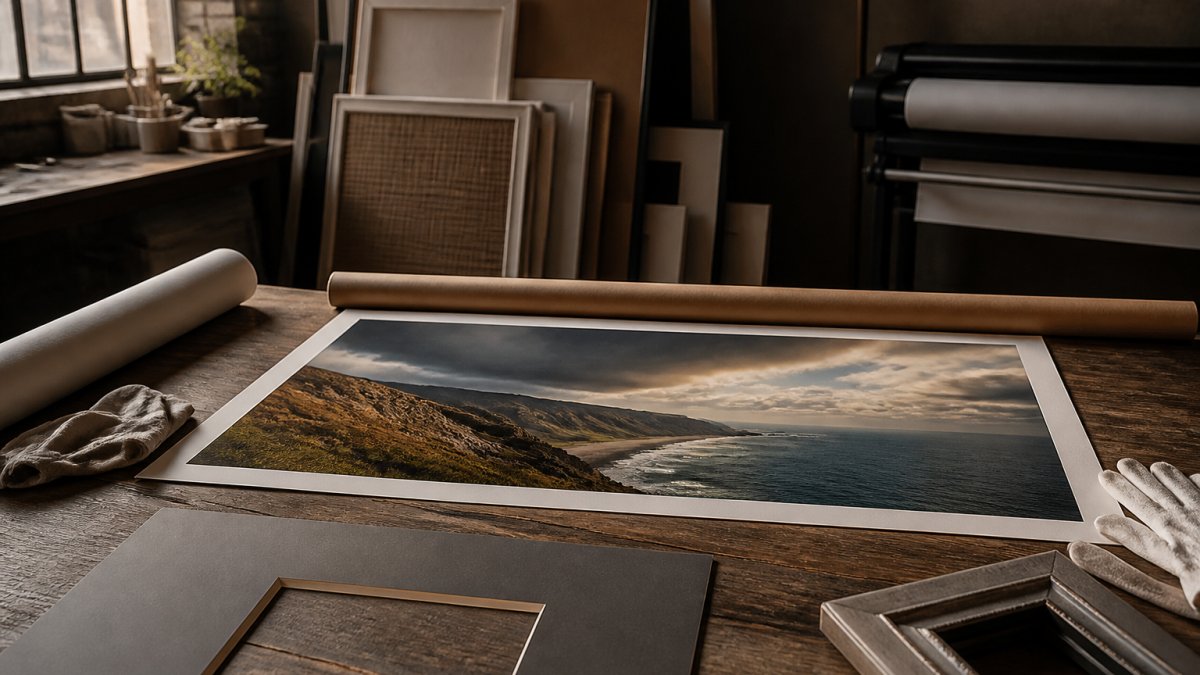
To buy landscape photography prints with confidence, look for a source that publishes its print method, paper stock, and edition size before checkout.
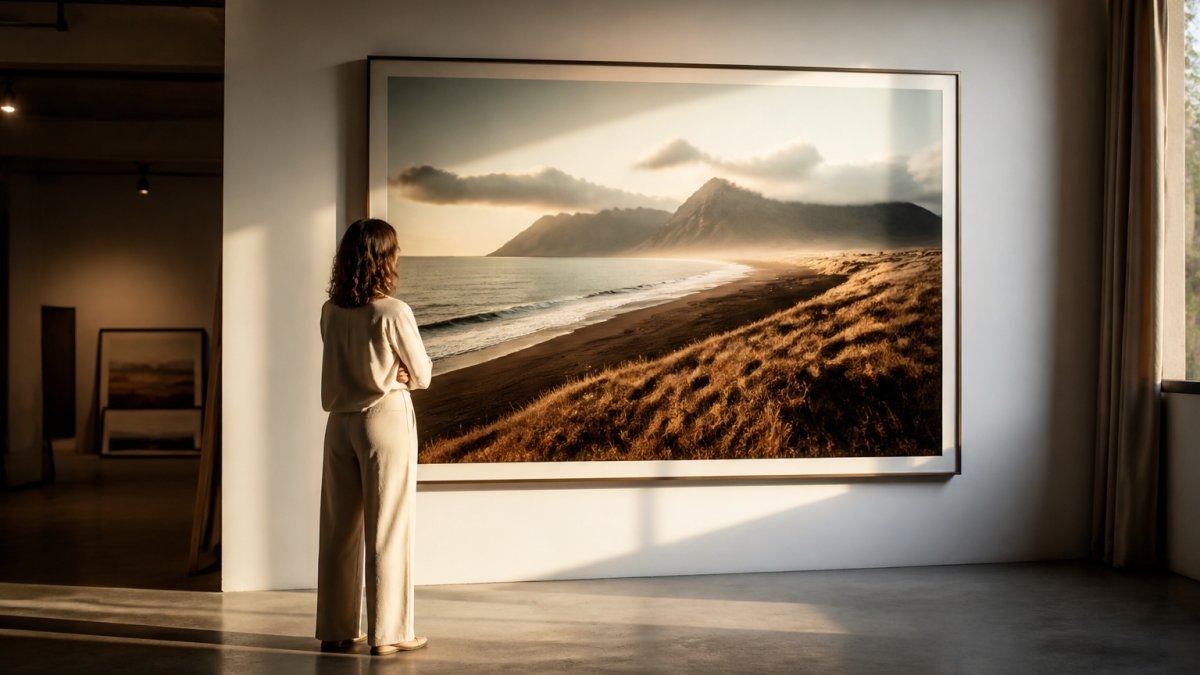
The guesswork shows up in three places: color, scale, and materials.
Industrial photography and landscape photography hold up best in large formats because the detail rewards the size.
What most guides miss: print method matters more than paper brand. A well-executed giclée print on mid-range fine art paper outlasts a poorly printed piece on premium stock every time.
Limited Edition Photography Prints: What the Numbers Actually Mean
Limited edition photography prints are released in a fixed, numbered run, after which no further prints of that image are made.
That's the definition. The practical question is what the number does to value.
A smaller edition generally supports stronger resale, but only if the work is collectible. An edition of 5 by an unknown photographer isn't automatically more valuable than an edition of 50 by a recognized one.
So when comparing sources, ask one question: does the seller state the edition size clearly, in writing, before purchase? If not, you're buying a reproduction, not a collectible.
Archival Fine Art Photo Prints: How to Verify Longevity Claims
Archival fine art photo prints use pigment-based inks on acid-free, lignin-free papers or substrates rated for long-term display. "Archival" is a claim about materials, not a feeling, and it should be verifiable.
The problem is that "archival" gets used loosely. Here's how to check it honestly.
- Ask which ink type was used. Pigment inks are the standard for longevity; dye inks fade faster.
- Ask for the paper or canvas specification, including whether it's acid-free.
- Ask about the framing materials. Acidic matting and backing can damage a print even when the print itself is archival.
- Ask whether the seller provides a guarantee or written specification. A vague verbal claim isn't verification.
The Image Permanence Institute's guidance on print stability publishes research on how inks, papers, and storage conditions affect print life, and it's the kind of source worth checking before you accept an archival claim at face value.
No print lasts forever. What archival materials buy you is decades of display without visible fading, provided the piece isn't hung in direct sunlight. That's worth asking about directly.
Fine Art Photography Framing and Mounting Options That Last
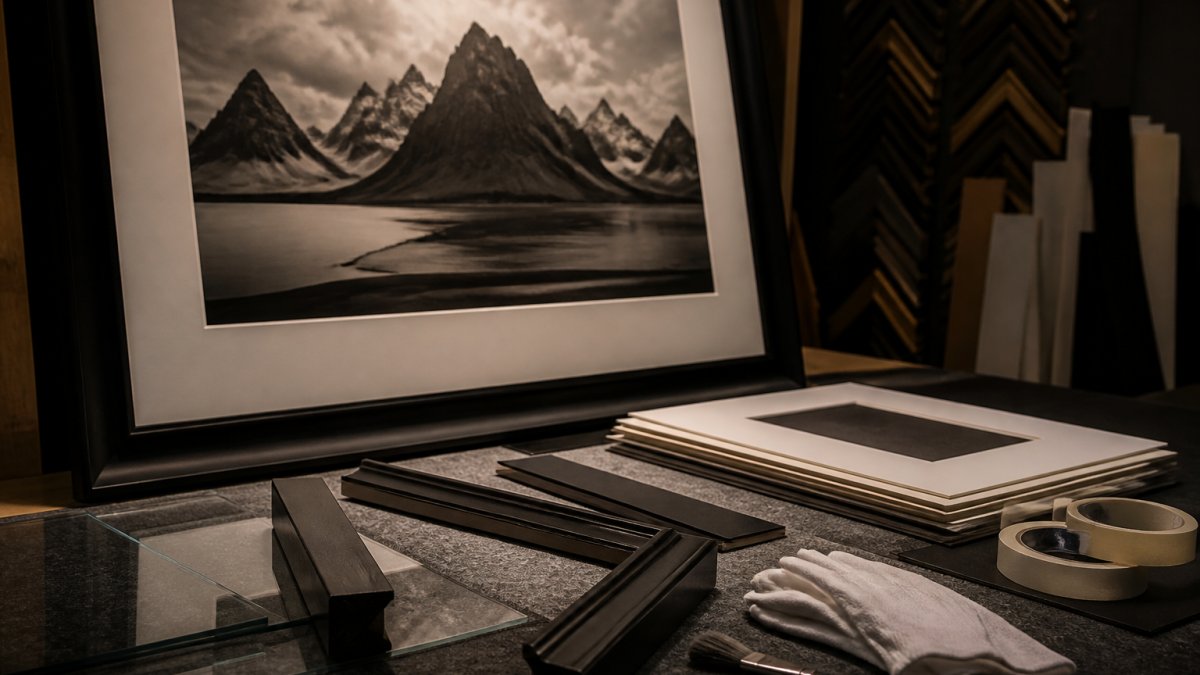
Fine art photography framing choices determine how the piece looks and how long it survives. Four common approaches each suit a different situation.
- Stretched canvas wraps the print around a frame with no glass. Lightweight and warm, but the surface is exposed to dust and touch.
- Framed canvas adds a solid frame around the stretched print, giving it a finished, gallery look with more structure.
- Acrylic and mounted prints face-mount the photograph to acrylic or a rigid backing. The result is sharp, glossy, and modern, with strong color reproduction.
- Traditional framing under glass protects the print surface from dust and contact, which matters most for paper prints on fine art paper.
Giclée print output on paper, properly matted and glazed, remains the most protective option for a long-term art collection. Canvas and acrylic win on presence in high-traffic rooms.
Mounting matters as much as the frame. A print mounted to rigid, acid-free backing resists warping; one on cheap board can ripple within a season. If you're spending real money on the photograph, don't economize on what holds it flat.
Which LUMAS Alternative Fits Your Budget and Space
Most buying guides stop at 'measure your wall.' The useful version ties three variables together: room size, viewing distance, and how much budget goes to the print versus the frame.
Match Format to the Wall, Not the Catalog
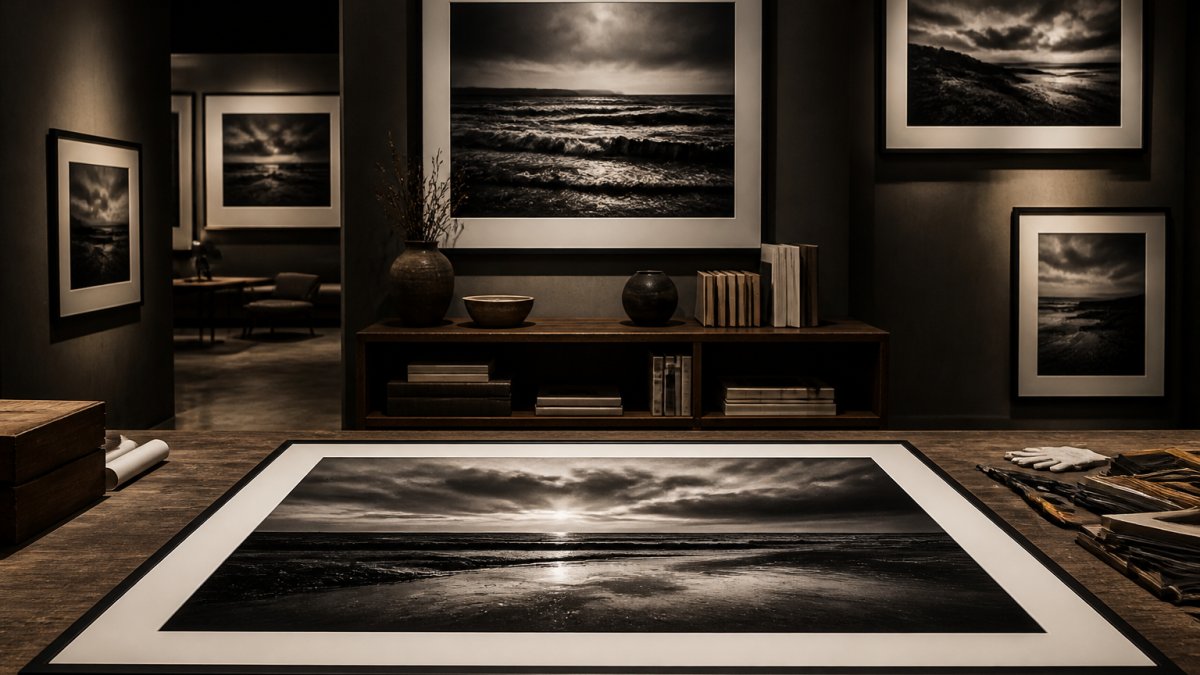
A common rule of thumb among framers and gallery installers is that a piece should occupy roughly two-thirds to three-quarters of the wall width it hangs on, with at least 8-12 inches of breathing room on each side.
- Small rooms and hallways (under 8 feet of wall). A 16×20 in or 20×24 in paper print, matted and framed, reads as a finished piece without crowding the space.
- Living rooms and dining rooms (8-12 feet of wall). A 30×40 in or 40×50 in print, or a stretched canvas in the same range, anchors the wall above a sofa or sideboard.
- Open-plan and double-height walls (12 feet and up). Large-format work, 48×72 in and above, or a diptych/triptych spanning the same width, is what makes a big wall read as intentional rather than empty.
Viewing distance matters as much as wall size. A print viewed from 6 feet needs less size than one viewed from 15 feet across a room. Large-format landscape and industrial photography reward bigger sizes because the detail holds up close and the composition reads from across the room.
Budget Allocation: Where the Money Should Go
For a first serious purchase, split roughly 60-70% of the budget on the print and 30-40% on framing and mounting.
Three buyer profiles, three different priorities:
- Statement-piece buyer (one large work, one wall). Spend on format and framing. Edition scarcity matters less than whether the piece fills the wall correctly and arrives ready to hang.
- Collection builder (several works over time). Spend on edition clarity and archival materials. Consistent framing across pieces makes a collection read as a collection, and documented editions protect resale.
- Gift or first-print buyer (modest budget). Prioritize a smaller archival paper print over a large canvas. A well-printed 16×20 in on acid-free paper will outlast a budget canvas at twice the size.
The Cost Mechanics Nobody Lists
Sticker price is rarely the total. The variables that move the final number:
- Framing. Custom framing can add a significant percentage to the print price.
- Shipping. Large-format and framed work ships freight or in oversized boxes, and that cost scales with dimensions, not weight.
- Returns. Return shipping on a framed, oversized piece is expensive and sometimes excluded. Confirm the return policy before you buy, not after.
- Custom sizing. Artist-direct studios can often produce a non-standard dimension; gallery networks and marketplaces usually cannot.
A Short Decision Path
- Measure the wall and note the viewing distance.
- Pick the format range from the ratios above.
- Decide whether you're buying a statement piece, a collection piece, or a gift.
- Confirm edition size, ink type, paper, framing materials, and total delivered cost in writing.
- Only then compare sources, because at that point you're comparing like for like.
This is where a direct-from-artist model changes the math. At DE LA Gallery, every piece is printed and framed in-house with verified archival materials, custom formats are available, and you can preview the work in your own space through augmented reality before committing, a combination hard to find from a catalog retailer.
Start with the room, not the catalog. Measure the wall, decide the format, then find a source that can deliver it with materials you can verify. For buyers who want large-format, museum-quality work with a direct line to the artist, that's what we built DE LA Gallery to do.
Frequently Asked Questions
What are the best alternatives to LUMAS for fine art photography?
Buyers typically compare a few distinct routes: artist-direct galleries like DE LA Gallery, photography-specific marketplaces such as ArtPhotoLimited, and established photography organizations like Magnum Photos or YellowKorner. Each serves a different need. Artist-direct sources give you verified archival materials, in-house framing, and a direct line to the photographer. Marketplaces offer wider browsing. The right pick depends on whether you want a curated, provenance-backed piece or a broader catalog to scroll through.
How can I tell whether a fine art photograph is archival?
Ask three questions: what paper or substrate is used, what inks or process, and whether the seller provides documentation. Archival fine art photo prints are typically made with pigment-based giclée printing on cotton rag or baryta paper, or with alternative processes like platinum-palladium or cyanotype that are inherently stable. Framing matters too: UV-filtering glazing and acid-free matting slow fading. If a seller cannot name the materials, that is your answer.
What is the difference between limited-edition and open-edition photography?
Limited edition photography prints are capped at a set number, often signed and numbered, which means the supply is fixed and the piece holds scarcity value. Open editions can be reprinted indefinitely, so they cost less but do not appreciate the same way. Before buying, confirm the edition size, whether it is signed, and whether a certificate of authenticity is included. Those three details separate a collectible from a decorative print.
Can I preview fine art photography on my wall before buying?
Some galleries now support augmented reality previews that let you see a piece at scale in your actual room through your phone. DE LA Gallery offers this feature, which helps with large-format work where the wrong size can overwhelm a wall. If a seller does not offer AR, measure your wall, tape off the dimensions, and step back. Seeing the footprint in real space prevents the most common buying regret: ordering too small.