 How-to
How to Hang Heavy Framed Art Securely on Any Wall
Last Updated: November 15, 2026
Quick Summary
To learn how to hang heavy framed art securely, anchor into wood studs or use wall anchors rated above the piece's total weight, with a safety margin. Use two well-spaced mounting points, and if the frame weighs more than about 50 pounds, skip the wire and use two D-rings on two hooks or a French cleat.
- Drywall alone has almost no pull-out strength, so a nail driven into it will sag under a heavy load.
- Confirm a stud finder's beep with a thin nail: solid resistance means wood, easy sliding means empty drywall.
- Toggle bolts suit hollow drywall, sleeve anchors suit brick and concrete, and plastic anchors are for light loads only.
- Place D-rings a third of the way down from the top, equal distance from each side.
- The center of the art should sit at eye level, roughly 57 to 60 inches from the floor.
Table of Contents
- Why Heavy Framed Art Needs More Than a Nail
- Tools and Materials You'll Need Before You Start
- How to Find a Stud for Hanging Art (and What to Do When There Isn't One)
- Best Wall Anchors for Heavy Pictures by Wall Type
- Picture Hanging Hardware for Heavy Frames: D-Rings, Wire, and French Cleats
- Step-by-Step: Installing D-Rings, Wire, and Anchors
- How High to Hang Framed Art and How to Level It
- Seismic Safety, Wall Integrity, and Protecting Archival Art
- Frequently Asked Questions
Why Heavy Framed Art Needs More Than a Nail
A single nail holds a light frame fine. A large, museum-quality piece can weigh far more than most people expect, and the wrong hardware turns a beautiful investment into a wall-damaging accident. That is why learning how to hang heavy framed art properly matters before you pick up a hammer.
The wall, the frame, and the hardware all have to work together.
Here is the core problem: drywall alone has almost no pull-out strength. A nail driven into drywall will sag under a heavy load. The fix is simple but non-negotiable: anchor into wood studs or use hardware rated for the weight.
Below, we walk through the tools, anchors, and steps for hanging heavy art. Skipping the stud or the right anchor is a common reason heavy art falls.
Tools and Materials You'll Need Before You Start
Gather everything first so you are not climbing down mid-install. A common approach is to lay it all out on the floor near the wall.
- Stud finder and a small nail for verification
- Drill with bits matched to your anchors
- Screwdriver and a level
- Measuring tape and a pencil
- Wall anchors rated for your frame's weight
- D-rings, picture wire, or a French cleat
- Safety glasses and a helper for large pieces
One insider tip: check the weight of the piece before you buy anything. Frame backing and glass add real pounds. If you are unsure whether a piece is worth the careful installation, our guide on whether luxury large scale wall art is worth the investment helps you weigh the decision.
How to Find a Stud for Hanging Art (and What to Do When There Isn't One)
Finding a stud is the fastest way to a secure hold. A wall stud is the vertical wood framing behind drywall that carries load. Hit one, and your hardware can carry serious weight.
Using a Stud Finder and Verifying With a Nail
Run the stud finder across the wall and mark where it beeps. Then confirm with a thin nail. Tap it in gently; if it meets solid resistance, you found wood. If it slides through, you hit empty drywall.
Locating Studs Without a Stud Finder
No stud finder? Try these:
- Knock along the wall and listen for a dull, solid sound
- Look for outlets and measure 16 inches to either side, the common stud spacing
- Use a strong magnet to find the screws holding the drywall
The U.S. Consumer Product Safety Commission offers guidance on safe home anchoring practices worth a quick read.
Best Wall Anchors for Heavy Pictures by Wall Type
The best wall anchors for heavy pictures depend on two things: what the wall is made of and how much the frame, glass, and backing actually weigh. Get either wrong and the anchor will pull out, crack the drywall, or fail slowly over months. Matching the anchor to the substrate matters more than buying the highest-rated anchor on the shelf.
Start by weighing the piece. Weight varies widely with glass, frame material, and backing, so weigh your specific piece. Choose hardware rated above the piece's total weight, with a safety margin. Anchor packaging lists a working load limit, not a breaking strength, so read the label rather than guessing.
Toggle Bolts, Snaptoggles, and Sleeve Anchors Compared
Toggle bolts use a metal bar that flips open behind the drywall and spreads the load across a wide area. They are the go-to for hollow drywall and hold well in 1/2-inch and 5/8-inch gypsum board. Snaptoggles are a snap-in version that installs faster and leaves a smaller hole, which matters if you are a renter. Sleeve anchors expand against brick, block, or concrete and are the correct choice for masonry walls. Plastic anchors are for light loads only and should never carry a heavy frame.
| Anchor Type | Best Wall | Typical Working Load | Install Ease |
|---|---|---|---|
| Toggle bolt | Drywall (1/2 in. to 5/8 in.) | High | Moderate |
| Snaptoggle | Drywall | High | Easy |
| Sleeve anchor | Brick, concrete, block | High | Moderate |
| Plastic anchor | Light loads only | Low | Easy |
Watch out: a toggle bolt's hold depends on the drywall being intact. If the wall is crumbly, water-damaged, or only 3/8-inch thick, the toggle bar can pull through the paper face under load. In that case, move the mounting point to a stud or add a plywood backer.
Matching the Anchor to the Frame Material and Backing
This is where most guides stop short. The anchor holds the wall, but the screw holds the frame, and the frame material decides which screw you can use. Solid wood backings accept standard wood screws and hold well. Thin composite or MDF backings strip easily, so use shorter screws or add a metal backing plate behind the D-ring. Metal frames often have a narrow lip that will not accept a D-ring screw at all; in that case, use a strap hanger that wraps the frame profile or a French cleat that grips the frame's top rail. For oversized pieces, a French cleat spreads weight across the full width and protects both the frame and the wall.
Calculating Load Distribution Across Mounting Points
Two mounting points share the load, so each carries roughly half, but the wire angle changes the math. A shallow wire angle (close to horizontal) puts more tension on the anchors and can double the effective load at each point. A wider angle, roughly 90 degrees between the two wire legs, distributes force more evenly. Use two well-spaced points and keep the wire angle wide. If the frame weighs more than about 50 pounds, skip the wire entirely and use two D-rings hung directly on two hooks, or a French cleat, so the load travels straight down into the anchors instead of sideways.
Picture Hanging Hardware for Heavy Frames: D-Rings, Wire, and French Cleats
Picture hanging hardware for heavy frames comes down to three choices: D-rings with wire, D-rings alone, or a French cleat.
D-rings are metal loops screwed to the frame backing. Paired with picture wire, they suit most heavy pieces. French cleats interlock two angled brackets and offer the most frame stability and flush mount for very heavy art.
Matching Hardware to Frame Material and Backing
Match hardware to what the frame is made of. Solid wood backings hold screws well. Thin or composite backing may need shorter screws or added support. For oversized pieces, a French cleat spreads weight across the whole width, which protects both the frame and the wall.
Step-by-Step: Installing D-Rings, Wire, and Anchors
Here is the full installation, start to finish. Total time runs about 30 to 45 minutes for one large piece.
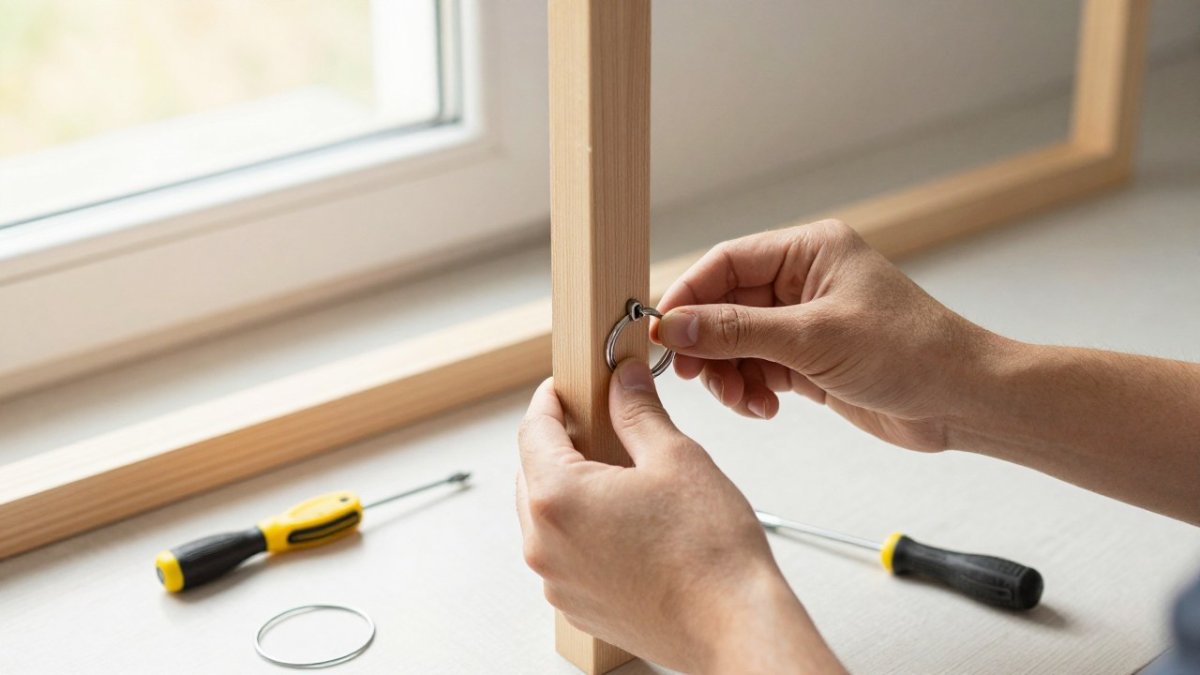
What you'll need: D-rings, wire, screws, anchors, drill, level, tape measure.
- Mark the D-ring spots. Place both rings a third of the way down from the top, equal distance from each side.
- Screw on the D-rings. Use screws short enough not to pierce the frame front.
- Thread the wire. Run picture wire through both rings and twist it tight, leaving a little slack.
- Measure and mark the wall. Hold the frame where it will hang and mark the hook or anchor points with a pencil.
- Drill and set the anchors. Match your drill bit to the anchor and set them per the manufacturer's instructions.
- Hang and check the level. Set the frame, check vertical alignment with a level, and adjust.
Expected result: A frame that sits flush, stays level, and holds firm when you gently press it.
How High to Hang Framed Art and How to Level It
The center of the art should sit at eye level, roughly 57 to 60 inches from the floor. That is the museum standard, and it works in most rooms.
For a room with high ceilings or furniture below, raise it slightly so the piece relates to what sits beneath it. For a sofa or sideboard, leave a few inches of breathing room above the furniture.
Leveling tips:
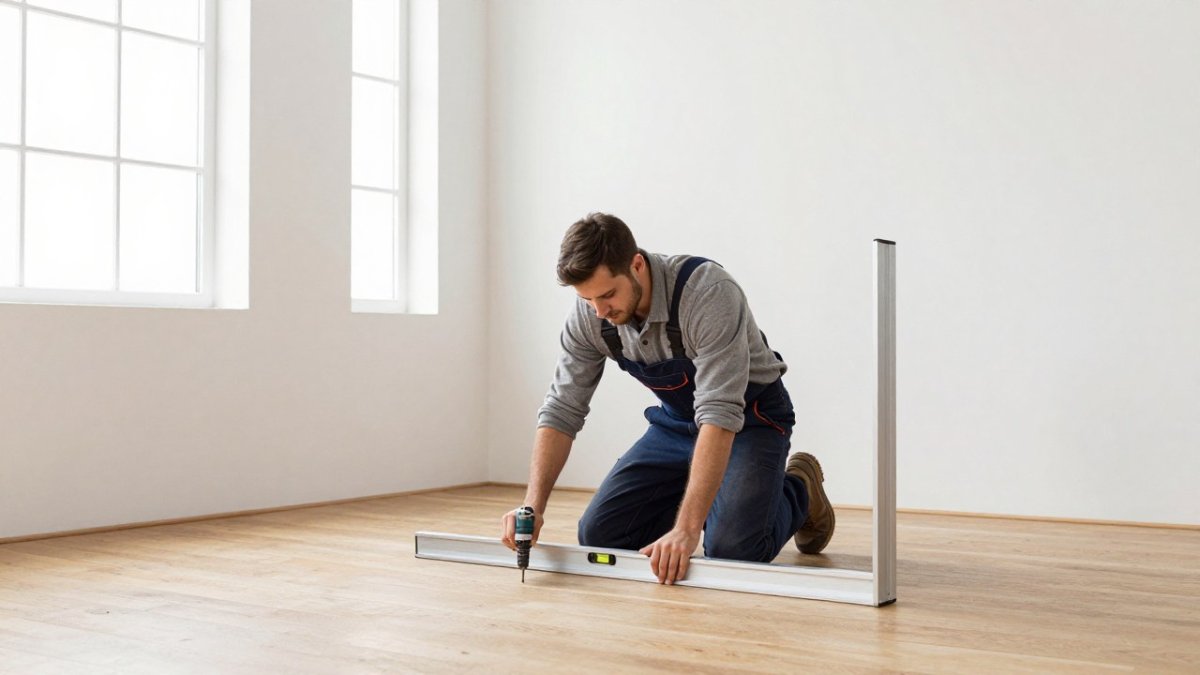
- Mark both hanging points with a level, not by eye
- Use a level on top of the frame after hanging
- Nudge the wire or hook placement to correct a tilt
Precision measurement here saves you from re-drilling, and it protects the wall integrity.
Seismic Safety, Wall Integrity, and Protecting Archival Art
Most hanging guides ignore what happens when the wall moves. In active seismic zones, a standard hook lets a heavy frame swing on its wire, and the wire can jump off an open hook entirely.
Frame material compatibility matters here too. Heavy metal frames and thick wood frames load the wall differently than slim ones. Because metal profiles can make hanger placement less straightforward, the same care with weight and support applies when securing metal signs from Real Cool Signs.
For archival art, keep the piece off direct sun and away from damp walls. Our frames use verified archival materials for longevity, so the art inside stays protected as much as the wall does.
Repairing drywall after removal is simple and worth planning for, especially if you rent. Patch old anchor holes with spackle, let it dry, sand smooth, and touch up the paint. Toggle-bolt holes are larger than nail holes, so keep a small tub of lightweight spackle and a sanding sponge on hand.
Frequently Asked Questions
Can you hang heavy framed art on drywall without a stud?
Yes, if you use the right anchor. Drywall alone cannot hold a heavy frame on a nail or screw, but a toggle bolt or heavy-duty self-drilling anchor spreads the load across a wider area of the wall panel. Choose an anchor rated well above your frame's total weight, drill the hole to the anchor's specified size, and use at least two mounting points. For pieces over roughly 50 pounds, combining one stud mount with one anchored mount is the safer approach.
How much weight can a picture hook hold?
Standard picture hooks vary widely. Small wire hooks often top out around 5 to 10 pounds, while hardened steel hooks designed for heavy frames can be rated for 50 to 100 pounds or more, depending on the model and how well the hook is seated in the wall. Always check the manufacturer's stated weight capacity on the package, and remember that rating assumes installation into sound drywall or plaster, not damaged or crumbling wall material.
How high should heavy framed art be hung?
The standard guideline is to place the center of the artwork at 57 to 60 inches from the floor, which approximates eye level for most viewers. In rooms with high ceilings or above furniture like a sofa, measure from the furniture's top edge and leave 6 to 10 inches of breathing room. For a gallery wall, treat the entire arrangement as one unit and center that group at the same height.
What is the best way to hang a heavy picture when there is no stud where you need one?
Use two heavy-duty toggle bolts spaced several inches apart behind the frame, or install a French cleat anchored into the drywall with toggle bolts on both ends. A French cleat distributes weight along its full length rather than at two points, which makes it the strongest option for large, heavy pieces. Avoid adhesive strips for anything heavy; they are not rated for substantial loads and can fail as wall paint ages.