 Listicle
High Quality Art Prints: How to Judge Archival Value
Quick Summary
High quality art prints are made on acid-free paper with pigment-based inks, which resist fading far better than thin paper and dye inks. Check the paper weight, surface finish, buffering and ink system, and ask whether the price covers the materials or only the frame.
- Ask whether the seller uses pigment inks or dye inks, since pigment inks typically hold color better.
- Look for paper described as acid-free, lignin-free and buffered for longer display life.
- Compare the paper weight, surface finish and ink system side by side across sellers.
- Check whether a price covers the print materials or mainly the frame, which can hide cheap paper.
- Request a quote for the exact size and framing, since pricing depends on those choices.
Table of Contents
- High Quality Art Prints: How to Judge Archival Value
- What Makes High Quality Art Prints Worth the Price
- How to Identify Archival Quality Prints
- Best Paper for Art Prints: Weight, Finish and Texture
- Giclée Art Prints and Pigment Inks Explained
- Comparing Where to Buy High Quality Art Prints
- Fine Art Photography Prints: Sizes, Framing and Total Cost
- Choosing Your Next Piece from DE LA Gallery
- Frequently Asked Questions
High Quality Art Prints: How to Judge Archival Value
Last Updated: November 21, 2026
Buying high quality art prints is a decision you will live with for decades, so it pays to know what separates a print that holds its color from one that washes out in a few years. At DE LA Gallery, we produce large-format fine art photography and use verified archival materials, so we have strong views on what actually makes a print last. Below, we explain how to judge paper, inks, printing methods and sellers, and how to compare the real cost of a piece.
Art printing is a specialized craft, and not every print sold online meets the same standard. Some prints are made on thin, acidic paper with dye-based inks that fade under ordinary room light. Others use heavyweight, acid-free paper and pigment inks rated for long display life. The difference shows up slowly, which is why buyers often miss it at the point of sale.
What Makes High Quality Art Prints Worth the Price
A high quality print costs more because each step affects how long the image lasts. Paper, ink, printer, and framing all contribute, and cutting any one of them usually shows up as fading, warping or yellowing later.
Price is often the first thing buyers compare, so start by asking what a seller includes. Ask whether the price covers the paper, the ink system, the printing method and the framing. A low price on a framed print can mean cheap materials hidden behind a nice-looking frame.
Pricing depends on size, paper, framing, and edition. Check the current prices directly on DE LA Gallery's website or request a quote before comparing sellers.
Watch out: a frame can make an inexpensive print look premium at the point of sale. Check the paper and ink specifications before you assume the price reflects print quality.
How to Identify Archival Quality Prints
Archival quality means the print is made to resist fading, discoloration and deterioration over time. In practice, this comes down to three checks: paper, ink, and how the seller describes both.
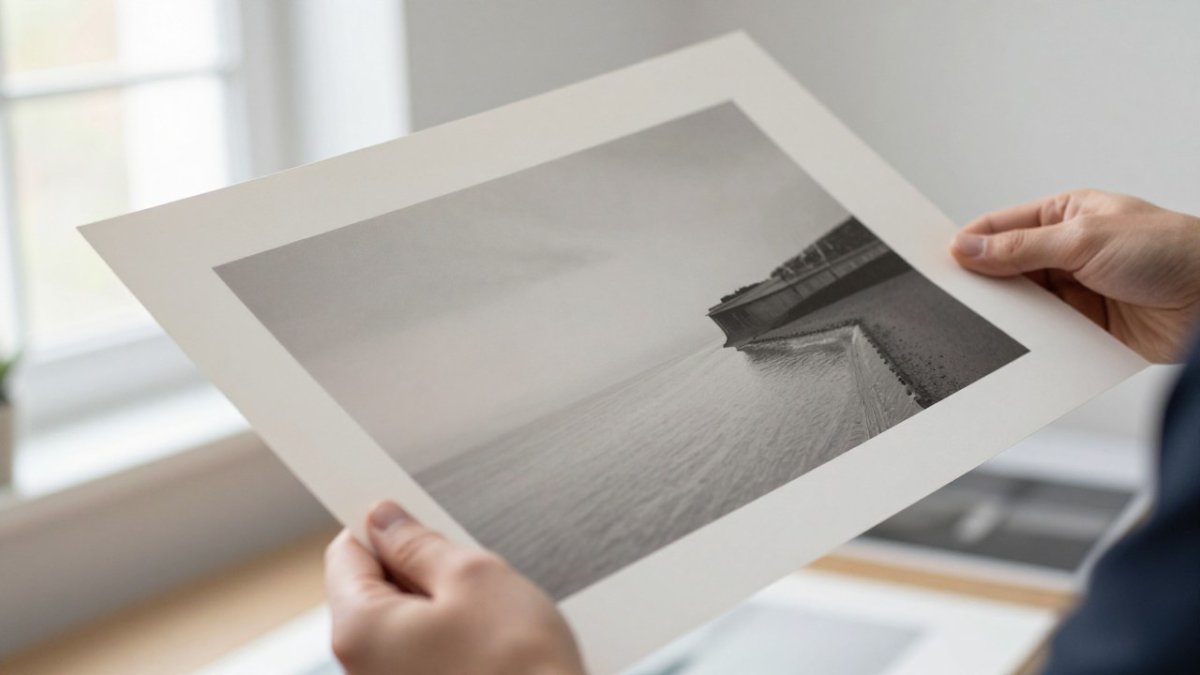
Start with the seller's specifications. A reputable seller states the paper type, paper weight, ink system and any light-fastness rating in plain terms. Vague phrases like "museum quality" with no supporting detail are a warning sign.
Next, look at the finish and surface. Matte and textured papers often reduce glare and suit landscape photography well. Glossy surfaces can show reflections under strong light.
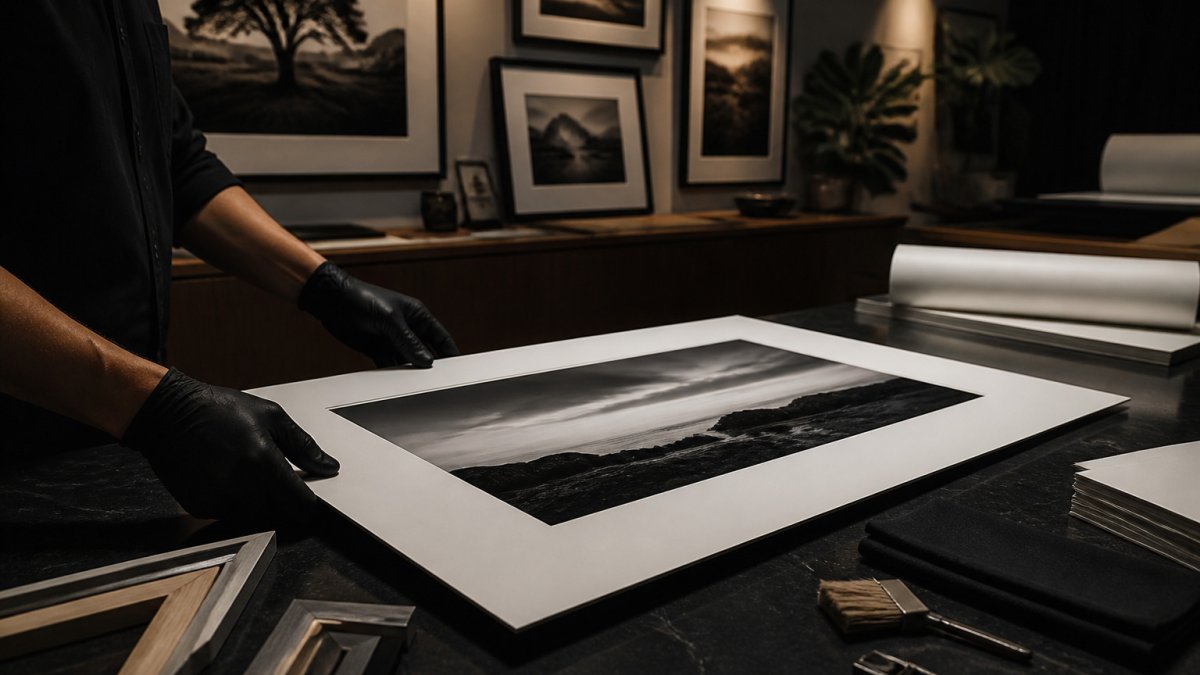
Finally, ask whether the seller can tell you what materials were used and who printed the piece. Direct answers are a good sign. Evasive answers usually are not.
Best Paper for Art Prints: Weight, Finish and Texture
Paper is the foundation of a long-lasting print, and it is also the specification most sellers describe vaguely. Instead of accepting "premium paper" as an answer, evaluate a sheet on five measurable points: basis weight, surface finish, acid-free status and buffering, brightness or whiteness, and opacity.
Basis weight. Paper weight is usually given in pounds (lb) for a given sheet size or in grams per square meter (gsm). Fine art inkjet papers span a wide range of weights, from lightweight matte stocks up to heavyweight cotton rag stocks. Heavier sheets feel more substantial, resist cockling (waving) when ink is applied, and generally lie flatter in a frame.
Surface finish. The main surfaces you will see are matte, textured (often called velvet or watercolor), satin or luster, and glossy. Matte and textured surfaces scatter light and suppress glare, which suits black and white landscape photography and rooms with strong windows. Satin and luster sit between matte and glossy: they hold more depth in shadows than matte but show less mirror-like reflection than gloss.
Acid-free and buffered. Acid in paper breaks down cellulose fibers over time, causing yellowing and brittleness (loc.gov). Look for paper described as acid-free and, for longer display life, buffered with an alkaline reserve (commonly calcium carbonate) that neutralizes environmental acids. Also ask about lignin: lignin-containing wood pulp papers are not appropriate for fine art prints.
Brightness and whiteness. Bright white papers can make cool-toned images pop but may shift the perceived color of warm-toned work. Natural or warm-white papers suit black and white photography and earth-toned images. Optical brightening agents (OBAs) make paper look whiter under daylight but can cause a slight color shift over time and under different lighting.
Opacity. Opacity is how much light passes through the sheet. Thin or highly translucent papers let dark frames or backing show through and can make an image look muddy. Heavier, more opaque stocks preserve contrast and are less likely to show the frame's backing board through the print.
A practical way to compare two listings: put the specifications side by side and check whether each one states basis weight (gsm or lb), surface name, acid-free and lignin-free status, buffering, OBA content, and opacity. If a listing gives only a marketing phrase, treat that as missing information rather than a neutral detail. Watch out: a heavy 300 gsm sheet on a glossy OBA-bright stock may look impressive in a photo but behave very differently on a sunlit wall than a 250 gsm matte cotton rag with no OBAs.
Texture deserves its own note because it changes how detail reads. Smooth matte papers render fine detail and subtle tonal gradations cleanly. Textured papers add a visible tooth that can enhance a painterly or atmospheric image but can soften very fine detail. For black and white landscape photography, many practitioners prefer a smooth or lightly textured matte cotton paper because it holds shadow detail without glare.
Giclée Art Prints and Pigment Inks Explained
The term giclée generally refers to an inkjet print made with pigment-based inks on fine art paper. Pigment inks use solid particles suspended in a carrier fluid, which tend to hold color better over time than dye-based inks.
Dye inks dissolve into the paper and can fade more quickly, especially under strong light. Pigment inks sit on or within the paper surface and typically offer better light fastness. This is one of the most useful questions to ask a seller: which ink system do you use, and is it pigment or dye?
Do not assume the word "giclée" alone guarantees quality. The term is used loosely, so verify the ink and paper specifics yourself.
Comparing Where to Buy High Quality Art Prints
Buyers choose between artist-direct galleries, print-on-demand marketplaces, and general art retailers. Each model has tradeoffs in price, customization, and accountability.
| Source Type | Main Strength | Main Tradeoff | What to Ask |
|---|---|---|---|
| Artist-direct gallery | Direct control over printing and framing | Typically higher cost | Who prints the work, and with what materials? |
| Print-on-demand marketplace | Wide selection, varied prices | Quality varies by seller | What paper and ink does each listing use? |
| General art retailer | Convenient browsing | Specifications often unclear | Is the paper acid-free and the ink pigment-based? |
Marketplaces such as Etsy list many independent sellers, and quality can differ widely between listings. Check each listing's paper and ink details rather than relying on photos alone.
Ask about returns, damage claims, and color variation before you buy. Screens display color differently from printed paper, so a seller's return policy matters, especially for a large piece.
Fine Art Photography Prints: Sizes, Framing and Total Cost
Size and total cost are linked, and both are easier to judge with a little arithmetic than with a browse through product photos. The goal is to choose a print that fits the wall and the viewing distance, then compare sellers on the full delivered cost rather than the print-only price.
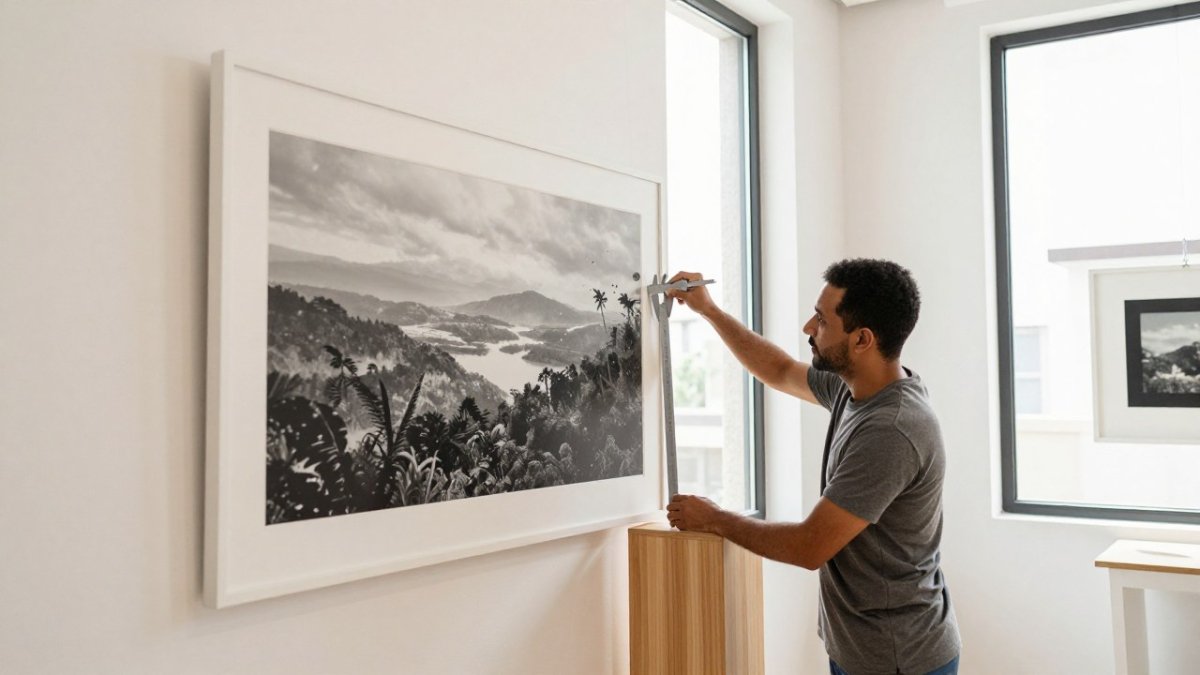
Sizing by wall and viewing distance. A common rule of thumb is that the print's diagonal should be roughly one to one-and-a-half times the typical viewing distance.
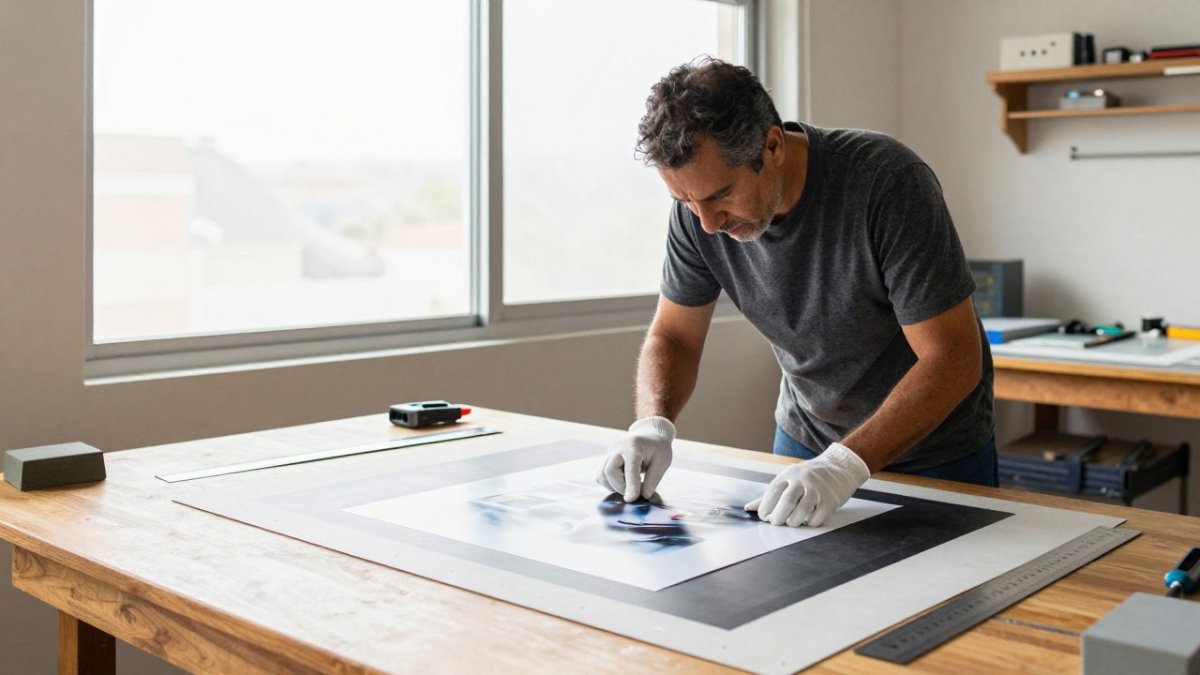
Aspect ratio matters. A photograph shot at 3:2 will not fit a 16 by 20 inch frame without cropping or matting. Decide whether you are willing to crop the image or want a mat to absorb the difference. A mat also adds visual breathing room and keeps the print surface away from the glazing. Ask the seller for the image's native aspect ratio and the exact printed image area, not just the paper size.
Framing, glazing, and mounting. Framing cost is driven by frame material, size, glazing type, and mounting method. Standard glass is inexpensive but heavy and breakable; acrylic glazing is lighter and safer but scratches more easily. For preservation, look for glazing described as UV-filtering, which slows fading from light exposure but does not stop it.
Total cost of ownership. Compare sellers on the same basis: print only, print plus mat, print plus frame and glazing, plus shipping, plus any hanging hardware. Framing can be a large share of the total, and shipping a framed piece is usually more expensive and more damage-prone than shipping a rolled print.
Preservation costs over time. A print on quality paper behind UV-filtering glazing in a stable indoor space needs little ongoing spend. A print in a bright, humid, or fluctuating space may need better glazing, a mat, and careful placement to avoid early replacement. Factoring a modest allowance for framing and glazing at the outset is usually cheaper than re-framing a damaged print later.
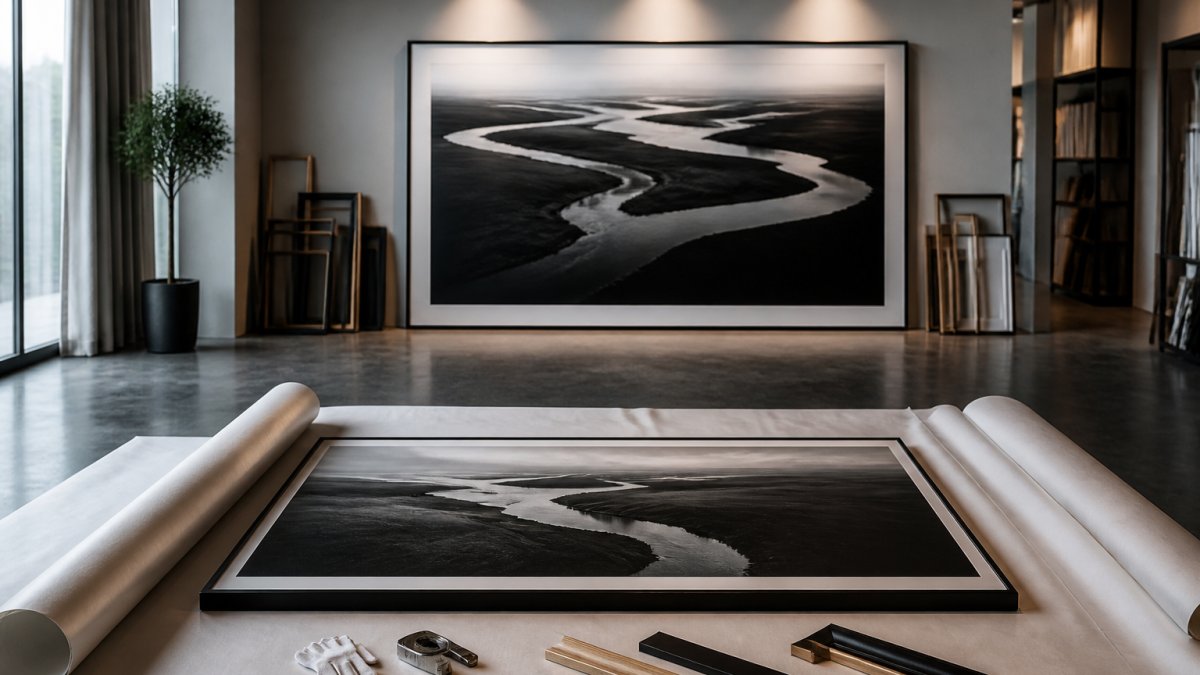
Our approach at DE LA Gallery is to handle printing and framing in-house. You can browse current options on the DE LA Gallery website and compare sizes that fit your space. When you request a quote, ask for the printed image area, the paper stock, the glazing type, the mounting method, and the delivered price so you can compare it line by line with any other seller.
Choosing Your Next Piece from DE LA Gallery
If you are ready to choose a piece, start by deciding on size, then check the paper, ink and framing specifications for each option. Ask the seller to confirm those details in writing before you pay. A piece like Sloppy Joes, available as a fine art photography print, shows how the same questions apply to any print you consider.
Then request a quote for the exact size and framing you want, since pricing depends on those choices.
Explore our collection and start with the piece that fits your space and your standards for archival quality.
Frequently Asked Questions
Where can I buy the highest quality art prints?
The highest quality art prints usually come from sellers who disclose their printing method, ink type and paper specifications. Look for giclée prints made with pigment inks on acid-free, archival-grade paper, and ask whether the work is printed in-house or by a third-party lab. Direct-from-artist sellers can often explain each step of production, which makes it easier to verify quality before you buy. Compare specifications, not just photos, because screen images can hide differences in color and texture.
How can you tell if an art print is archival quality?
Check for pigment-based inks, acid-free paper and a stated lightfastness or longevity rating. Ask the seller which materials are used and whether they can provide documentation. Ordinary inkjet prints on standard paper can look good at first but tend to fade or yellow over time. Verified archival materials and a clear description of the printing process are stronger signals than vague claims like premium quality.
What is the difference between a giclée print and a regular art print?
Giclée is an inkjet printing process that uses fine, high-resolution pigment inks, typically on archival paper or canvas. A regular art print may be made with dye-based inks or lower-grade paper, which can fade faster. Giclée prints generally reproduce color and detail more faithfully, but the term alone does not guarantee quality, so check the paper, ink and printer details the seller provides.
What paper is best for fine art prints?
Heavyweight, acid-free matte or fine art paper is generally the strongest choice for fine art prints. Matte finishes reduce glare and suit detailed photography, while heavier paper feels more substantial and resists warping. Paper weight and texture affect how the final print looks in a room, so request the paper specification before ordering a large-format piece.