 How-to
How to Find Fine Art Photography Near You
Quick Summary
Fine art photography near you is best found by checking whether a seller is an artist-run studio or gallery with a physical address, a stated service area, and a preview option. Verify the artist, the print materials, and the edition details before buying. Ask for a live or recorded preview of the actual print under room lighting.
- Check the physical address, suite number and posted hours before trusting a seller as local.
- Ask who makes and frames the print, and where, before ordering.
- Request a live or recorded preview of the actual print under room lighting.
- Ask for the paper and ink names, and their archival ratings.
- Confirm sales tax treatment in writing on the invoice if you pick up locally.
Table of Contents
- What Fine Art Photography Actually Means
- Finding Fine Art Photography Prints for Sale Near You
- How to Tell If a Fine Art Print Is High Quality
- Why Archival Fine Art Photography Matters
- Choosing a Large-Format Landscape Photograph for Your Wall
- Questions to Ask Before You Buy or Book
- Previewing Your Next Piece in Your Own Space
- Frequently Asked Questions
What Fine Art Photography Actually Means
Last Updated: November 22, 2026
Fine art photography is photography made as an artwork first. The photographer controls the vision, the print is made with archival intent, and the edition is usually limited.
Fine art photography is defined by intent and craft. A commercial image exists to sell something. A fine art image exists to hold attention for its own sake, with composition, tonal range and print quality treated as the subject.
Two markers help separate the two categories:
- Limited editions: The photographer restricts how many prints exist, often numbering each one.
- Archival materials: Inks, papers and mounts are chosen to resist fading and yellowing over decades.
Because the term is used loosely, you'll see "fine art" applied to everything from framed snapshots to gallery-grade prints. Ask the seller what the print is made from, who made it and how many exist. Those three answers tell you far more than the label.
Finding Fine Art Photography Prints for Sale Near You
Searching for prints nearby can work, but local availability is often narrower than it first appears. A direct-from-artist arrangement, such as the one DE LA Gallery offers through Jorge de la Torriente, can give you access to work you won't find in a regional shop.
Start with a few checks:
- Look for the artist's name and a statement about the printing process.
- Confirm where the print is made and who frames it.
- Ask whether a gallery visit or live preview is possible before you buy.
Some buyers prefer to see work in person. Others are comfortable buying online if the seller offers clear information about materials and returns. Our visitors in Key West can view pieces at our gallery, and everyone can explore the collection online at the Art Storefronts Organization directory of registered art businesses.
How to Verify a Seller Is Genuinely Local
The search results for "fine art photography near me" mix four different business types, and each one means something different by "local":
- Artist-run studios and galleries, the artist or a representative is on site, and you can usually preview work in person by appointment.
- Regional print shops and frame shops, they may print or frame fine art but do not represent the artist or hold editions.
- Marketplaces and online art sellers, they may ship from anywhere and have no physical presence in your area.
- Retail chains and decor stores, they sell reproductions, not limited editions.
A practical verification sequence:
- Check the physical address. A street address with a suite number and posted hours is a stronger signal than a P.O. box or a "serving your area" line with no address.
- Confirm the service radius. Ask how far the seller travels for in-person previews, delivery or installation.
- Ask who handles the work. Ask where the print is made and who frames it, and whether you can see the print or framing area during a visit.
- Request a live or recorded preview. A short video call showing the actual print under room lighting tells you more than a web image.
- Confirm local pickup and sales tax. If you pick up in person, the seller should charge sales tax based on the delivery or pickup location. If the piece ships out of state, tax treatment can differ; ask the seller to state it in writing on the invoice.
What Local Availability Actually Changes
Local sourcing affects four practical things beyond convenience:
- Preview and approval. You can see the actual print, not a calibrated screen image, before money changes hands.
- Shipping risk. Large framed pieces are expensive and fragile to ship. Local pickup or hand delivery removes most damage risk and the insurance cost that goes with it.
- Turnaround. Turnaround times for custom framing vary, so ask the seller for the current timeline before you order.
- Service after the sale. Rehanging, glass replacement and reframing are easier with a seller you can drive to.
Browse the full black and white landscape photography prints collection to compare options before you decide.
How to Tell If a Fine Art Print Is High Quality
A high-quality print shows its quality in four places: the image file, the paper, the ink and the mount. Start with the image itself. Look for sharp detail, smooth tonal transitions and shadows that hold texture rather than turning to solid black.
Next, examine the materials. Ask which paper and ink were used, and whether they are rated for archival use. Museum-quality claims should be backed by specifics, not vague language.
A quick evaluation checklist:
- Sharp detail when viewed up close
- Smooth gradients across skies and water
- Named paper and ink, with archival ratings
- Clear edition information and signature
- Framing materials listed, including glazing type
Watch out: a print that looks vivid on a screen can look flat or muddy in person. Ask for a physical sample or a detailed description of how color is calibrated before you commit to a large piece.
A Concrete Quality Rubric
Use the following criteria to compare prints side by side. Each one is something a reputable seller can answer with specifics.
**1.
2. Paper. Ask for the paper's brand and product name, not just "archival paper."
**3.
4. Color management. A calibrated workflow means the file, monitor and printer are profiled to the same standard.
**5.
6. Edition and signature. A limited edition should state the total edition size, the print number, and whether the artist signs and numbers by hand.
7. Framing materials. Ask for the glazing type and the mat board brand used in the framing.
How to Test a Print in Person
If you can view the piece before buying, run these checks:
- Look at the shadows. Good shadow detail shows texture; poor shadow detail turns to a solid black patch with no separation.
- Look at the highlights. Bright areas should hold detail rather than clipping to pure white.
- Check the gradients. Skies and water are where banding shows first. Smooth transitions indicate good ink and profiling.
- Tilt the print toward a light. Surface glare and texture tell you about the paper finish and whether the glazing is non-glare.
- Check the edges and corners. Lifting, bubbling, or uneven borders point to mounting problems that will worsen over time.
If you cannot view the piece in person, ask for a short video of the actual print under room lighting and a close-up of the signature and edition number. A seller who cannot provide either is asking you to buy on faith.
The article lists the markers that separate a high-quality print from a weak one, so this table pairs each quality check with what to ask the seller.
| Quality check | What to look for | Question to ask |
|---|---|---|
| Resolution | Sharp detail up close | Pixel size of master file vs. print size |
| Paper | Named product with archival rating | Which paper brand and product name? |
| Ink | Pigment ink set | How many ink channels are used? |
| Color management | Calibrated workflow | Is the monitor calibrated and paper profiled? |
| Archival life | Stated display life under glass | What permanence standard applies? |
| Edition | Total size, print number, signature | Are artist proofs included? |
| Framing | Glazing type and mat board named | Which glazing and mat board are used? |
Why Archival Fine Art Photography Matters
Archival quality matters because prints are expected to last for decades. Fading, yellowing and acidic degradation can ruin an image that looked perfect when it was framed. Archival prints use stable inks, acid-free papers and protective glazing to slow these changes.
Buyers who have been burned by cheap online art often ask how long a print will hold its color. Reputable sellers answer that question with materials and testing details, not promises.
Archival standards also protect the value of a collection. A limited edition printed on stable materials keeps its appearance and its market interest over time. A print that yellows loses both.
Choosing a Large-Format Landscape Photograph for Your Wall
A large landscape print changes the feel of a room, but scale is where many buyers make mistakes. Measure the wall first, then consider the viewing distance from the sofa or dining table.
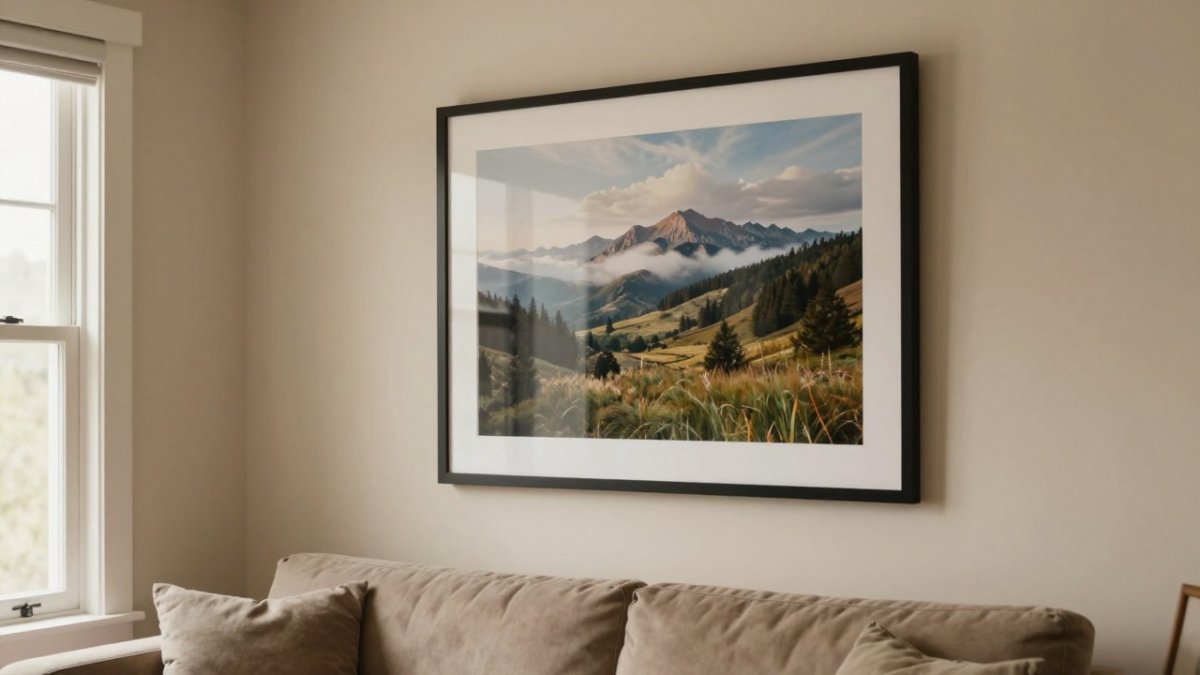
Light matters as much as size. Look at where the window sits relative to the wall, and whether the room gets direct sun. Landscape prints with strong tonal range hold up well in mixed light. Very dark images can disappear in dim rooms.
We recommend a simple test: tape the dimensions on the wall with painter's tape and live with the outline for a few days. You'll learn more from that than from any preview.
Questions to Ask Before You Buy or Book
Before purchasing, ask questions that reveal how the work is made and how the seller handles problems. The answers separate direct-from-artist sales from resale arrangements.
Useful questions include:
- Is the artist directly involved in the editions I'm considering?
- Where is the print made, and who frames it?
- What archival materials are used, and can you provide documentation?
- How accurate is the color when I view it on my screen?
- What is the return or replacement policy if the piece arrives damaged?
Collectors and casual buyers alike benefit from clear answers. You don't need to be a serious collector to ask for them. If a seller avoids these questions, treat that as information.
Previewing Your Next Piece in Your Own Space
Previewing a piece in your own space reduces the risk of a large, expensive mistake. Augmented reality previews let you see a print on your wall at true scale before ordering.
For a piece you're seriously considering, you can also review a specific work and its current pricing directly. The Remnant large-format photography print is available through DE LA Gallery, with pricing starting at $2,500.00 for the Gallery Edition.
Once a piece is on your wall, check it in the room's natural light at different times of day. Color and contrast can shift noticeably, and that is the real test of whether the print belongs in your home.
Frequently Asked Questions
What is considered fine art photography?
Fine art photography is photography created primarily as an artistic expression rather than for commercial or documentary use. The artist controls the image from capture through printing, and the work is usually offered in limited or numbered editions. What separates it from decorative prints is intent, craftsmanship and the presence of a clear artistic vision. When you evaluate a piece, look for an artist statement, edition information and printing details that show the work was made to be collected and kept.
What makes a photograph archival?
An archival photograph is printed with materials chosen to resist fading, yellowing and deterioration over decades. This generally means pigment-based inks rather than dye-based inks, acid-free and lignin-free papers, and framing with conservation-grade mats and UV-filtering glazing. Ask any seller to name the specific ink, paper and mounting materials used and whether they are documented as archival. Verified materials and written documentation matter more than the word archival alone.
How do I choose the right size fine art photograph for my wall?
Start with the wall, not the catalog. Measure the space and consider the viewing distance, since larger images read well from across a room. For a sofa or console, a piece roughly two-thirds the width of the furniture usually looks balanced. Large-format landscape prints suit open walls and entryways, while smaller works suit hallways and reading nooks. Many sellers offer augmented reality previews that place the piece at true scale on your wall before you order.
How can I preview artwork on my wall before buying?
Use an augmented reality preview if the seller offers one, which shows the piece at true scale in your own room. You can also tape paper templates of the print dimensions to the wall to judge size and placement. Check how the lighting in the room changes through the day, and consider the frame color against nearby finishes. If a preview does not match what arrives, ask the seller about their return or replacement policy before purchasing.