 how-to
Why Museum Quality Photography Is Expensive
Table of Contents
- What Museum Quality Photography Actually Means
- The Real Costs Behind Every Museum-Quality Print
- How to Identify Archival Quality Prints Before You Buy
- How Long Do Archival Photo Prints Last?
- Fine Art Photography Print Prices: What You Are Actually Paying For
- Rights, Editions, and Institutional Restrictions
- How to Read a Quote and Cut Costs Without Cutting Quality
- Frequently Asked Questions
Last Updated: October 21, 2026
What Museum Quality Photography Actually Means
Museum quality photography is a term that gets thrown around loosely. In practice, it describes a print made to strict archival standards, from capture through framing.
At DE LA Gallery, we treat the phrase as a technical claim, not a marketing badge. A museum-quality print must survive decades without fading, color shift, or paper breakdown. That takes specific materials and specific methods.
Most buyers never learn the difference until a cheap print fades. By then, the money is gone. Below, we break down where the expense actually comes from, so you can judge a price with clear eyes.
The Standards Behind the Label
Museum-quality is not a regulated term. No government body certifies it. That looseness is exactly why prices vary so wildly.
Real archival work follows published standards for paper acidity, ink stability, and display conditions. The Library of Congress guidance on care and handling of prints explains how light, humidity, and paper chemistry drive long-term survival.
So when a gallery says "museum quality," ask what materials it uses. A vague answer tells you plenty.
The Real Costs Behind Every Museum-Quality Print
Every archival print carries a stack of costs a standard poster never touches. The paper alone can cost many times more. The inks are pigment-based, not dye-based. The printer needs calibration and upkeep.
Then there is time. A single large-format print may need test prints, color proofing, and careful handling before it is right. That labor is invisible in the final product, which is why buyers underestimate it.
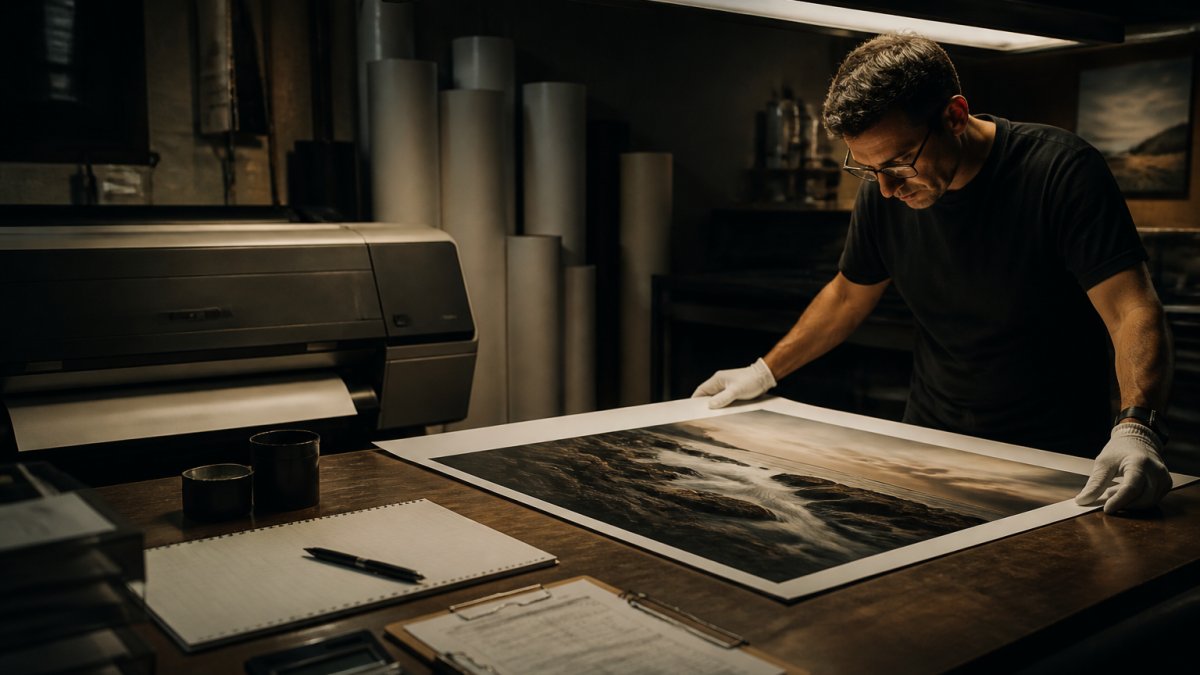
A Transparent, Itemized Breakdown of Museum-Grade Work
Most quotes hide the mechanics. Here is how the money actually divides across a museum-grade piece, from capture to delivery:
- Capture and lighting labor. Museum and artwork reproduction is slow, controlled work. A photographer may spend hours positioning lights, checking reflections, and shooting tethered to a calibrated monitor. Flat-field copy work and cross-polarized lighting to kill glare on varnished or glazed surfaces take time that a snapshot never requires.
- Color management. A color target is shot alongside the artwork, and the files are profiled so the digital file matches the object. Calibrated monitors, spectrophotometers, and profiling software carry real purchase and upkeep costs, and the operator's skill is part of the price.
- Post-production. Dust removal, perspective correction, stitching large files, and soft proofing against the target all happen before a single print is made. Retouching a large file can take hours.
- Specialized equipment. Wide-format pigment printers, archival paper handling, and a controlled viewing environment are capital costs. Printers need nozzle checks, calibration, and replacement parts.
- Archival output. Pigment inks, acid-free paper, and archival mounting and framing materials cost more per unit than standard poster stock.
- Rights and permissions. When the subject is a museum object or a protected work, reproduction permissions, access fees, and usage licensing can add a line item that has nothing to do with printing.
A quote that shows these lines is a quote you can audit. A single lump number hides where the standards are being cut.
Labor, Equipment, and the Cost of Doing Business
Here is where the price gap widens. A photographer's time, a skilled printer's time, and a framer's time all stack up.
Equipment matters too. Wide-format pigment printers are costly to buy and maintain. Calibrated monitors, color management software, and archival storage all add to the bill. Insurance and studio overhead follow.
A common mistake is comparing an archival print to a mass-produced poster. They share a shape. They share almost nothing else.
How to Identify Archival Quality Prints Before You Buy
To identify archival quality prints, check three things: paper composition, ink type, and the seller's documentation. A genuine archival print uses acid-free, cotton-rag or alpha-cellulose paper and pigment inks rated for long display life.
Ask these questions before you commit:
- Is the paper acid-free and buffered?
- Are the inks pigment-based, not dye-based?
- Does the seller name the paper brand and weight?
- Is there a certificate or material spec sheet?
- Are mounting and framing materials archival too?
If the seller cannot answer, that silence is your answer.
What Museum and Artwork Reproduction Actually Requires
Museum-quality capture is a workflow, not a camera setting. When an object is photographed to reproduction standard, several controls come into play:
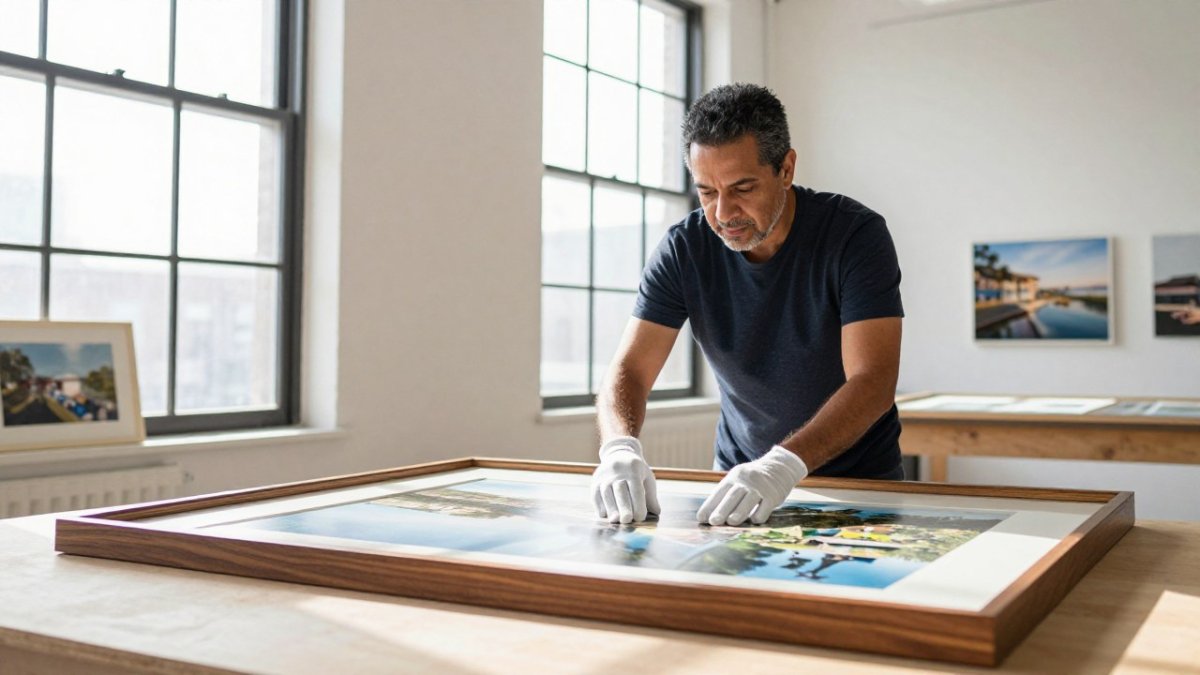
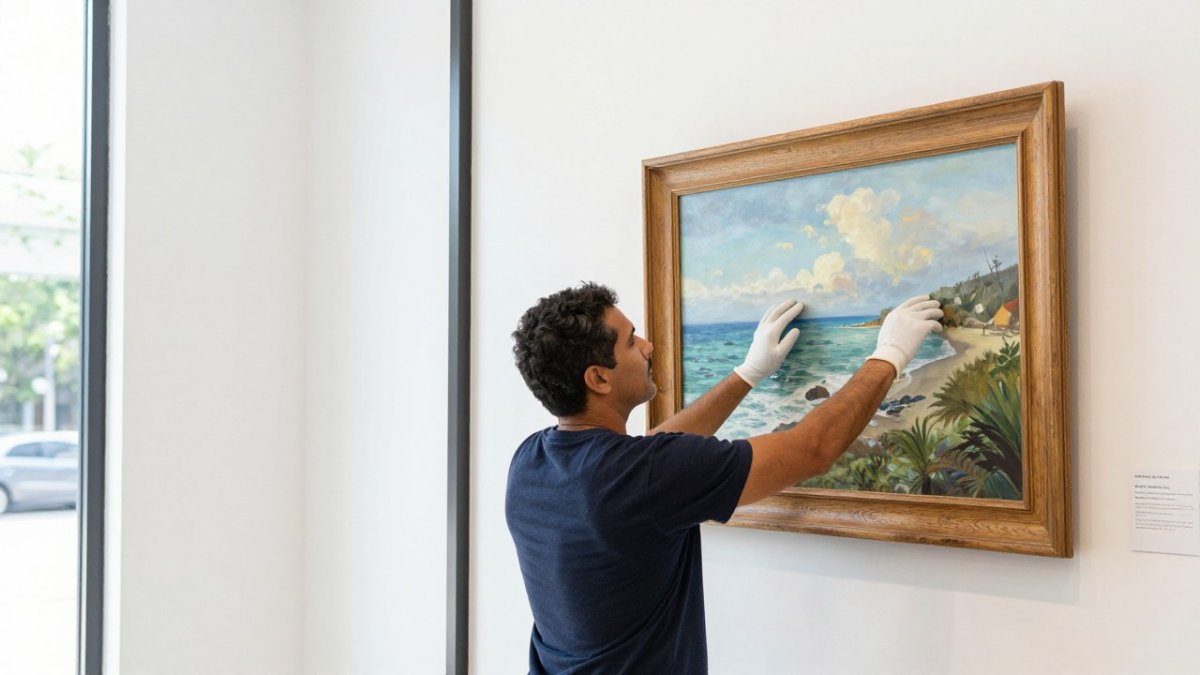
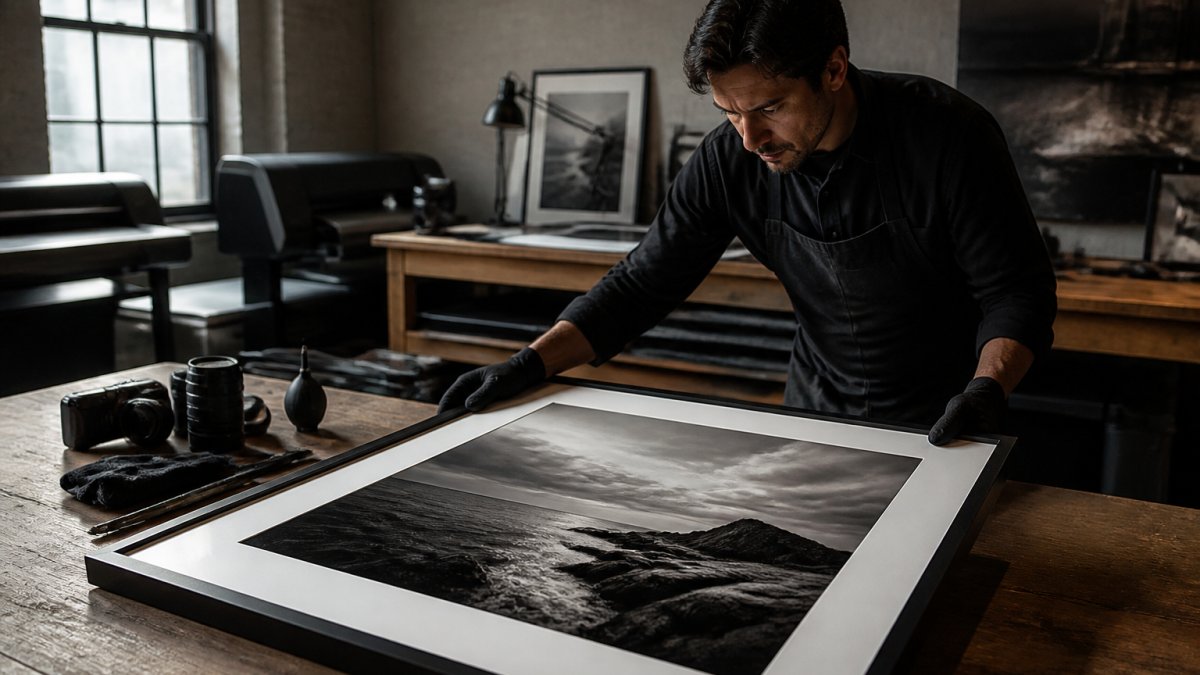
- Object handling. Works are handled with gloves, supported on clean surfaces, and kept away from heat and moisture. Fragile or framed pieces may need special cradles or glass removal, and that handling time is part of the cost.
- Lighting setup. Cross-polarized lighting and controlled softboxes reduce glare and surface reflections, especially on varnished paintings, glazed frames, and textured prints. Consistent, even illumination across the object is the goal.
- Color targets. A color target and gray card are captured in the same lighting as the artwork, then used to build a profile so the file reproduces the object's actual colors rather than a pleasing approximation.
- Resolution requirements. Reproduction files are captured at high resolution so detail holds up at print size. Large works may be shot in sections and stitched, which multiplies capture and post-production time.
- Glare and reflection control. Positioning lights and the camera to avoid hot spots is a skill measured in trial and error, and it is repeated for every surface type.
- Quality checks. Files are compared against the target and the object, soft-proofed, and reprinted if the match drifts. A print that leaves the studio has usually been proofed more than once.
These steps are why museum-grade work costs more than a well-lit photograph. The seller should be able to describe this workflow. If the answer is only "we use a good camera," the standards are probably not there.
How Long Do Archival Photo Prints Last?
Archival photo prints can last generations when made and stored correctly. Under proper display conditions, pigment prints on quality paper often hold up for many decades. Poor light exposure and humidity shorten that life fast.
The Smithsonian Institution guidance on preserving artwork and prints stresses controlling light, temperature, and humidity. Direct sun is the enemy. So is a damp wall.
Framing with UV-filtering glazing helps. So does keeping prints away from heat sources. These steps protect the investment you already made.
Fine Art Photography Print Prices: What You Are Actually Paying For
Fine art photography print prices reflect materials, labor, and scarcity, not just image quality. A limited edition adds another layer, because fewer copies exist.
Here is how the costs stack up across a typical archival piece:
| Cost Component | What It Covers | Why It Matters |
|---|---|---|
| Materials | Archival paper, pigment inks | Drives fade resistance and longevity |
| Labor | Printing, proofing, framing | Skilled hands reduce errors and waste |
| Equipment | Printer upkeep, calibration | Keeps color accuracy consistent |
| Edition size | Limited run of prints | Scarcity supports long-term value |
| Rights | Licensing and usage terms | Protects how the image can be used |
Notice what is missing: a markup for a middleman. Buying direct from the artist removes a layer of cost and adds a layer of accountability.
That is the model we use at DE LA Gallery. We print and frame in house, so the person making the print answers for it.
Rights, Editions, and Institutional Restrictions
Usage rights decide what you can legally do with an image. A print for your wall is different from a print you reproduce or resell. Limited editions usually come with paperwork stating the run size and the artist's terms.
Museums and institutions add their own rules. They often require proof of provenance and restrict reproduction. If you plan to lend or donate a piece, keep every document the seller provides.
This is the part most guides skip. Rights and editions are not fine print. They shape what your purchase is actually worth.
How to Read a Quote and Cut Costs Without Cutting Quality
A quote should itemize materials, labor, framing, and any licensing. If it is one lump number, ask for the breakdown. Transparent sellers will provide it.
Ways to lower cost without losing quality:
- Choose a smaller size within the same archival process
- Skip elaborate framing and use a clean, simple frame
- Buy an open-edition print instead of a limited edition
- Ask about in-house printing to avoid middleman markup
- Preview the piece before ordering to avoid returns
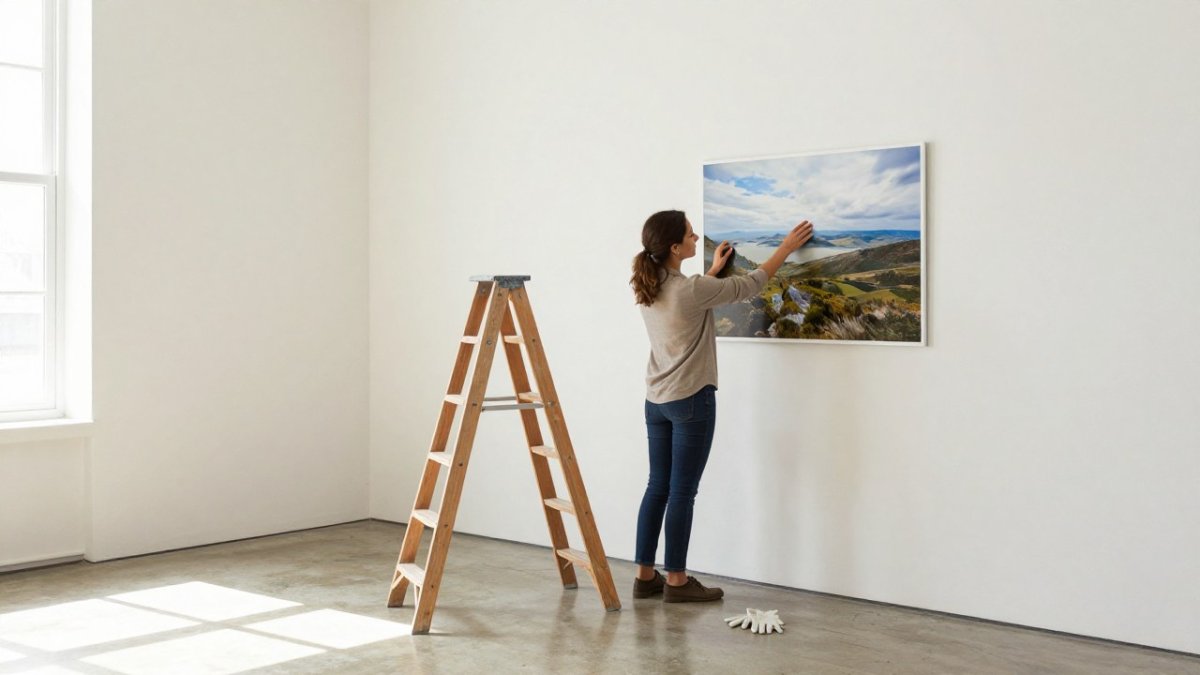
We built augmented reality previews into DE LA Gallery for exactly this reason. Seeing a large piece on your own wall first prevents costly mistakes.
Museum-quality photography costs more because it is built to last, and lasting takes better materials, skilled labor, and honest documentation. If you want a piece you can keep for decades, choose a seller who shows you exactly what goes into it. At DE LA Gallery, we print and frame every piece in house using verified archival materials, and our augmented reality preview lets you see the work on your wall before you buy. Browse the collection and get started with DE LA Gallery to find a piece made to endure.
Frequently Asked Questions
Why are museum-quality photographs so expensive?
The price reflects the full production chain, not just the image. A museum quality photography print involves a limited edition, pigment-based printing on archival paper, color management calibrated to the artist's proof, and framing with materials that will not off-gas or stain the print. Add photographer time, equipment, insurance, and the cost of doing business, and the price climbs fast. You are paying for a piece built to survive decades, not a poster that will fade in a few years.
How can you tell if a photographic print is archival?
Ask three questions. What paper and ink were used, and are they rated for long-term display? Was the print made with pigment inks rather than dye inks? And is the framing using acid-free matting and UV-filtering glazing? Reputable sellers will state these details plainly and stand behind them. If a listing only says 'high quality' without naming materials, treat that as a warning sign and ask for specifics before you buy.
Do archival prints last longer than standard photo prints?
Yes, by a wide margin. Standard dye-based prints on consumer paper can show noticeable fading within a decade under normal room light. Archival pigment prints on acid-free paper, framed with UV-filtering glazing, are rated to hold their color for generations when displayed sensibly. The difference comes down to ink chemistry, paper stability, and framing materials. That longevity is a large part of why museum quality photography commands a higher price.
Is museum-quality photography worth the investment?
It depends on what you want from the piece. If you want a large statement work that stays vivid for decades and holds value as a limited edition, the extra cost is justified by materials and scarcity. If you want decorative art you may replace in a few years, a lower-cost print makes more sense. Compare quotes line by line, ask what edition size you are buying into, and confirm the archival materials in writing before you commit.