 how-to
How to Prevent Fine Art Fading: A Collector's Guide
Table of Contents
- Why Fine Art Fades: Causes and Warning Signs
- How to Protect Art from Sunlight: Room-by-Room Strategies
- UV-Protective Glass for Art: What Actually Works
- Archival Framing for Fine Art Prints: Materials That Matter
- How to Store Fine Art Prints Safely
- Material-Specific Prevention: Photography, Canvas, and Works on Paper
- Coatings, Fixatives, and DIY Treatments: Risks and Alternatives
- What to Do When Fading Has Already Started
- Frequently Asked Questions
Last Updated: October 16, 2026
Why Fine Art Fades: Causes and Warning Signs
Learning how to prevent fine art fading starts with understanding what you are actually fighting. Fading is not one problem. It is two separate problems wearing the same disguise, and most collectors only defend against one of them.
At DE LA Gallery, we print and frame every piece in-house with verified archival materials. That work only pays off if the art is displayed and stored correctly once it leaves us.
The Two Culprits: UV Radiation and Visible Light
Ultraviolet radiation is the high-energy portion of light that breaks chemical bonds in pigments and dyes, causing them to lose color permanently. It is invisible, it comes through windows, and it does its damage quietly.
But UV is only half the story.
Visible light also fades art. Every photon that hits a print carries energy, and over years of exposure, that energy breaks down colorants.
The practical takeaway: UV filtering slows fading dramatically. It does not stop it. Light management does the rest.
Environmental Factors: Humidity, Heat, and Pollutants
Heat speeds up every chemical reaction, including the ones that destroy color. Humidity adds moisture damage to the list: warping, mold, and foxing on paper.
Pollutants matter too. Cooking fumes, cigarette smoke, and fireplace soot settle on surfaces and work their way into paper.
- Keep art in cool, dry conditions with steady temperature
- Avoid bathrooms, kitchens, and damp basements
- Keep pieces away from radiators, vents, and fireplaces
Those warning signs mean damage has already started. Catching them early gives you options.
How to Protect Art from Sunlight: Room-by-Room Strategies
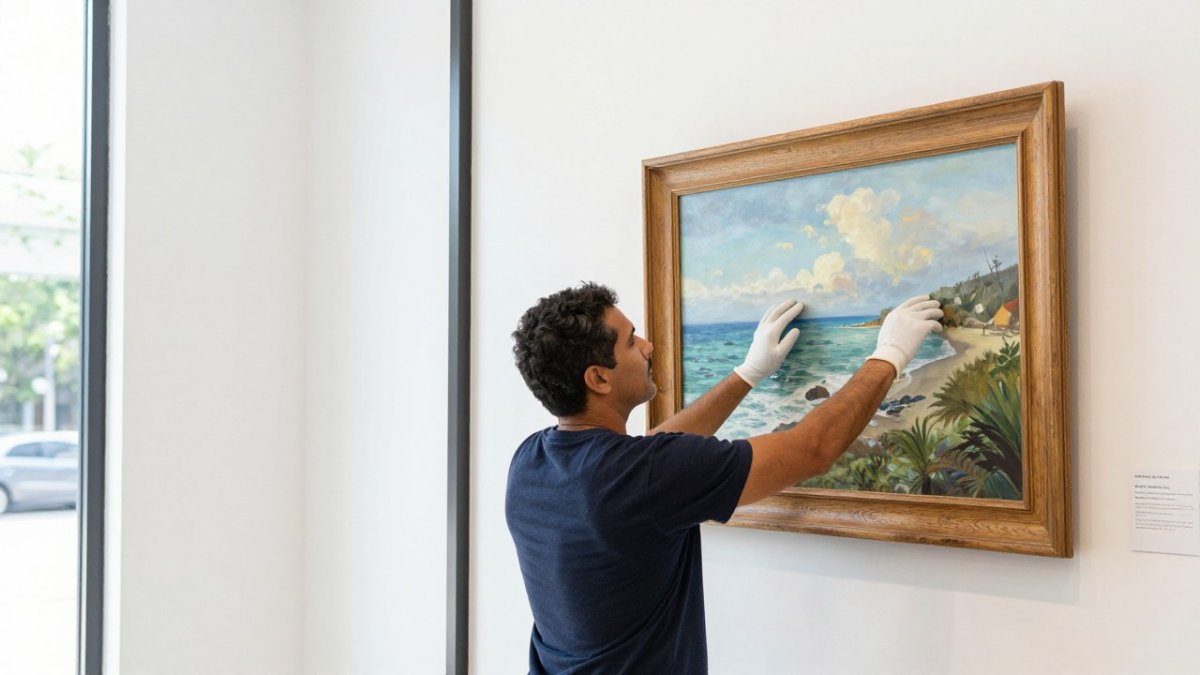
The fastest way to protect art from sunlight is to never let direct sun touch it. Sounds obvious. In practice, it means walking through your home room by room and asking one question: where does the sun actually land?
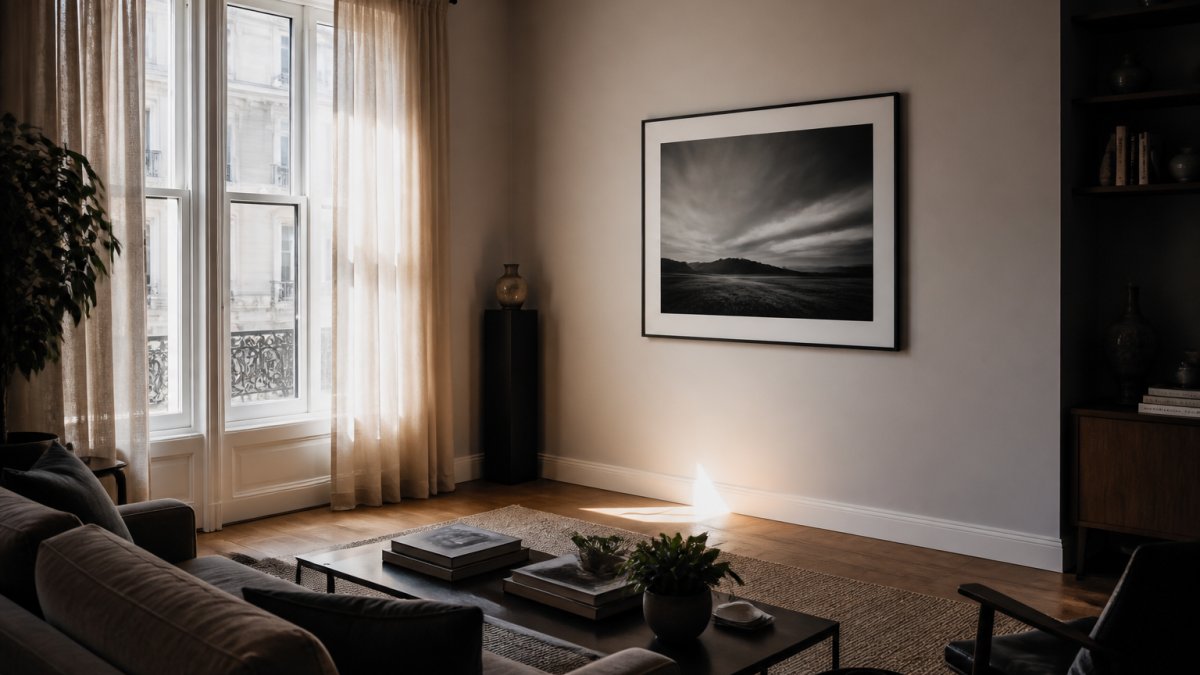
Start with the rooms that get the most light.
- Living rooms: Hang art on interior walls, not the wall facing the window
- Bedrooms: Usually the safest rooms; morning light is gentler than afternoon sun
- Hallways: Low light, but check for ceiling fixtures that run all day
Window Treatments and UV-Filtering Window Film
Curtains, blinds, and shades cut light at the source, which is the most effective move. Sheer curtains diffuse; blackout shades block.
UV-filtering window film is the second layer. It adheres to the glass and reduces ultraviolet transmission while staying nearly invisible. It helps most on windows you cannot cover all day.
Neither option replaces the other. Film reduces UV. Curtains reduce total light. Use both.
Measuring Light Levels with a Lux Meter
A lux meter tells you how much visible light actually reaches your art. You can buy one for modest cost, or use a light-meter app on your phone as a rough guide.
Here is how we would check a room:
- Turn off lamps and read the light at the art's surface
- Take readings at noon and again in late afternoon
- Note the highest number, not the average
- Compare readings across rooms before deciding where a piece hangs
Most collectors are surprised by how much a single afternoon reading differs from morning. That peak number is what fades your art.
Target Light Levels, Exposure Duration, and Display Rotation
UV filtering alone cannot stop fading. Visible light does the rest of the damage, and the two variables you actually control are intensity and duration.
- Highly light-sensitive works, most photographs, watercolors, dye-based prints, and works on paper, are commonly displayed in the range of about 50 lux (roughly 5 foot-candles) with limited cumulative exposure.
- Moderately sensitive works, oil and acrylic paintings, pigment inkjet prints, and most textiles, are often displayed in the range of about 150 to 200 lux (roughly 15 to 20 foot-candles).
- Low-sensitivity works, stone, metal, and most ceramics, tolerate higher levels, but the display budget still applies over decades.
A common pattern in museum practice is to rotate light-sensitive pieces off display after a few months and rest them in dark storage.
Distance matters too. Light intensity falls off with the square of the distance from the source, so moving a piece a few feet farther from a window or lamp can cut its exposure substantially.
Temperature and Relative Humidity Targets
Light is only half the environment. Heat accelerates every chemical reaction that fades color, and moisture drives warping, mold, and foxing on paper.
- Temperature: A stable range around 65 to 70 degrees Fahrenheit is a common target for display and storage.
- Relative humidity: Roughly 40 to 50 percent, held steady, is the range most often cited for mixed collections.
- Stability beats precision. A piece that swings from 30 to 70 percent relative humidity every week suffers more than one held at a slightly imperfect but constant level.
An inexpensive hygrometer and thermometer placed near the art will tell you more than any guess. Log readings for a week, note the daily swing, and fix the swing before you fix the number.
When to Call a Conservator
Monitoring is not the same as diagnosing. Bring in a qualified conservator if you see any of the following:
- Color shift that appears within a single year of display
- Foxing, tide lines, or mold on paper
- Flaking, cupping, or craze cracking on a painted surface
A conservator can measure conditions, identify the medium, and set a display budget specific to the work. That is the point where prevention stops being a checklist and becomes a plan.
UV-Protective Glass for Art: What Actually Works
UV-protective glass for art is glazing treated to block most ultraviolet radiation while remaining clear. It is the single most useful upgrade you can make to a frame.
Two types dominate. Acrylic glazing is lighter and shatter-resistant, which matters for large-format work. Glass glazing resists scratching better over decades.
What most guides miss is the number that matters: look for the UV blocking percentage on the spec sheet, not the marketing name.
Archival Framing for Fine Art Prints: Materials That Matter
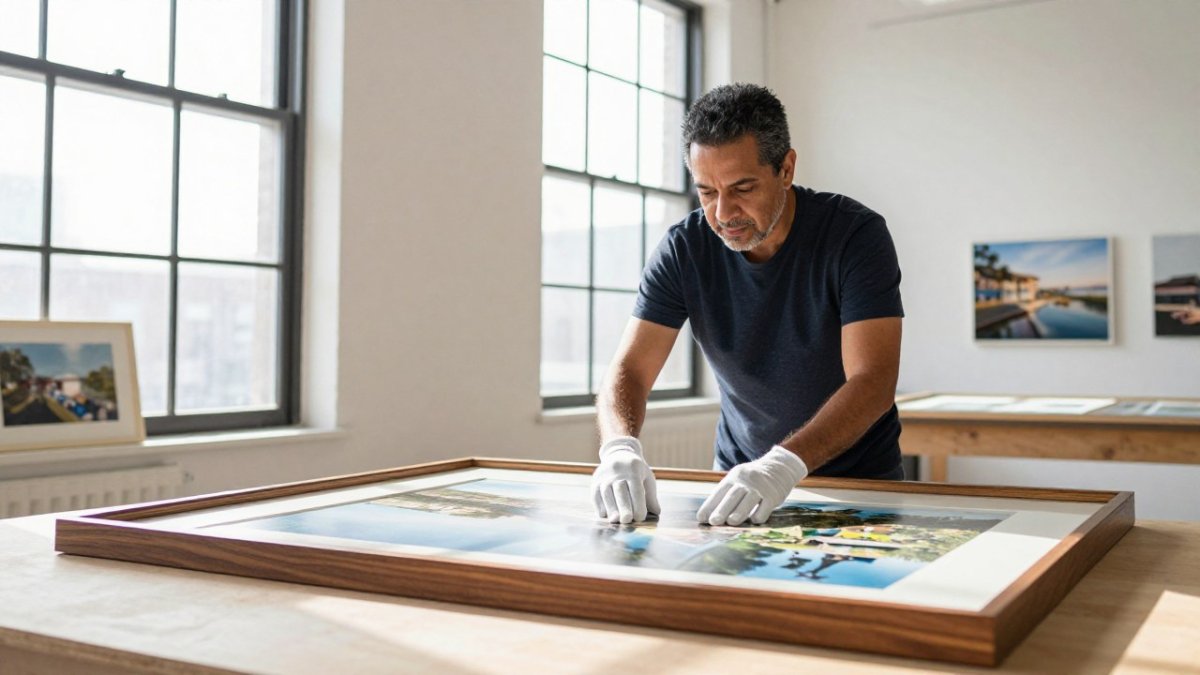
Archival framing for fine art prints means every material touching the art is stable and acid-free. This is where cheap framing quietly ruins good work.
Standard cardboard backing is acidic. Over years, it off-gasses and stains the print. So does a basic mat board.
Mat Boards, Backing, and Mounting Techniques
- Mat board: Use cotton rag or purified wood pulp board, both acid-free
- Backing: Acid-free foam board or corrugated board behind the print
- Mounting: Hinges or photo corners, never dry-mount adhesive for valuable work
Mounting deserves a note. Dry mounting is fast and flat, but it is permanent. For a limited-edition print, reversible hinging protects both the art and its value.
How to Store Fine Art Prints Safely
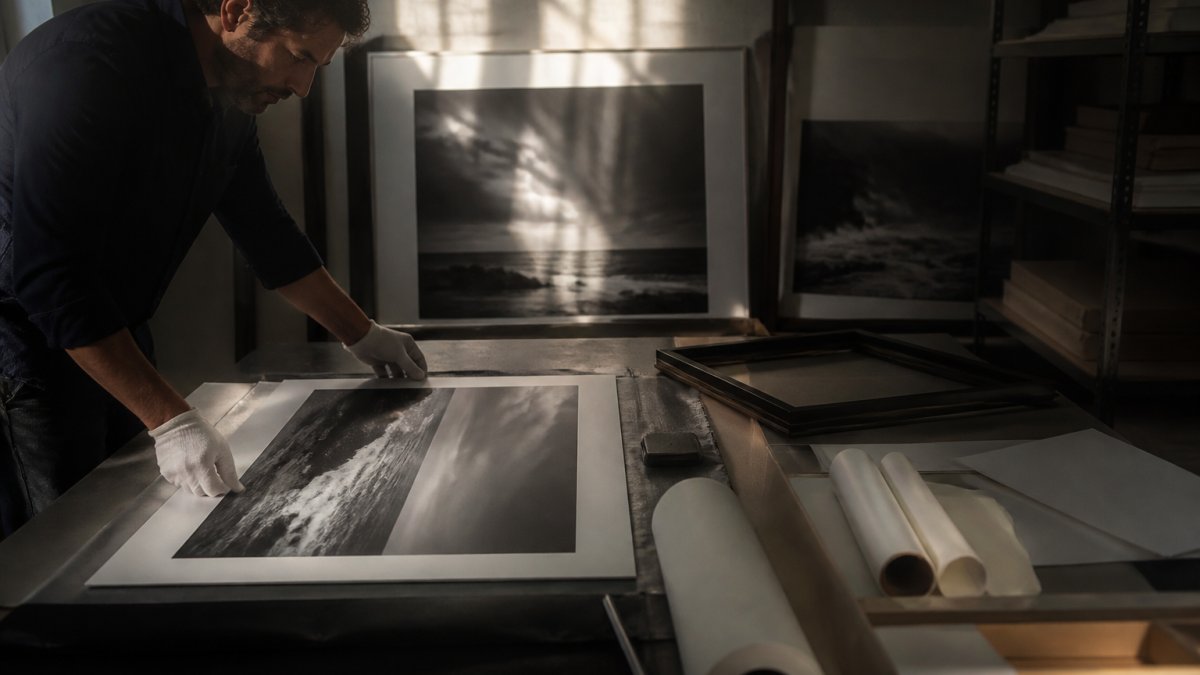
How to store fine art prints safely comes down to three things: dark, flat, and dry. Light fades art whether it is on a wall or in a box.
- Use acid-free boxes and interleaving tissue
- Lay prints flat in flat-file storage, never rolled long-term
- Keep the storage area cool, dark, and low in humidity
A portfolio box in a climate-controlled closet beats a frame in a sunny hallway every time.
Material-Specific Prevention: Photography, Canvas, and Works on Paper
Fading rates are not universal. A pigment inkjet print, a dye-based photograph, a watercolor, and an oil painting respond to light, humidity, and handling in different ways. Matching protection to the medium is the single most underused tactic in the SERP, so here is the medium-by-medium breakdown.
| Material | Primary Fade Mechanism | Best Protection | What to Avoid |
|---|---|---|---|
| Pigment inkjet prints (giclée) | Slow visible-light fading; paper yellowing | UV glazing, low-lux display, acid-free enclosure | Direct sun, dry-mount adhesives, spray fixatives |
| Dye-based inkjet prints | Rapid visible-light and ozone fading | UV glazing plus dark storage rotation | Long display cycles, unsealed frames near windows |
| Silver-gelatin and chromogenic photographs | Light-induced dye and silver oxidation | UV glazing, cool storage, inert sleeves | Prolonged bright display, PVC sleeves, humid basements |
| Watercolor and gouache on paper | Light fading plus acid burn and foxing | UV glazing, acid-free mat, flat storage | Dry mounting, non-buffered boards, damp walls |
| Water-based marker and pen drawings | Fast dye fading, especially in bright light | UV glazing, low-lux display, dark storage | Direct sun, fluorescent task lamps, laminating |
| Acrylic paintings | Surface dirt, minor light shift, craze cracking | Stable humidity, gentle dusting, optional conservation varnish | Solvent varnishes applied without testing, direct heat |
| Oil paintings | Varnish yellowing, canvas cracking, dirt | Stable humidity, professional varnish refresh, backing board | Rapid humidity swings, radiators, smoke exposure |
A few patterns worth internalizing:
- Dye-based colorants fade far faster than pigment-based ones. If you are buying a print, ask whether the inks are pigment or dye. Pigment is the more stable choice for anything you plan to display long-term.
- Photographs are the most light-sensitive category on this list. Museums typically rotate photographs off display after a few months and rest them in dark storage. A collector can copy that habit by rotating favorite pieces seasonally.
- Works on paper are the most vulnerable to acid and moisture, not just light. Acid burn and foxing often show up before any visible color shift, which is why acid-free matting and backing matter as much as glazing.
If you are unsure what you own, a conservator can identify the medium and recommend a display budget. That single consultation often saves more color than any aftermarket product.
Coatings, Fixatives, and DIY Treatments: Risks and Alternatives
Spray fixatives and varnishes are sold as protection. For fine art, they carry real risk.
A fixative can change surface sheen, alter color, and cannot be undone. Applied unevenly, it leaves permanent streaks. On a valuable print, that is a one-way door.
Here is our honest position: for anything you consider an investment, do not spray it yourself. Protective glazing and light control are reversible, proven, and safe.
- Skip DIY sealants on paper and photographs
- Use varnish only on canvas, and only when a professional applies it
- Never treat a limited-edition print with an aftermarket spray
What to Do When Fading Has Already Started
Fading cannot be reversed. No spray, filter, or treatment brings pigment back. What you can do is stop it from getting worse.
- Move the piece out of light immediately
- Photograph it as a record of current condition
- Consult a conservator before attempting anything
- Reframe with UV glazing and archival materials
- Store it flat and dark if it is not on display
For work that is replaceable, replacing it with an archival piece is often the smarter path. That is the difference between buying art and buying art that lasts. Every piece we print uses verified archival materials, framed by our team with the same standards we would apply to our own collection.
Frequently Asked Questions
What causes fine art prints to fade?
Fading is primarily caused by exposure to ultraviolet (UV) radiation and visible light, which break down pigments and dyes in the artwork. Humidity, heat, and pollutants can also accelerate the process. Even indirect sunlight and indoor lighting emit UV rays that slowly degrade colors. To prevent fading, limit light exposure, use UV-filtering glazing, and maintain stable, cool, dry conditions.
Does UV-protective glass prevent artwork from fading?
UV-protective glass blocks up to 99% of UV radiation, significantly slowing fading. However, it does not eliminate fading entirely because visible light also causes damage. For maximum protection, combine UV glass with light management strategies such as avoiding direct sunlight and using curtains or window film. Regular monitoring and rotating your art collection can further extend its life.
How should I store fine art prints to keep them from fading?
Store prints in a cool, dry place away from sunlight and heat sources. Use archival-quality boxes or flat files with acid-free interleaving paper. Avoid attics, basements, and bathrooms where humidity fluctuates. Ideally, keep relative humidity between 30-50% and temperature stable. For long-term storage, consider placing prints in solander boxes and handling them with clean cotton gloves to prevent oils from transferring.
Can I spray a protective coating on fine art prints?
Spray coatings and fixatives can offer some protection against UV and moisture, but they carry risks. They may alter the surface texture, cause discoloration, or interact poorly with inks over time. For valuable or archival prints, consult a conservator before applying any coating. Instead, rely on UV-filtering glass and proper framing, which provide protection without modifying the artwork itself.
Fading is not a matter of luck. It is a matter of light, materials, and where you choose to hang what you love. DE LA Gallery handles the half you cannot control, with in-house printing, expert framing, verified archival materials, and a direct-from-artist experience built for work meant to last decades, not seasons. Browse the collection online or visit us to see the materials in person, and start your collection with art made to hold its color.